Coast
Swimming at Varkala: currents, seasons and the mineral spring
Varkala's beach is open to the full swell with no reef to soften it. How to read the water, what the Papanasam spring is, and why the monsoon changes everything.
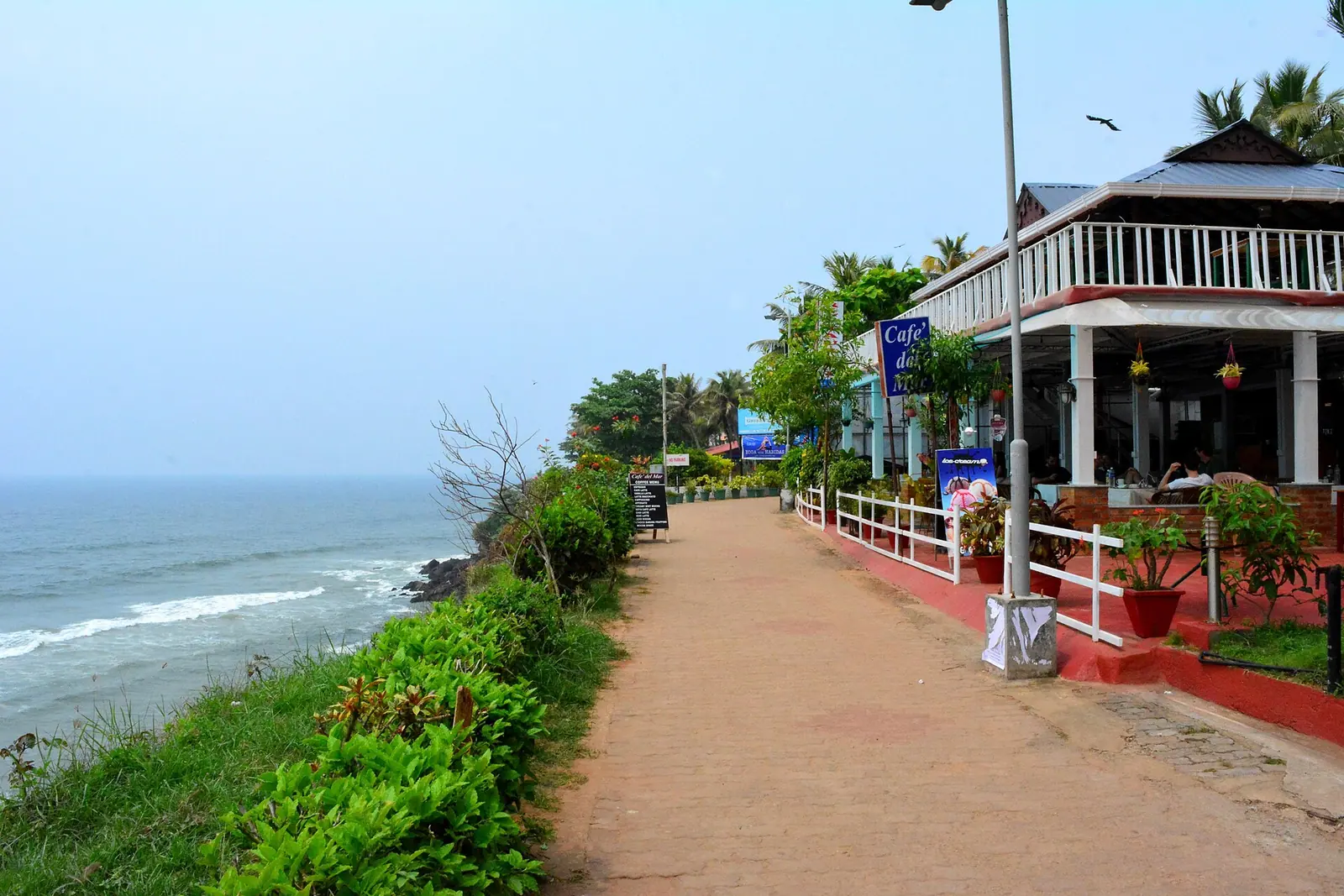
Photograph: Sunaina Pai and Susam Pal / CC BY 4.0, via Wikimedia Commons
Varkala is the most photographed beach in Kerala and the least sheltered. The cliff runs along the shore, the sand is a narrow strip at its foot, and the sea arrives with nothing to break it. That is not a reason to stay out of the water, but it is a reason to understand what you are walking into.
The beach is also a place of pilgrimage, which is why it has a spring and a set of rituals that predate the cafes on the cliff.
Destination in this story
BeachVarkalaThiruvananthapuramWhat the water does here
A beach with no reef, no headland and no sandbar is exposed to the full energy of the swell. Waves break close to the shore, and the water that runs back out has to find a channel, which is how rip currents form. A rip is not a monster wave; it is a narrow river flowing seaward, usually where the surf is calmest and the water looks most inviting.
The practical rule is the one lifeguards give everywhere. If you are caught in a current moving away from the shore, do not swim against it. Swim parallel to the beach until you are out of it, then come in. Panic, not the current, is what makes rips dangerous.
The Papanasam spring
At the southern end of the beach, fresh water comes up through the sand within reach of the surf. It is a mineral spring, and it has been regarded as sacred for a long time: the name Papanasam means the destruction of sins, and pilgrims come to bathe where the spring meets the sea.
The spring is a small, unglamorous thing — a patch of damp sand and a trickle — and it is easy to walk past. Its presence is a reminder that the beach's reputation is religious before it is commercial, and that the families bathing at the southern end are observing a custom rather than posing for a photograph.
The monsoon sea
From June the southwest monsoon turns the Arabian Sea rough. The surf gets bigger, the undertow stronger and the water dirtier with sediment, and the beach is not a sensible place to swim. Some cafes close, the cliff empties, and the town returns to its own rhythm.
This is not a small seasonal inconvenience. It is the reason the season exists at all: Varkala works between November and March, when the sea is calmer and the weather settled, and visitors who arrive in July expecting a swimming holiday will be disappointed.
Reading a beach you do not know
Before you go in anywhere, spend five minutes watching. Note where the waves break, where the water between the waves is smooth, and where the surface is being pulled outward. Look for flags and for the groups of local people, who generally know where the bottom is safe. Ask at your accommodation; the cliff has been watching this water for decades.
Swim with someone else, keep children within arm's reach, and avoid the hours around high tide when the strip of sand narrows. Alcohol and surf do not mix, and the cliff path down to the beach is steep enough that the walk back is part of the risk.
The rest of the shore
North of the main beach, the cliff continues and the coves become smaller and less visited. The walk along the top is the best free thing in Varkala: cafes on one side, a hundred feet of laterite on the other, and the sea visible for kilometres.
At the southern end, the fishing beach and the temple sit together, and the contrast with the cliff is sharp. Both are part of the same town, and both are worth an hour.
Getting there
The nearest airport and railhead: Trivandrum International Airport (TRV), ~55 km · Varkala Sivagiri (VAK), ~3 km.
- By air: Trivandrum International Airport is about 55 km away, around 1.5 hours by taxi.
- By rail: Varkala Sivagiri station is about 3 km from the cliff; autos meet most trains.
- By road: Regular buses run from Thiruvananthapuram and Kollam; the cliff is a short auto ride from the bus stand.
Once there, Autos are the main way up and down the cliff road. The cliff walk itself is pedestrian-only in parts.
What to do while you are there
- Walk the cliff path at sunset and eat seafood above the sea
- Visit Papanasam Beach and the Janardanaswamy Temple
- Take a beginner surf lesson with a reputable local school
- Join a yoga class and check the teacher's credentials
- Day trip to Kollam's Ashtamudi backwaters
Eating
Fresh seafood, Kerala breakfasts and a surprisingly good international cafe scene on the cliff.
Local customs and manners
Papanasam is a pilgrimage beach; modest swimwear and respectful behaviour are appreciated. The temple has a dress code.
Access, safety and health
Poor. Steep steps, sandy access and cliff paths make wheelchair access very difficult. The sea has strong currents and a steep bottom in places; drownings occur every season. Do not swim at night or where red flags are flying. Keep back from the cliff edge, especially after rain.
Fees, hours and permits on record
Beach access is free; surf lessons, yoga and sunbeds are paid separately.
The beach and cliff are always open; temple timings vary.
Nearby, less obviously
- Kappil Beach and backwater
- Anjengo (Anchuthengu) Fort
Practical notes
- Watch the water for five minutes before entering and note where the surface pulls outward.
- If caught in a current, swim parallel to the shore rather than against it.
- Do not swim in the monsoon months; the surf and undertow are genuinely dangerous.
- Swim with others and keep children within arm's reach.
- Ask locally where the bottom is safe; the cliff's residents know the beach.
Common questions
- Is Varkala beach safe for swimming? It is an exposed beach with no reef, so the surf and currents are strong. It is swimmable in the settled season if you stay within your depth and watch the water, but it is not a sheltered bay.
- Can you swim in the monsoon? No. From June the sea is rough, the undertow is strong and the water is murky. Most of the cliff's seasonal businesses close as well.
- What is the Papanasam spring? A freshwater mineral spring that rises through the sand at the southern end of the beach. It is regarded as sacred and pilgrims bathe where it meets the sea.
- Is Varkala good for swimming? Only in calm conditions and in the areas used by locals. Currents can be strong and the drop-off is steep. Follow warnings and never swim alone.
- Is Varkala better than Kovalam? Varkala has more character and a cliff setting; Kovalam is more convenient for the airport and calmer for families. Many travellers visit both.
Plan this trip
Planning a trip to Varkala, Thiruvananthapuram?
Nearby places around Varkala with real road distances, listed stays, and a route you build yourself.
PLAN TRIP HERE CONTACT US TO ARRANGE THIS TRIPA trip-arrangement request, not a booking. Nothing is confirmed or charged here.
The full place guideVarkalaThiruvananthapuram · how to get there, when to go, what it costsSources & notes
- Kerala Tourism — official state tourism portal · checked 2026-10-22
- Wikipedia — place and history reference · checked 2026-10-22
- Kerala Tourism — Thiruvananthapuram district · checked 2026-10-22
Last updated 31 October 2026. Prices, opening hours and transport should be confirmed with official sources before travel.
Hello Kerala Publisher
Hello Kerala's editorial desk.
Found an error or an outdated detail?
Tell us