Responsible travel
Nilambur's forest edge: villages, teak and the rules of visiting
The Nilambur valley is where Malappuram's teak plantations meet the forests of the Nilgiri range, and where Adivasi hamlets sit at the edge of both. How to visit without doing harm.
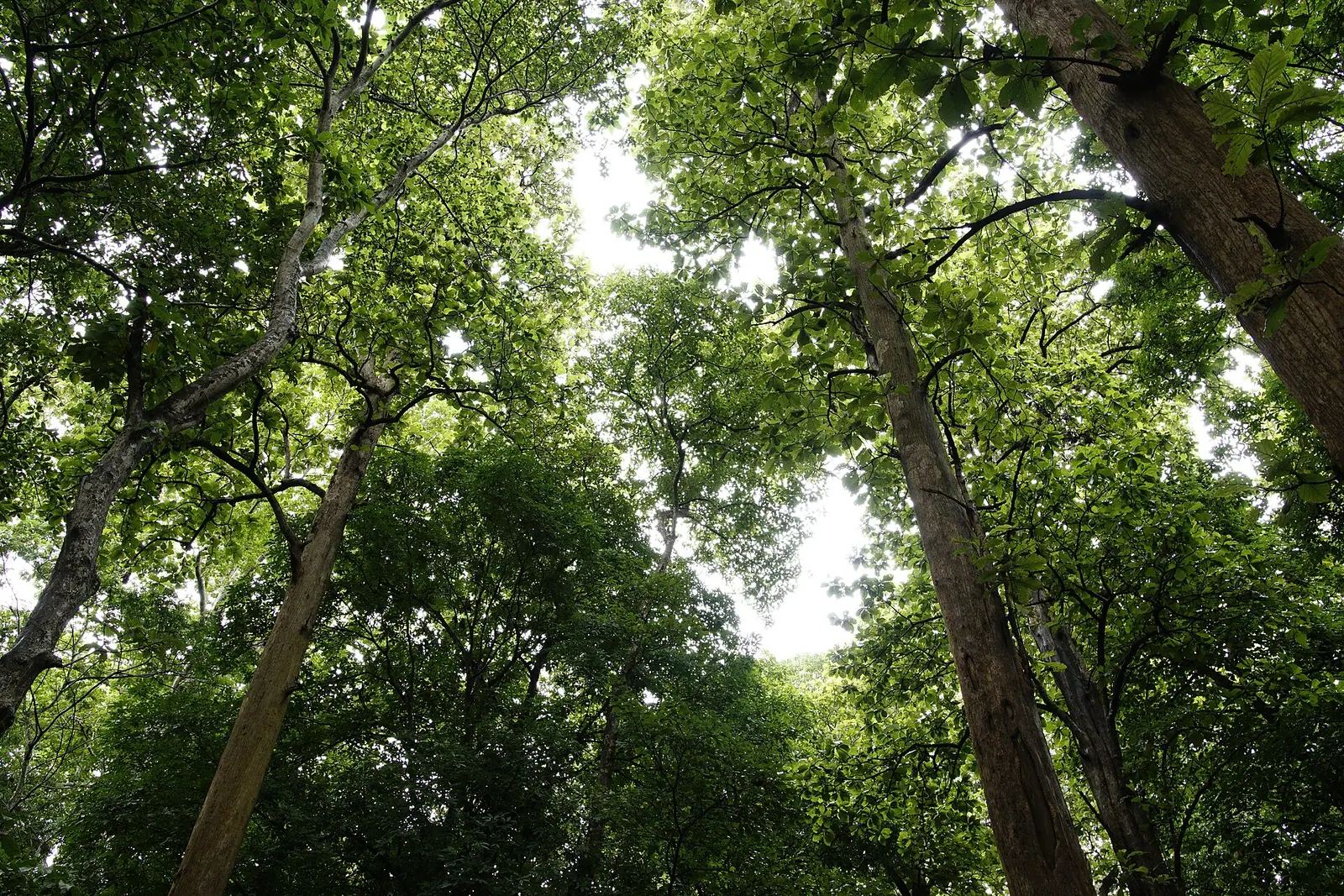
Photograph: Vengolis / CC BY-SA 4.0, via Wikimedia Commons
Where the plantation ends
Nilambur is known for teak, and the reputation is deserved: the plantations here are among the oldest managed teak stands in the world, and the town's timber history shaped its buildings, its economy and its sense of itself. But the plantation is only the first mile. Behind it the land rises into the forests of the Nilgiri range, towards New Amarambalam and the edge of Silent Valley.
That transition is the reason to come. Within a short drive the landscape goes from orderly rows of a planted tree to something much older and less legible, and the villages along that seam live from both — plantation work, forest produce, farming, and the tourism that arrives in bursts.
Who lives at the forest edge
The forests around Nilambur are home to several Adivasi communities, including the Cholanaickan, one of the groups the state classifies as particularly vulnerable. Their presence is not a tourist attraction and should not be treated as one. Most hamlets are reached by forest tracks, are not set up for visitors, and have clear reasons to be wary of strangers arriving with cameras.
It is worth understanding the legal position before romanticising the setting: forest rights, settlement claims and access to produce have been contested here for decades, and the communities at the edge are not decorative inhabitants of a landscape but rights-holders within it.
What a visitor can legitimately do
Walk the plantation and visit the Teak Museum, which explains the timber history without pretending the forest is untouched. Take a forest department trek or a guided nature walk where those are running, and use the eco-development units that local committees operate under the department's rules — those are the channels that return money to the villages rather than to an outside operator.
Do not drive into hamlets uninvited, do not ask children to pose, and do not hand out sweets, money or medicine. If you want to contribute, buy from local produce sellers and pay the guide who was actually assigned to you.
Consent, cameras and money
Ask before photographing anyone, and accept a no without negotiating. A portrait of a Cholanaickan family is not a souvenir, and the power difference between a visitor with a vehicle and a household at the end of a forest track is large enough that consent needs to be active rather than assumed.
On money: use the official guiding and permit channels even when an informal guide offers a shortcut. The informal route is cheaper for you and worse for everyone else, because it takes work away from the system that gives the community a stake in keeping the forest standing.
The road in and the season out
The drive from Nilambur towards the hills narrows quickly, and the last stretches are single-lane with blind bends. Do not plan to drive back after dark on a road you do not know, and do not attempt the interior tracks in the monsoon, when surfaces soften and leeches are constant.
The dry months from late November into February are the sensible window: cooler, clearer, and with the tracks passable. Whatever the season, carry water, wear closed shoes, and tell someone where you are going before you leave the paved road.
The district in brief
Malappuram runs from the Bharathapuzha river plain up into the Nilgiri foothills. It is a district of mosques, football, timber and the famous teak plantations around Nilambur, with less tourist traffic than the coast.
Practical notes
- Use forest department treks and eco-development committee guides rather than informal operators.
- Ask before photographing people, and accept a refusal the first time.
- Do not enter hamlets uninvited or distribute sweets, money or medicine.
- Plan the return before dark; the hill roads are single-lane with blind bends.
- The dry months from late November to February are the easiest for tracks and visibility.
Common questions
- Can I visit an Adivasi village near Nilambur? Not as a sight. Hamlets are private places reached by forest tracks, and visiting requires an invitation or an official programme. Arriving unannounced is intrusive and usually unwelcome.
- What is there to see in Nilambur itself? The teak plantations and the Teak Museum explain the town's timber history. The surrounding forests and the road towards New Amarambalam are the reason to stay longer.
- Is the forest safe to walk alone? Walk with a guide who knows the area. The forest is dense, mobile coverage is patchy and the tracks are easy to lose in the monsoon.
Plan this trip
Planning a trip to Nilambur's forest edge, Malappuram?
There is no mapped record for Nilambur's forest edge yet, so no route is drawn. The planner opens with Nilambur's forest edge named, and a person can check what is actually there.
PLAN TRIP HERE CONTACT US TO ARRANGE THIS TRIPA trip-arrangement request, not a booking. Nothing is confirmed or charged here.
Sources & notes
- Kerala Tourism — Malappuram district · checked 2026-10-22
- Kerala Tourism — official state tourism portal · checked 2026-10-22
- Wikipedia — place and history reference · checked 2026-10-22
Last updated 31 October 2026. Prices, opening hours and transport should be confirmed with official sources before travel.
Hello Kerala Publisher
Hello Kerala's editorial desk.
Found an error or an outdated detail?
Tell us