Backwaters
Houseboats from Kollam: the quieter way into the backwaters
The Kollam–Alappuzha route is the long version of the houseboat trip: a full day of narrow channels, paddy and villages instead of a loop around one town.
Two ways to do the backwaters
Most houseboat trips are loops: board at Alappuzha, cruise for a few hours, moor for the night, return. They are convenient and they are crowded, because every boat is doing roughly the same circuit at roughly the same time.
The alternative is the through route between Kollam and Alappuzha, a passage of about eight hours that uses the lake, the narrower channels and the Kuttanad paddy country in between. Boats leave from Kollam in the morning and arrive in Alappuzha in the afternoon, or the other way round. Because it is a journey rather than a loop, you see the backwaters change instead of circling a single view.
What the route passes
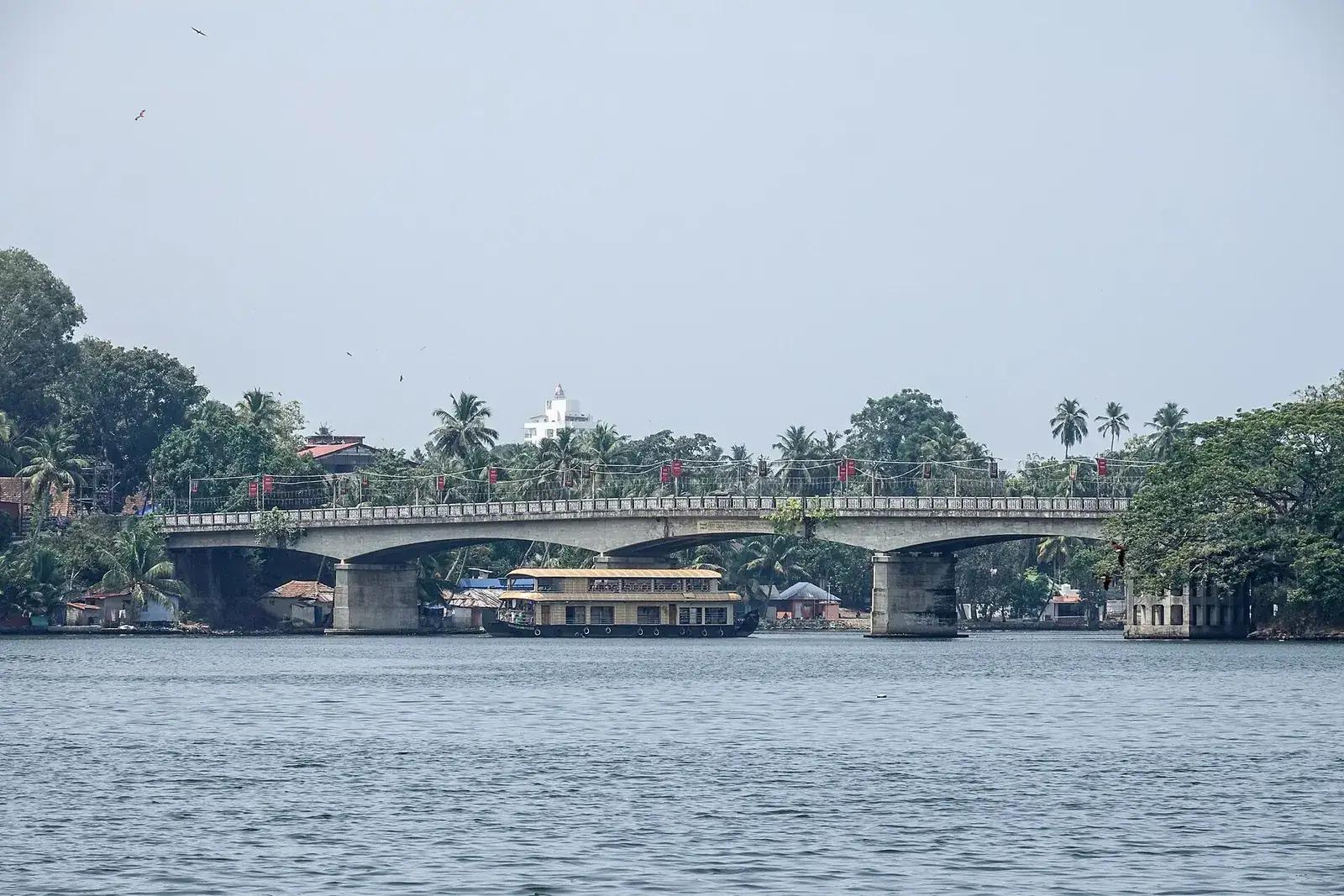
Leaving Kollam, the boat crosses Ashtamudi, passes Munroe Island with its narrow canal, and then enters the canal and river system that runs north through Kuttanad. The land either side is below sea level in places, farmed for rice on fields that are pumped dry and protected by bunds.
The villages along the way are the attraction: coir yards, fish traps, a church or a temple at the water's edge, children waving from a bank, and paddy that goes on further than it looks like it should. The boat slows for the narrow stretches, which is when the trip is at its best.
What an overnight boat actually is
A kettuvallam is a converted cargo boat: a long wooden hull, a roof, and a cabin or two built into it. The good ones are cool, simple and quiet; the cheap ones are hot, loud and lit by a generator that runs all night. The difference in price usually buys insulation, space, a proper cook and a smaller number of fellow guests.
Meals are cooked on board, typically Kerala food with fish, and the crew is two or three people. Air conditioning, where it exists, usually runs only at night, and hot water is a promise worth checking. Nobody should be swimming from a moving houseboat, whatever the brochure suggests.
Choosing honestly
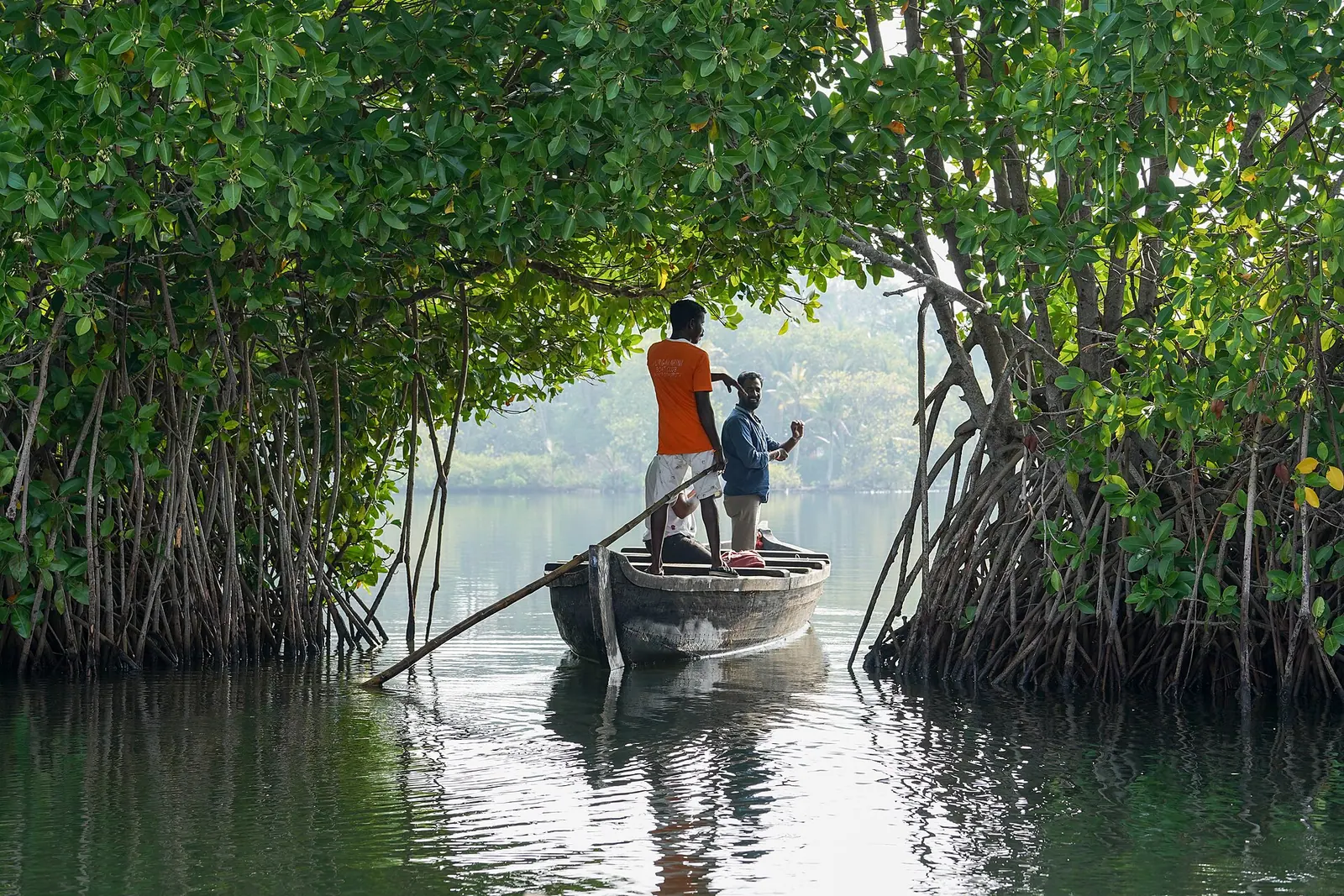
Decide first what you want. A day cruise gives you the scenery without the night; an overnight gives you the dawn, which is the best hour on the water. A small canoe or a country boat with a boatman gives you the narrow channels that a houseboat cannot enter, at a fraction of the cost.
Then ask about the route. A boat that cruises for two hours and moors by four is not offering the same thing as one that runs the full passage. Ask where it stops, whether the price includes meals, and how many other guests share the deck. The answers separate a real trip from a floating party.
The cost of the convenience
Houseboats are heavy, and their wash erodes the banks of channels that were built for canoes. They burn diesel, generate waste, and concentrate money in the hands of owners rather than the villages they pass. None of that makes them illegitimate — they employ crews and cooks and drivers — but it is why the smallest boat that does the job is usually the better choice.
The practical gesture is to take the through route rather than the loop, book a boat with fewer cabins, eat what the crew cooks, and tip the people who actually did the work. And if you have the time, spend a morning in a canoe on the same water: you will understand what the houseboat is crossing.
The district in brief
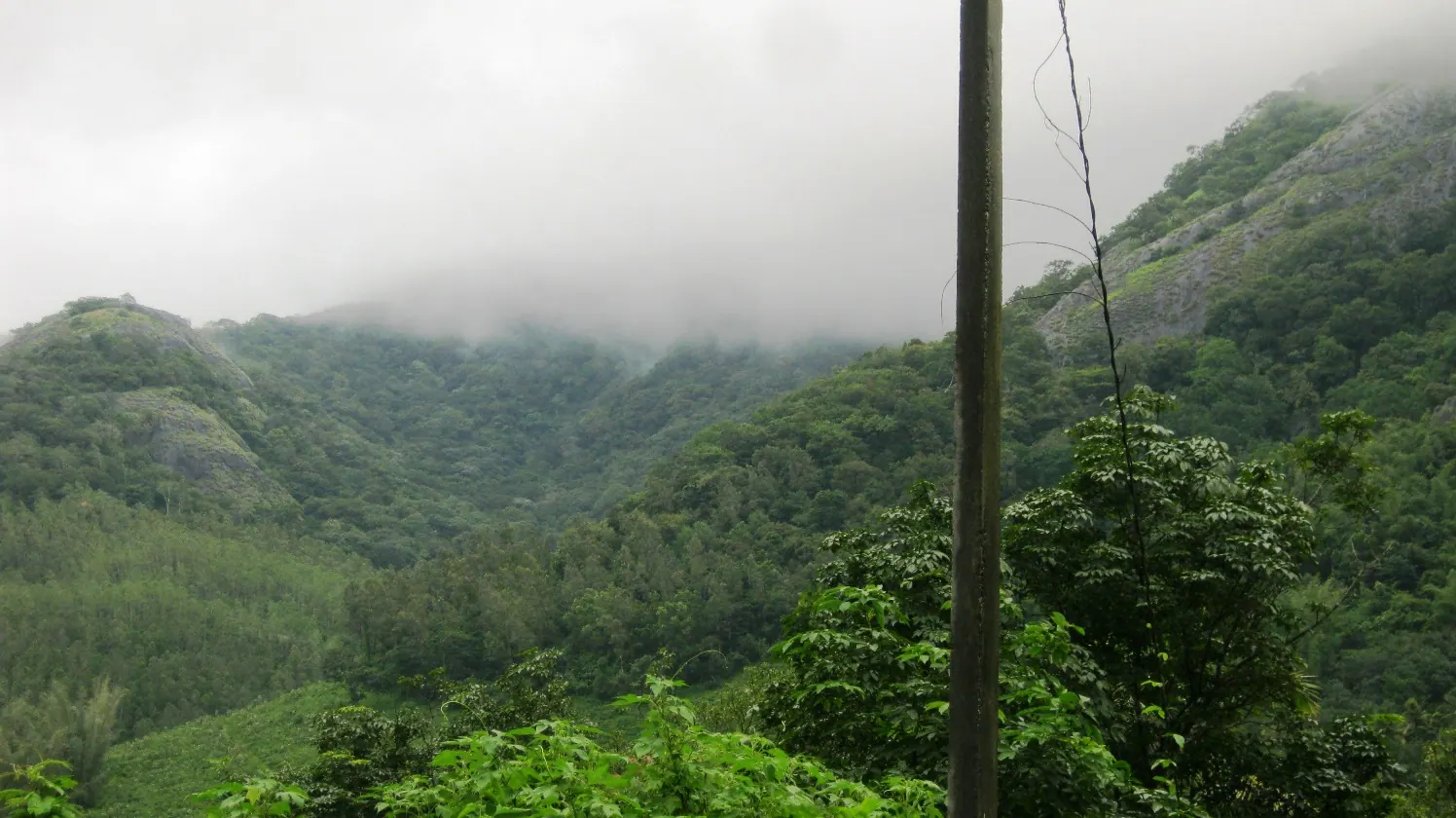
An old port shaped by cashew and coir, Kollam is where the backwaters widen into Ashtamudi Lake. It is a quieter, more workaday starting point for houseboats than Alappuzha, with the Western Ghats and the Jatayu sculpture a short climb inland.
Elsewhere in Kollam
Ashtamudi Lake. A wide, eight-armed lake at Kollam, with houseboats, kayaks and quiet canal villages.
Destination in this story
 BackwatersAshtamudi LakeKollam
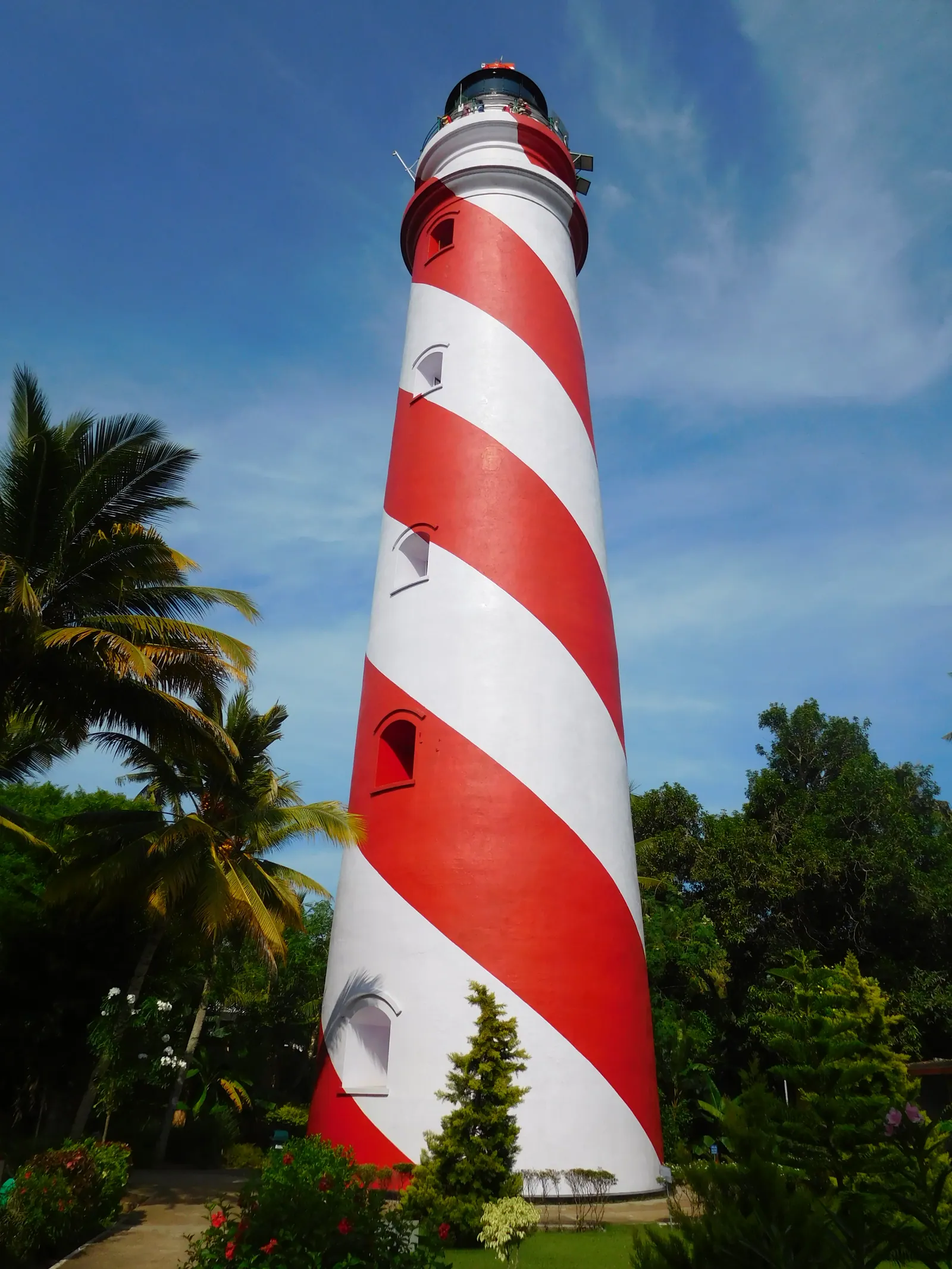
Jatayu Earth's Center. A colossal sculpture of the mythical vulture Jatayu on a rocky hill, with cable cars and long views.
Destination in this story
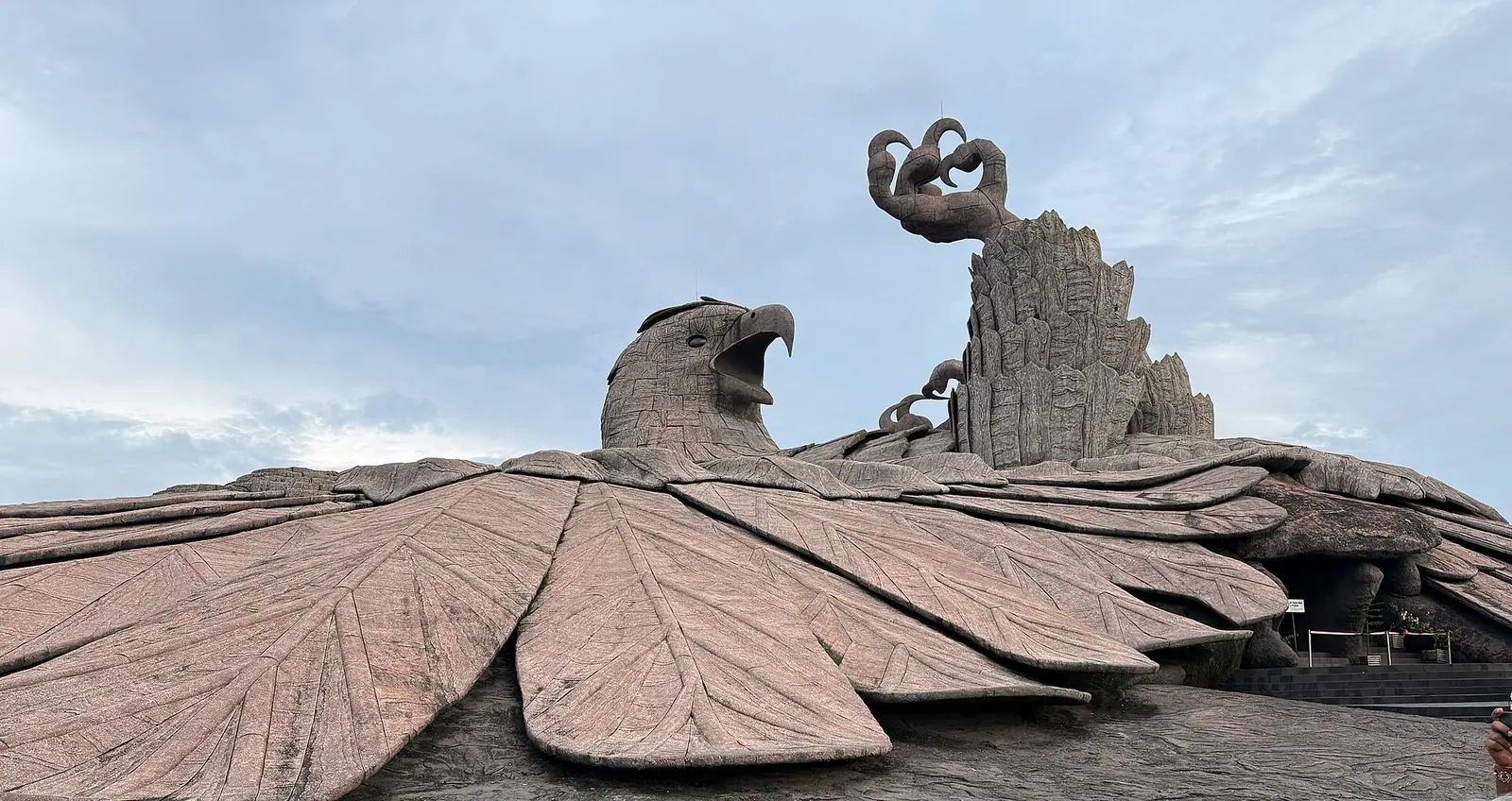 HeritageJatayu Earth's CenterKollam
Thenmala. A forest-fringed ecotourism project in the Western Ghats foothills, with boardwalks, boating and short trails.
Destination in this story
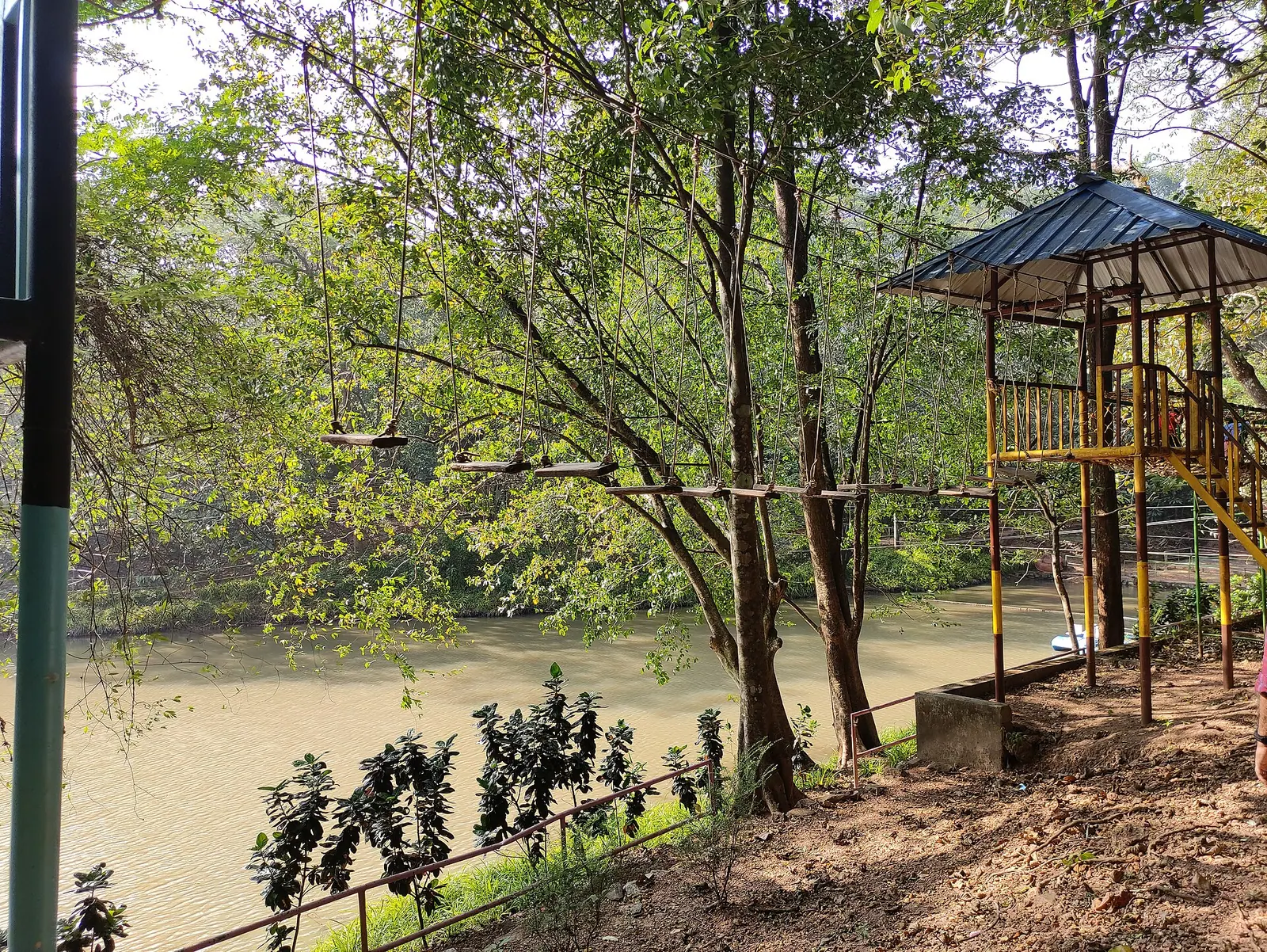 AdventureThenmalaKollam
Practical notes
- Ask whether the price covers the full Kollam–Alappuzha passage or only a short loop.
- Fewer cabins means a quieter deck and a fairer share of the crew's attention.
- Check what air conditioning and hot water actually mean on the specific boat.
- Take the smallest boat that suits you; canoes reach channels a houseboat cannot.
- The dawn after an overnight mooring is the best hour of the trip — be awake for it.
Common questions
- How long is the Kollam to Alappuzha boat route? Roughly eight hours of cruising, which most operators split across a day or run as an overnight trip with a mooring in between.
- Is a houseboat from Kollam cheaper than from Alappuzha? Often, because demand is lower, but the through route uses more fuel and crew time. Compare what the price includes rather than the headline number.
- Can you swim from a houseboat? You should not. The boats are moving or moored in working channels, and the water is deep, turbid and used by other traffic.
Plan this trip
Planning a trip to Houseboats from Kollam, Kollam?
There is no mapped record for Houseboats from Kollam yet, so no route is drawn. The planner opens with Houseboats from Kollam named, and a person can check what is actually there.
PLAN TRIP HERE CONTACT US TO ARRANGE THIS TRIPA trip-arrangement request, not a booking. Nothing is confirmed or charged here.
Sources & notes
- Kerala Tourism — official state tourism portal · checked 2026-10-22
- Wikipedia — place and history reference · checked 2026-10-22
- Kerala Tourism — Kollam district · checked 2026-10-22
Last updated 28 October 2026. Prices, opening hours and transport should be confirmed with official sources before travel.
Hello Kerala Publisher
Hello Kerala's editorial desk.
Found an error or an outdated detail?
Tell us