Backwaters
The backwater villages of Kollam: a lake with eight arms
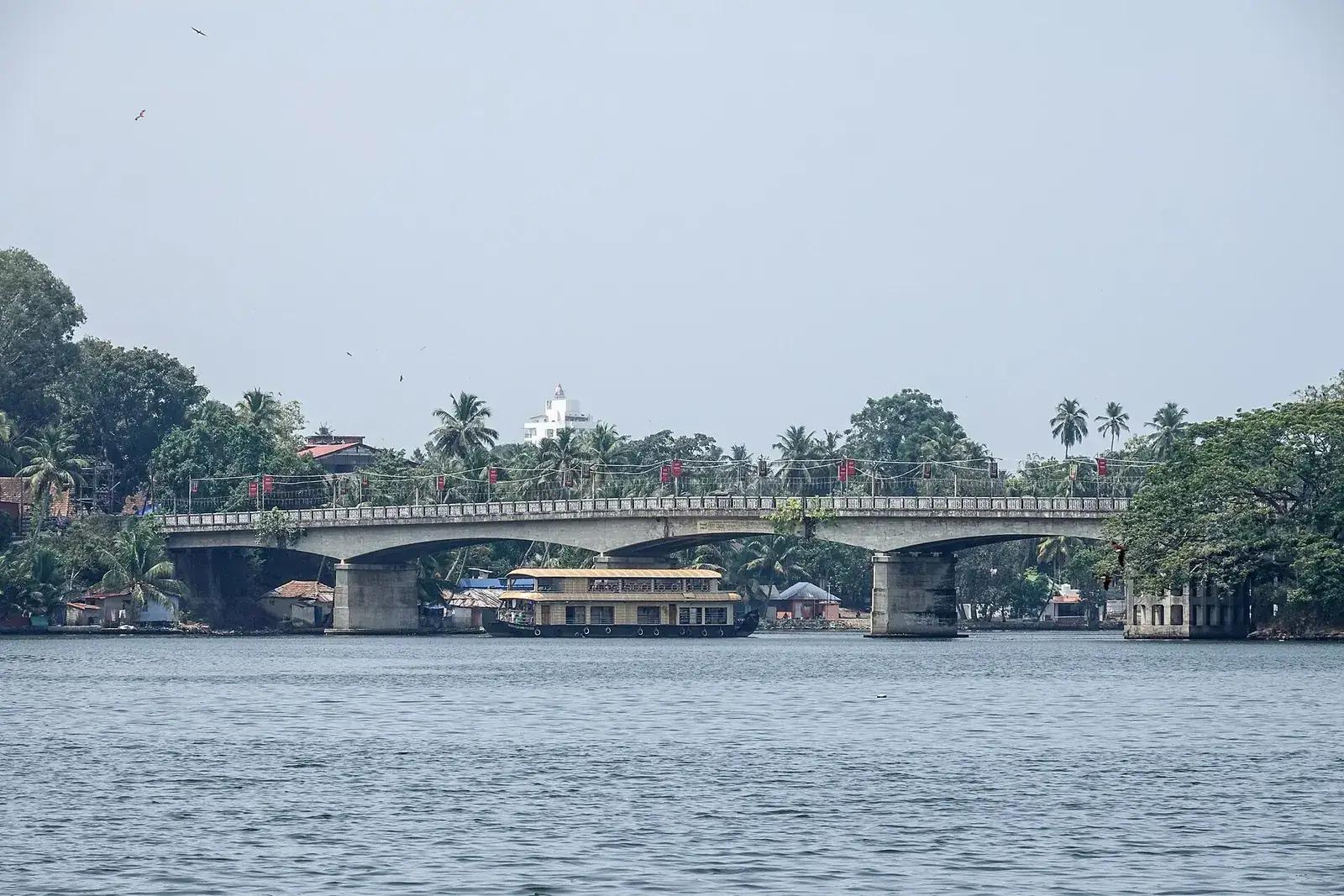
On the edges of Ashtamudi, villages still run on coir, fish and a boat that takes children to school — a working landscape that a houseboat window turns into scenery.
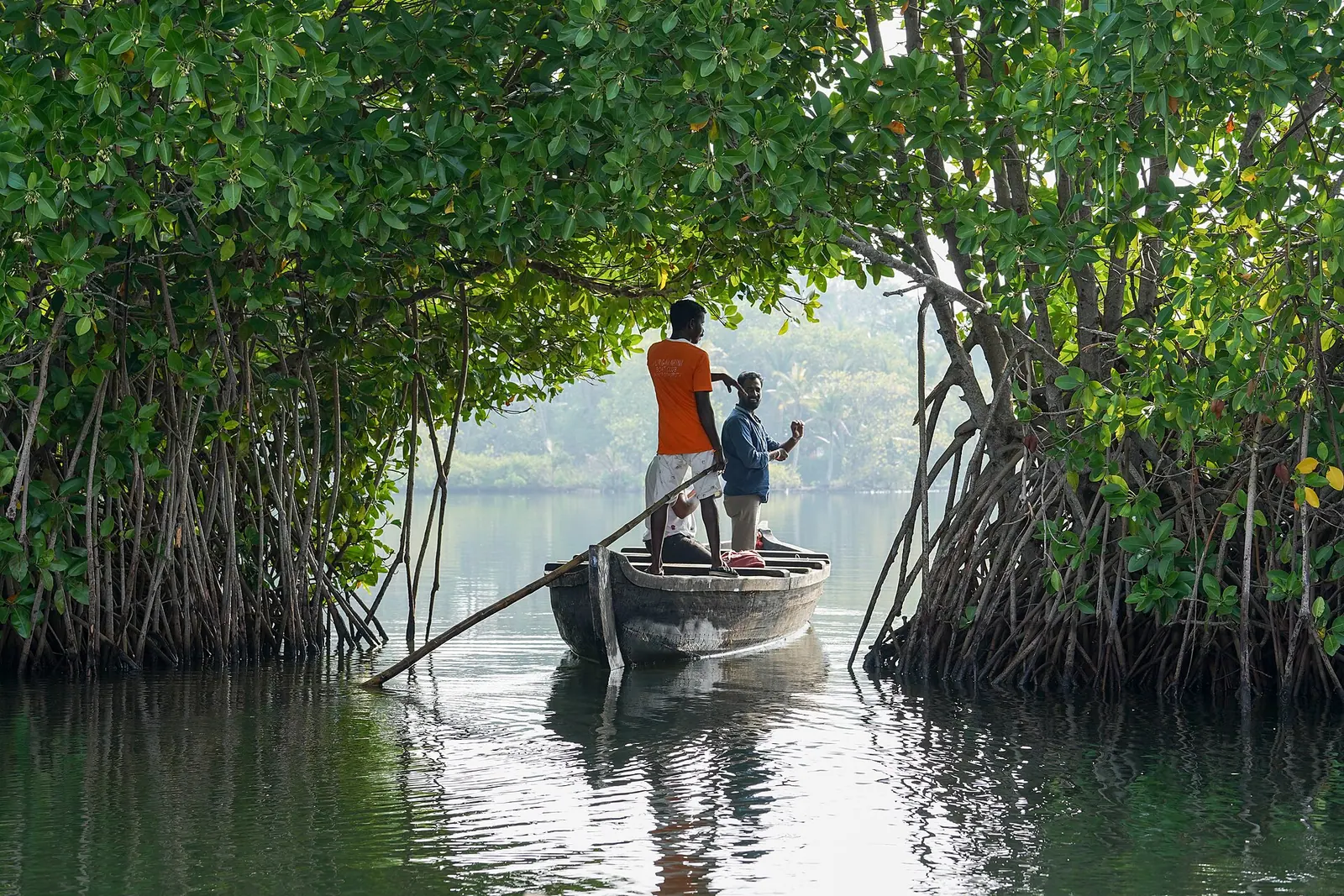
Photograph: Timothy A. Gonsalves / CC BY-SA 4.0, via Wikimedia Commons
A lake, not a canal
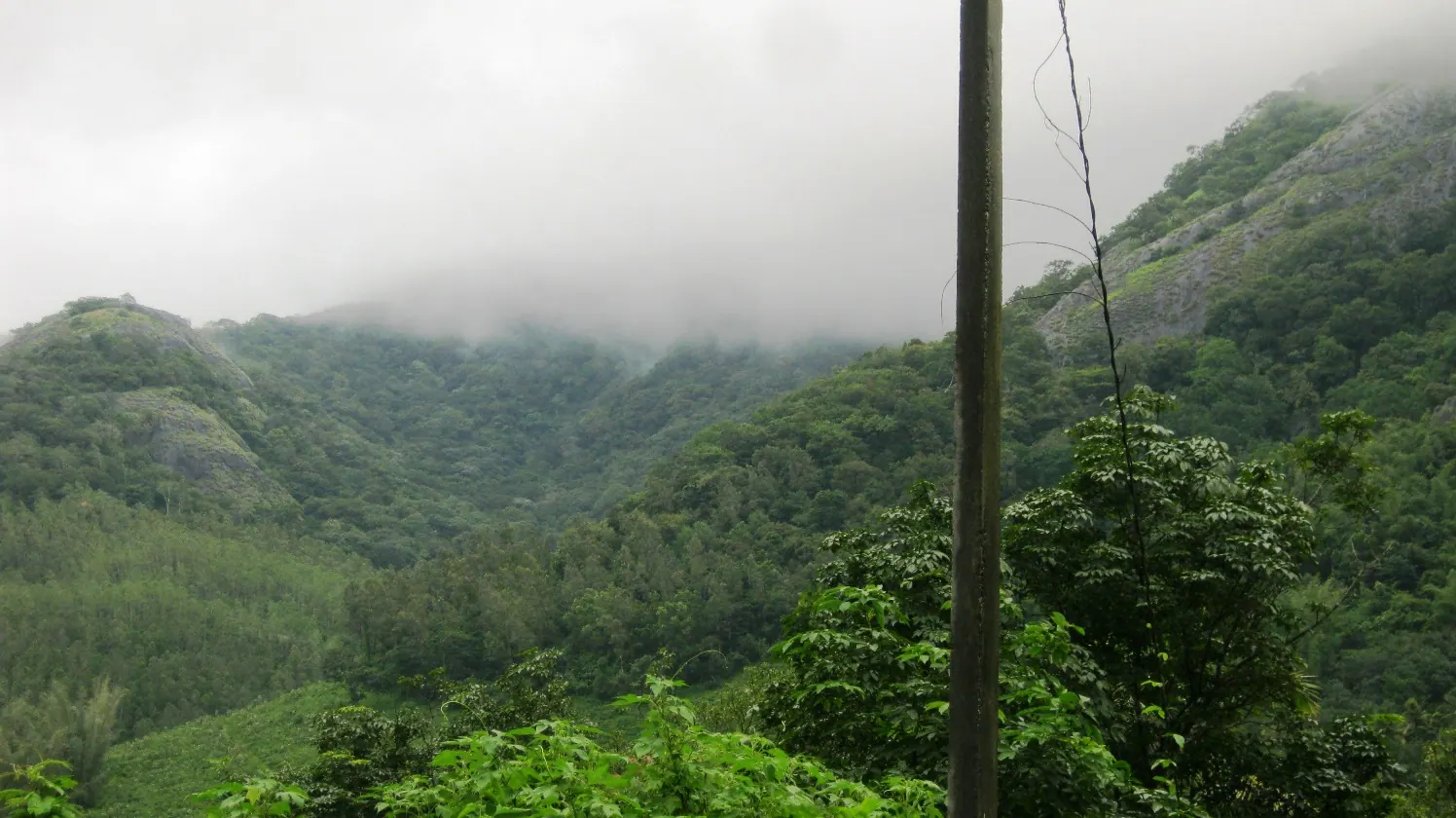
The backwaters are usually described as a network of canals, which makes them sound like roads. Ashtamudi is better understood as a lake with a tide: salt water pushes in from the sea at Kollam, fresh water comes down from the hills, and the mixture moves twice a day. The arms reach inland between ridges, and each arm has its own villages, jetties and fishing grounds.
That geography decides everything else. A village on an arm is closer to the market by boat than by road, the water level sets the planting season, and the same channel that carries a canoe at dawn can be a rough, brown flood in July.
Destination in this story
BackwatersAshtamudi LakeKollamCoir and fish
Coir is the old industry here: coconut husk retted in water, beaten, spun and woven into rope, matting and yarn. The retting pits are part of the smell of the place — sour, unmistakable, and a sign that a household is working rather than posing. The trade has shrunk against synthetic rope and mechanised yarn, but it has not gone, and the coir cooperatives still buy from small producers.
Fishing is the other constant. Small boats set nets in the lake for prawns, mullet and pearl spot, and the catch goes to the local market, the drying yards or the ice plant. Neither industry is photogenic in the way a houseboat is, and both are the reason the villages exist.
Getting about on water
Country boats, canoes and small ferries still do the work that roads do elsewhere. Children cross to school, women take produce to market, and a boatman with an outboard will take a passenger for a fare that is negotiated rather than posted. The bigger jetties connect to the town; the smaller ones are simply a step down to the water.
This is the honest alternative to a packaged cruise: a local boat, a short crossing, and a village on the other side. It requires asking, waiting and accepting that the timetable is whoever is going that way. In return you see the lake at the speed it is actually used.
What a visitor should understand
People live here. A canal bank is a front yard, a bathing place and a workplace, and a camera pointed at it is pointed at somebody's morning. Ask before photographing, do not walk into compounds to see a loom or a net, and do not hand out sweets or money to children — it changes the place for the next visitor and teaches the wrong lesson.
Buy what the village sells: coir products, fish, toddy from a licensed shop, bananas. Eat in the small hotels rather than carrying food in. And take your plastic back with you, because the lake does not.
When the water changes
The southwest monsoon turns the lake turbid and the sea rough, and the boats that carry visitors stop for weeks. The 2018 floods pushed water and sediment through these villages in a way that older residents still describe as unmatched, and the recovery reshaped banks and jetties.
The dry months from December to March are the easy season: calm water, good light, and a working day that starts before sunrise and ends before the heat. If you come in the rain, come for the green and the quiet, and accept that the water will decide the itinerary.
Getting there
The nearest airport and railhead: Trivandrum International Airport (TRV), ~70 km · Kollam Junction (QLN), ~2 km.
- By air: Trivandrum International Airport is about 70 km away; Kochi airport is around 140 km.
- By rail: Kollam Junction is about 2 km from the main boat jetty.
- By road: Kollam is well connected by bus from Thiruvananthapuram and Kochi; the jetty is a short auto ride from town.
Once there, Autos and local buses around town; boats and kayaks for the lake. Houseboat transfers are usually arranged by the operator.
When to go
September to March. The monsoon is green and dramatic but can disrupt boat schedules.
Tropical, 24–32°C. The southwest monsoon brings heavy rain and choppy water; the northeast monsoon can bring short storms in October and November.
Most visitors give it 1–2 nights. That is the record's own recommendation, not a rule.
What to do while you are there
- Take a day cruise or overnight houseboat through the lake's channels
- Kayak to Munroe Island and walk through canal-side villages
- Visit the Kollam cashew and coir workshops
- Eat karimeen and toddy-shop food with a local guide
- Continue to Thenmala or the Jatayu Earth's Center
Eating
Karimeen pollichathu, prawns, tapioca and fish curry. Houseboat menus are often generous; ask about dietary needs in advance.
Local customs and manners
Kollam's cashew workers and coir makers have shaped the town for generations. Ask before photographing workers and buy directly where possible.
Access, safety and health
Limited. Most boats and jetties are not designed for wheelchairs. Discuss specific needs with operators before booking. Wear life jackets, especially on small boats and kayaks. Check that the houseboat has working lights, fire extinguishers and a licensed crew. Avoid swimming in the lake.
Fees, hours and permits on record
No entry fee for the lake; houseboats, kayaks and guided tours are paid.
Boats typically operate in daylight; overnight houseboats board in the afternoon.
Nearby, less obviously
- Munroe Island
- Thangassery lighthouse and Portuguese ruins
Practical notes
- Hire a local boat rather than only a packaged cruise; agree the fare and the route before boarding.
- Go early — the lake is calmest and the villages are awake before the heat.
- Ask before photographing people, homes or work; a canal bank is somebody's front yard.
- Do not give money or sweets to children; buy from shops and producers instead.
- Carry your rubbish out; plastic in the lake ends up in the fish and the clams.
Common questions
- Can you stay in a backwater village near Kollam? Yes, there are homestays on the lake edges, mostly small and family-run. Book direct and ask about the approach by road and by boat.
- Are the villages reachable without a boat? Most have road access, but the shortest route between them is often the water. Local ferries and country boats fill the gaps.
- When is the water calmest? December to March. The monsoon months bring rough water, turbid channels and suspended boat trips.
- Should I choose Alappuzha or Ashtamudi for a houseboat? Alappuzha has more boats and a bigger choice; Ashtamudi is quieter and feels less commercial. Both offer overnight cruises with meals.
- Can I do the backwaters without a houseboat? Yes. Day cruises, kayaks and local ferries are cheaper and often more interesting for a short visit.
Plan this trip
Planning a trip to Ashtamudi Lake, Kollam?
Nearby places around Ashtamudi Lake with real road distances, listed stays, and a route you build yourself.
PLAN TRIP HERE CONTACT US TO ARRANGE THIS TRIPA trip-arrangement request, not a booking. Nothing is confirmed or charged here.
The full place guideAshtamudi LakeKollam · how to get there, when to go, what it costsSources & notes
- Kerala Tourism — official state tourism portal · checked 2026-10-22
- Wikipedia — place and history reference · checked 2026-10-22
- Kerala Tourism — Kollam district · checked 2026-10-22
Last updated 2 November 2026. Prices, opening hours and transport should be confirmed with official sources before travel.
Hello Kerala Publisher
Hello Kerala's editorial desk.
Found an error or an outdated detail?
Tell us