Waterfalls
Soochipara: the waterfall at the end of a tea road
A three-tiered fall near Meppadi, reached by a steep walk through tea and forest. It is beautiful, popular and more dangerous than it looks when the water is high.
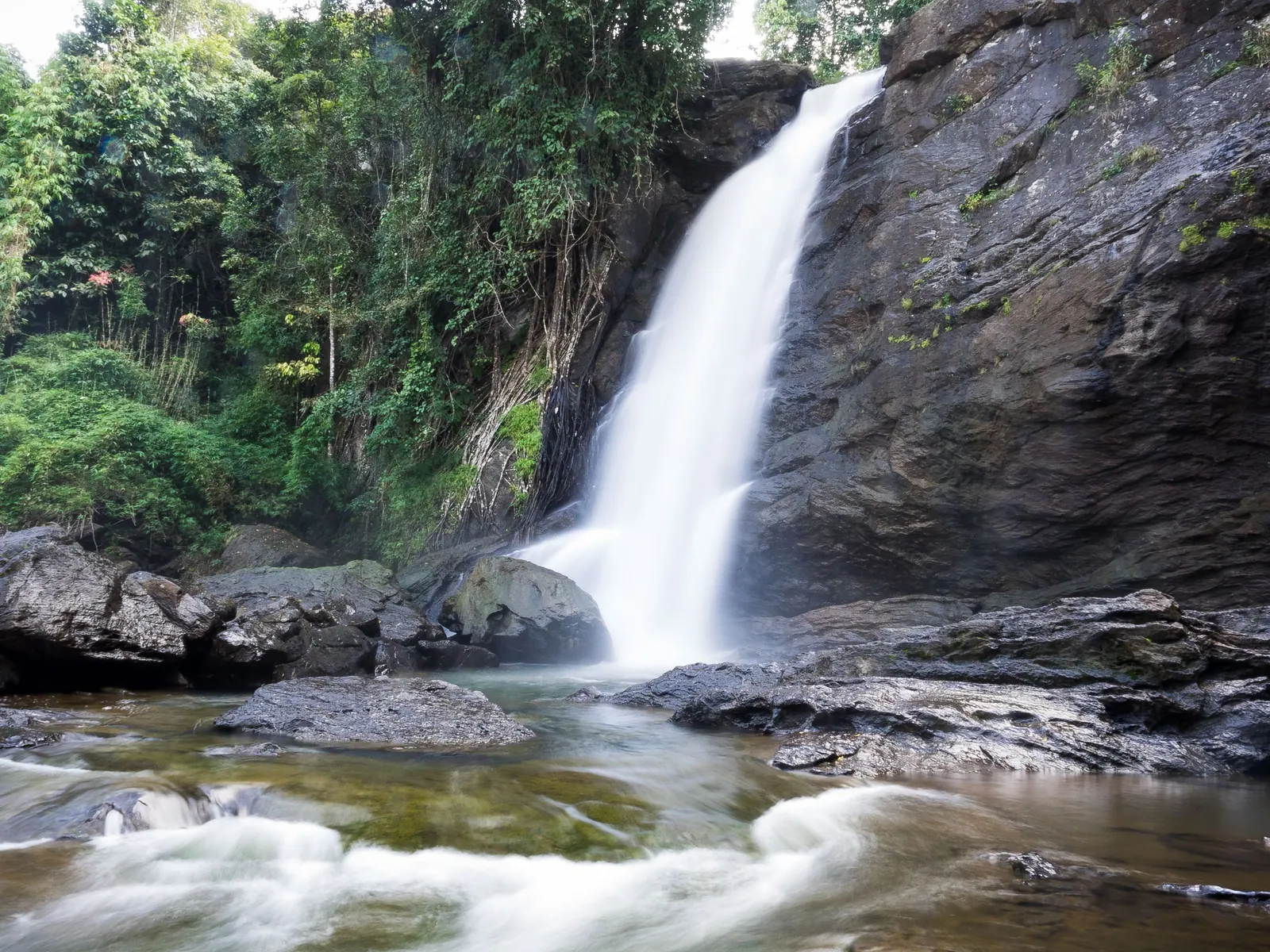
Soochipara is the waterfall everyone in Wayanad seems to recommend, and for good reason. The water drops in tiers over dark rock into a pool surrounded by forest, and the setting — tea estates, a narrow road, a steep path down — is exactly what people imagine when they picture the Western Ghats. It is also a busy, managed attraction with a car park and a gate, not a secret. Knowing that in advance makes the visit better.
The fall is also called Sentinel Rock Falls, after the rock formation above it. The name Soochipara refers to the needle-like shape of the rock or the falling water, depending on who you ask. It sits near Meppadi, in the southern part of Wayanad, and is usually combined with Chembra or the tea estates around it.
The fall
The water arrives from a forest catchment above and drops in stages, with the main fall visible from the path and a lower pool at the bottom. In the dry months the flow is gentler and the pool is clearer; after heavy rain it is powerful, brown and loud. The character of the place changes completely with the season. A photograph from January is not a reliable guide to what you will find in July.
The surrounding vegetation is thick and wet, with the moss and ferns that come with constant spray. The rock is dark and slick. That combination is beautiful and hazardous in equal measure. The path and the viewing areas are managed, but the natural surfaces are not a staircase.
The walk down
From the entrance, a path descends through tea and forest to the fall. It is not long, but it is steep in places, with steps, roots and loose gravel. Coming back up is the harder direction, especially in the afternoon heat. Wear shoes with grip, carry water and allow more time than the distance suggests. Sandals without a heel strap are a poor choice on wet stone.
The walk is part of the experience. The tea bushes give way to taller forest, the air cools, and the sound of the fall arrives before the view. Take it slowly and watch your footing rather than your phone. If it has rained recently, expect mud and leeches in the vegetated sections.
- Wear proper shoes with tread; the path and rocks are slippery.
- Carry water and a light rain layer.
- Do not cross barriers or climb onto wet rock for a photograph.
- Supervise children closely, especially near the pool.
- Take your litter back up with you; the bins at the gate are the last ones.
Swimming and safety
Swimming is the part of a waterfall visit most likely to go wrong. The pool can look calm while the current below the surface is strong, and the rock shelves drop away unexpectedly. Rules on entering the water vary and are often tightened after accidents or heavy rain. Follow the staff on the day, and do not treat a local swimmer's confidence as proof that it is safe for you.
The biggest risk is not the water itself but the combination of wet rock, crowds and a phone in one hand. People slip at the edges, not in the middle of the pool. Keep back from the lip of the fall, do not stand under the main flow, and never dive into water you cannot see the bottom of. If a guide or guard says no, accept it.
The tea road
The drive to Soochipara is part of the appeal: narrow estate roads, tea on both sides, occasional workers and small shops. It is not a highway, and the last stretch can be slow when cars park badly. Go early to avoid the worst of the traffic and to see the fall in softer light. The road continues into the Meppadi countryside, which is worth an hour of wandering if you have the time.
Soochipara is a good example of a place that rewards a little restraint. See it, walk it, sit with it, and leave before the crowd and the heat build. The fall will still be there tomorrow; the pool will be cleaner if everyone treats it that way.
Sources & notes
- Kerala Tourism — official state tourism portal · checked 2026-10-22
- Wikipedia — place and history reference · checked 2026-10-22
- Kerala Forest Department — protected areas, permits and ecotourism · checked 2026-10-22
Last updated 24 October 2026. Prices, opening hours and transport should be confirmed with official sources before travel.
Hello Kerala Publisher
Hello Kerala's editorial desk.
Found an error or an outdated detail?
Tell us