Heritage
Edakkal Caves: reading 6,000 years of marks on a rock wall
Two natural rock shelters above Ambukuthi hold some of Kerala's oldest known carvings. The climb is short, the marks are subtle, and the story is more interesting than the souvenir stalls suggest.
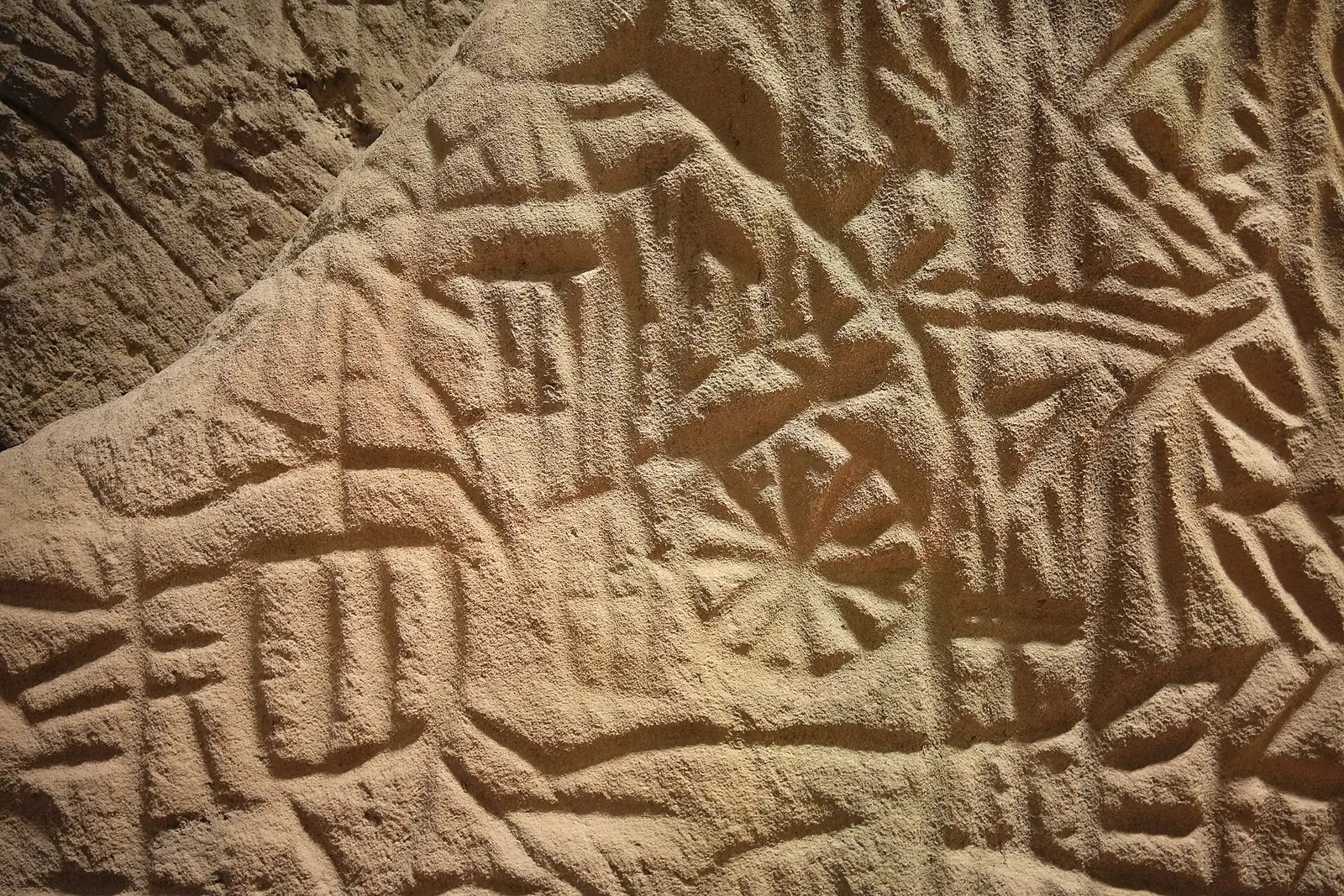
Edakkal is not a cave in the sense of a deep chamber with stalactites. It is a pair of natural rock shelters formed when a huge boulder slipped and came to rest across a gap in the hillside. The name means something like the stone in between. What makes the place extraordinary is not the space itself but the walls: covered in engravings made over a very long period, from Neolithic and Bronze Age marks to later symbols and script.
The shelters sit on Ambukuthi hill, above the road between Sultan Bathery and Ambalavayal. You climb, you enter a cool cleft of rock, and you look at lines that someone cut thousands of years ago. It is a quiet experience if you let it be one. It is also a popular stop, with the usual car park, stalls and crowd, so the quiet takes some arranging.
The shelter and the marks
The lower shelter is the larger of the two and the one most visitors see. Its walls carry human and animal figures, geometric patterns, wheels, bows and what look like ritual scenes. Some marks are clearly figurative; others are abstract and have been argued over for more than a century. The upper shelter is smaller and reached through a narrow gap, with further carvings and later inscriptions.
The carvings were brought to wider attention in the late nineteenth century by Fred Fawcett, a British police officer and anthropologist working in the region. Since then, scholars have disagreed about dates, sequences and influences. That disagreement is not a failure of the site; it is the honest state of the evidence. Anyone who tells you the whole wall has been decoded is selling certainty that archaeology does not have.
What the carvings are, and are not
The figures are usually described as prehistoric rock art, with later additions. They are not a written history, a map or a religious text in any straightforward sense. They may mark territory, ritual, animals, people or something we no longer have the context to read. The value is in the act of marking: people stood in this shelter and cut these lines with stone tools, long before the temples and mosques and colonial forts that make up most of Kerala's heritage trail.
Because the site is protected, there are limits on what visitors can do. Photography rules have varied over the years, and flash, tripods and touching are generally not welcome. Check at the entrance and follow the instructions of the staff rather than the advice of a guide who promises a better angle. A photograph is not worth damaging a 6,000-year-old surface.
- Wear shoes with grip; the rock path is uneven and can be wet.
- Carry water, but take the bottle back down with you.
- Do not touch, trace or rub the carvings.
- Keep your voice low inside the shelters; sound carries and the space is small.
- Allow time for the climb and the queue, especially on weekends and holidays.
The climb and the visit
The walk from the road to the shelters is short but uphill, with steps cut into the rock in places. It is manageable for most people who can climb a few flights of stairs, though the heat makes it feel longer than it looks. There is a small entrance area and a narrow section near the top; large bags and umbrellas become a nuisance. Leave what you do not need in the vehicle.
The site is usually visited as a half-day from Sultan Bathery or Kalpetta, combined with the Wayanad Heritage Museum at Ambalavayal or the Edakkal viewpoint. The museum is a useful companion: it holds local finds and explains the region's history, so the carvings have some context beyond the labels at the gate.
Ambukuthi and the surrounds
The hill itself is part of the experience. The view from the path opens over paddy and coconut, and the rock faces and vegetation are typical of the Wayanad plateau. Nearby, the road continues towards Ambalavayal and its museum, and further on to the caves and estates around Sulthan Bathery. It is easy to string these into a day without rushing.
Come early if you want the shelter without a crowd. The rock stays cool, but the path and the car park do not. A weekday morning in the cooler months is the most comfortable combination, and it leaves the afternoon free for the museum or a drive through the countryside.
Sources & notes
- Kerala Tourism — official state tourism portal · checked 2026-10-22
- Wikipedia — place and history reference · checked 2026-10-22
Last updated 24 October 2026. Prices, opening hours and transport should be confirmed with official sources before travel.
Hello Kerala Publisher
Hello Kerala's editorial desk.
Found an error or an outdated detail?
Tell us