Hill country
Ranipuram: a short trek on Kerala's northern edge
Grassland, shola forest and a ridge that looks towards the coast: Ranipuram is one of Kerala's least developed hill areas, and the walk is better for it.
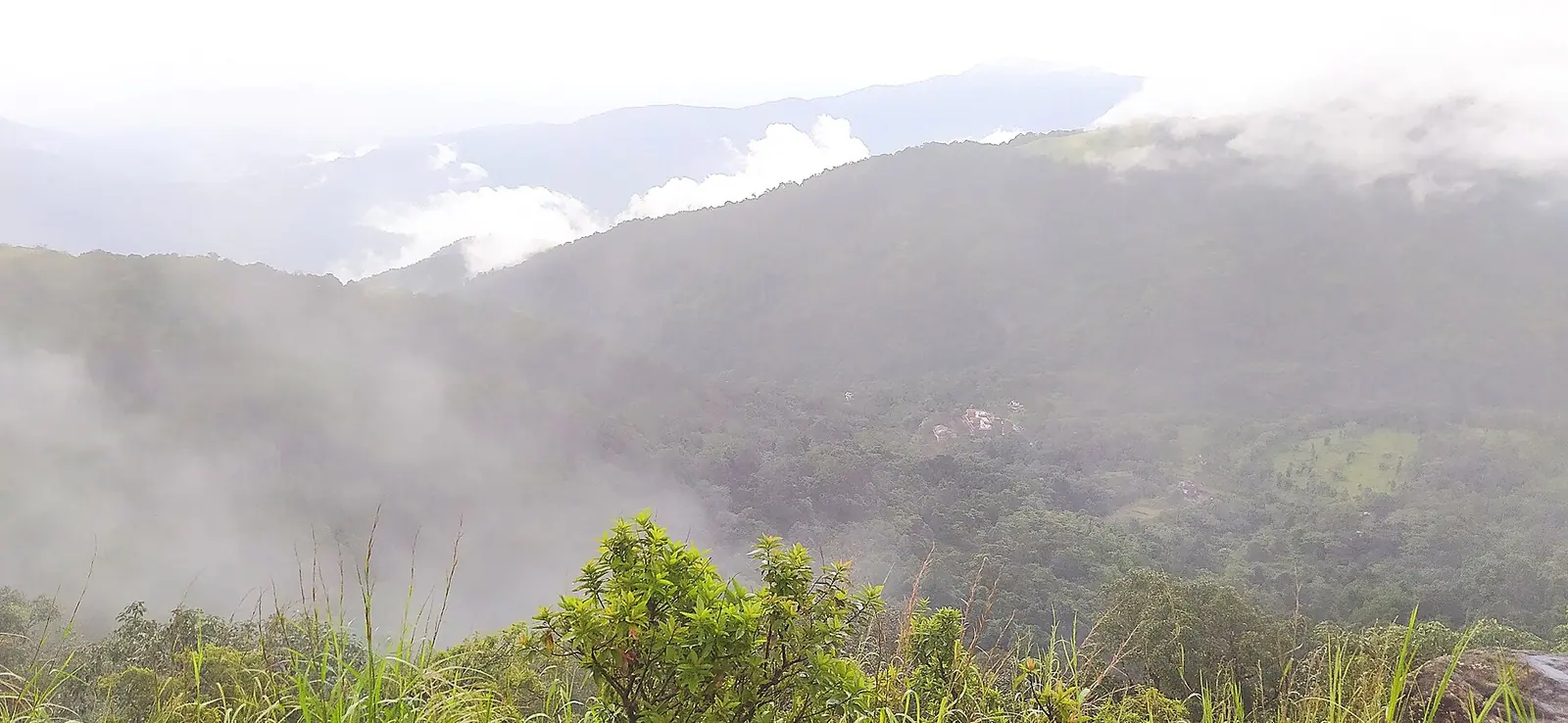
Ranipuram does not behave like a hill station. There is no promenade, no strip of tea shops and no queue for a viewpoint. It is a high, open area of grassland and shola forest in the north of Kasaragod district, close to the Karnataka border, and the main thing to do is walk. That simplicity is the point. It is also why the place rewards a little preparation more than most short treks in Kerala.
The approach
The usual base is Kanhangad or Kasaragod, from where the road climbs through Panathady and towards the hills. The drive itself is part of the visit: rubber and arecanut give way to open slopes, and the air cools noticeably as you gain height. The final stretch is narrow and slow, with the kind of bends that make a local driver worthwhile. Cars can usually get to a point below the main trail; from there the walking begins.
The trail is not long in distance — a few kilometres, depending on where you start — but it is steep in places and fully exposed for much of the way. There is little shade once you leave the shola patches. In the heat, that matters more than the gradient. Start early, carry more water than you think you need and turn around if the weather closes in. Mist can arrive quickly and erase the path ahead.
Grassland, shola and what lives there
The landscape is a mosaic of grassland and stunted evergreen forest, the kind of high-altitude habitat that survives where the soil is thin and the wind is strong. It looks open and harmless; it is not empty. Elephants move through these hills, and gaur are present in the wider landscape. This is a corridor as much as a viewpoint. Keep your distance, make noise on blind bends, do not walk at dusk and follow any instruction from forest staff.
Birdlife is modest but rewarding for anyone patient enough to sit still: warblers, bulbuls, raptors riding the updraughts. The shola patches hold moisture and a different set of species from the open grass. Leeches are active in the wet months, so long trousers and a tucked-in shirt are sensible even when the ground looks dry.
- Wear shoes with grip; the grass hides loose stones and the path is eroded in places.
- Carry a rain shell and a warm layer even on a clear morning; the ridge is exposed.
- Take cash for small local charges, and do not rely on card machines or reliable signal.
- Do not light fires or leave food; this is a wildlife corridor, not a picnic site.
- If a guide is required on the day, use an official one rather than an unsolicited offer.
When to go, and how long to stay
The months after the southwest monsoon, when the grass is green but the trails have had time to dry, are generally the most comfortable. The middle of the dry season is hotter and hazier but still workable if you start at dawn. Heavy monsoon rain makes the track slippery and the views pointless, and access can be restricted. Winter mornings can be genuinely cool, which is a pleasure in a district that is otherwise humid for most of the year.
There is very little accommodation at the top, and what exists is basic. Most visitors treat Ranipuram as a half-day from Kanhangad or a stop between Kasaragod and the Karnataka border. That is enough for the walk, but not for the place. If you can stay nearby and walk twice — once in the evening light and once at dawn — you will see a different mountain each time. Just do not expect the infrastructure of Munnar, and do not treat the absence of it as an inconvenience to be solved.
Sources & notes
- Kerala Tourism — official state tourism portal · checked 2026-10-22
- Wikipedia — place and history reference · checked 2026-10-22
- Kerala Forest Department — protected areas, permits and ecotourism · checked 2026-10-22
Last updated 24 October 2026. Prices, opening hours and transport should be confirmed with official sources before travel.
Hello Kerala Publisher
Hello Kerala's editorial desk.
Found an error or an outdated detail?
Tell us