Heritage
Ananthapura Lake Temple: the temple in the pond
A small temple stands on an island in a laterite-edged lake near Kumbla. Its setting is beautiful, its history is contested, and its crocodile is not an attraction.
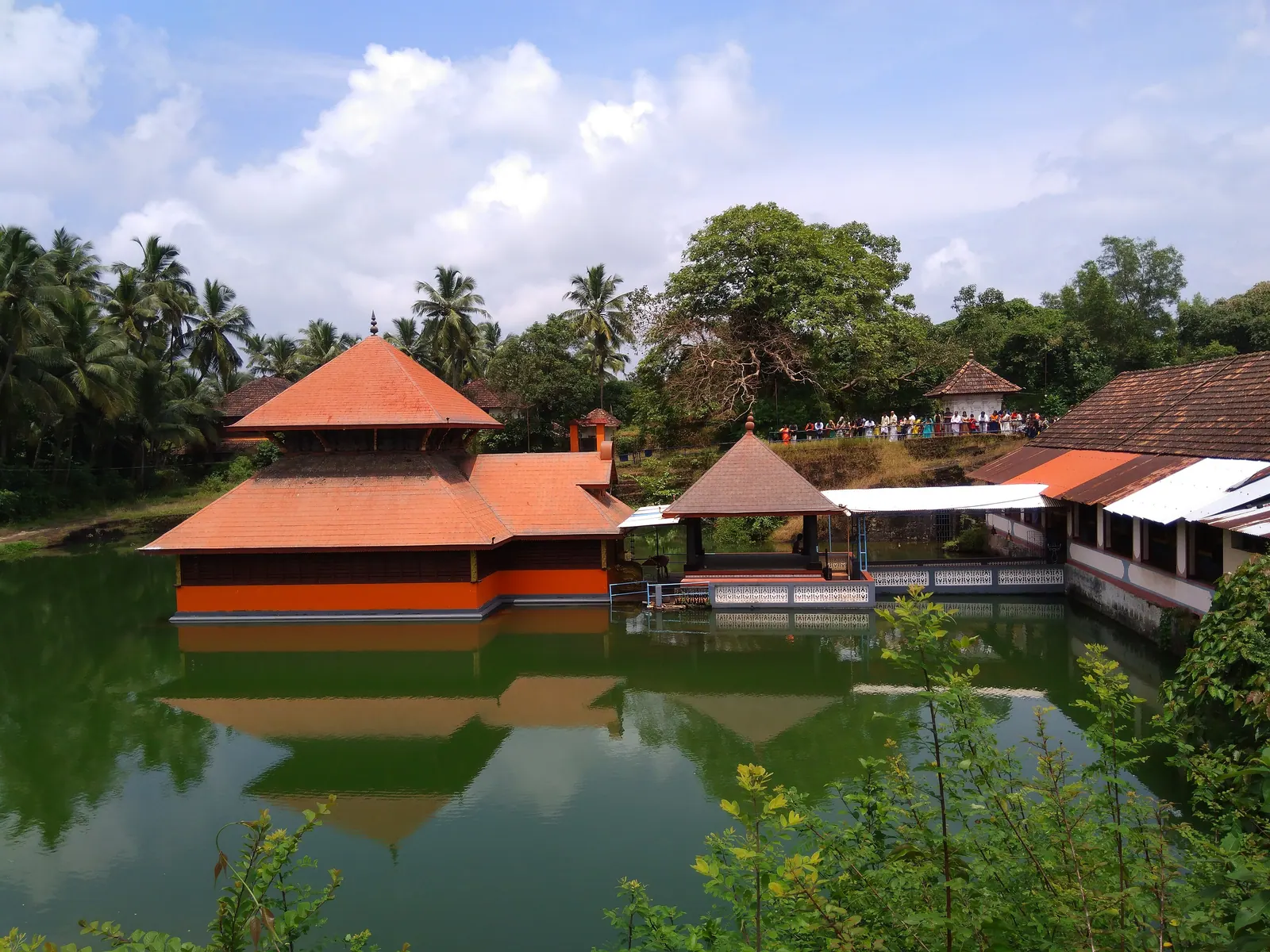
Ananthapura Lake Temple sits on a small island in a temple tank, reached by a short bridge, surrounded by laterite and palms. It is a quietly beautiful place, and one of the few temples in Kerala where the water is not an accessory to the architecture but the reason for it. The shrine is dedicated to Ananthapadmanabha, the reclining Vishnu, and is closely associated with the Padmanabhaswamy temple in Thiruvananthapuram.
The lake and the shrine
The temple is built in the Kerala style, with a low tiled roof, wooden details and a small enclosing structure on the island. The lake is fed by a spring, and the water is clear enough to reflect the building on a still morning. The setting is the attraction: the bridge, the narrow causeway, the birds and the sense of a place that has been kept small on purpose. It is not a large complex, and an hour is enough unless you are there for worship.
The temple's history is traditionally linked to the Padmanabhaswamy temple, with the claim that the deity was originally installed here before being moved south. The claim is part of the temple's identity and is repeated in local accounts; the precise history is difficult to verify. Treat it as tradition rather than settled fact, and you will avoid the kind of confident statement that a resident would immediately correct.
The crocodile, told carefully
The temple is known for a crocodile said to live in the lake — a tradition that has been reported for generations and that has become one of the most repeated stories about the place. The animal is not a pet and not a guaranteed sighting. Do not visit expecting to see it, do not throw food into the water, and do not treat the lake as a zoo enclosure. If a crocodile is present, watch from where you are told to stand and keep children close.
The story also carries a lesson about how temple traditions are reported. A single animal, a name and a long chain of retellings can turn into a certainty that no one can verify. The responsible thing is to describe the tradition as a tradition, enjoy the lake for what it is, and leave the claims to the temple authorities.
Visiting respectfully
- Dress modestly; men may be asked to remove their shirt inside the shrine, and women should cover shoulders and knees.
- Non-Hindu access to the inner shrine may be restricted. Ask at the entrance rather than assuming.
- Do not photograph worshippers without permission, and observe any photography restrictions.
- Remove shoes where indicated and do not step into the lake or onto the flower beds.
- Keep voices low; this is an active place of worship, not a heritage park.
The temple is near Kumbla, a short drive from Kasaragod town and within easy reach of Bekal and Chandragiri. The surrounding area is part of the district's distinctive linguistic landscape, where Malayalam, Tulu, Kannada and Konkani are all spoken. A visit here is a good excuse to slow down, eat a local lunch and stop treating Kasaragod as a transit corridor between Kannur and Mangalore.
Come early in the morning if you can. The light is soft, the lake is still and the bridge is quiet. By midday the stone is hot and the reflections are gone. The temple is small enough that a rushed visit leaves almost no impression; give it the time it asks for and it will be one of the more memorable half-hours of a northern Kerala trip.
Sources & notes
- Kerala Tourism — official state tourism portal · checked 2026-10-22
- Wikipedia — place and history reference · checked 2026-10-22
Last updated 24 October 2026. Prices, opening hours and transport should be confirmed with official sources before travel.
Hello Kerala Publisher
Hello Kerala's editorial desk.
Found an error or an outdated detail?
Tell us