Heritage
Fort Kochi on foot: a half-day heritage walk
Portuguese churches, Dutch warehouses, British offices and a working fishing waterfront, all inside a peninsula you can cross in twenty minutes. The trick is to walk it in the right order.
Fort Kochi is small. The peninsula between the backwaters and the Arabian Sea is only a few kilometres across, and the historic core can be walked end to end in under half an hour. That compactness is what makes it such a good place to slow down: you are not collecting sights, you are moving through layers of a port town that has been continuously inhabited and repeatedly remade.
The Portuguese arrived in 1503 and built a fort; the Dutch took it in 1663 and rebuilt much of the town; the British took it from the Dutch in 1795 and folded it into the Madras Presidency. Each layer left streets, churches, warehouses and names. The best way to see them is on foot, starting early, before the heat and the tour groups arrive.
Start at Vasco da Gama Square
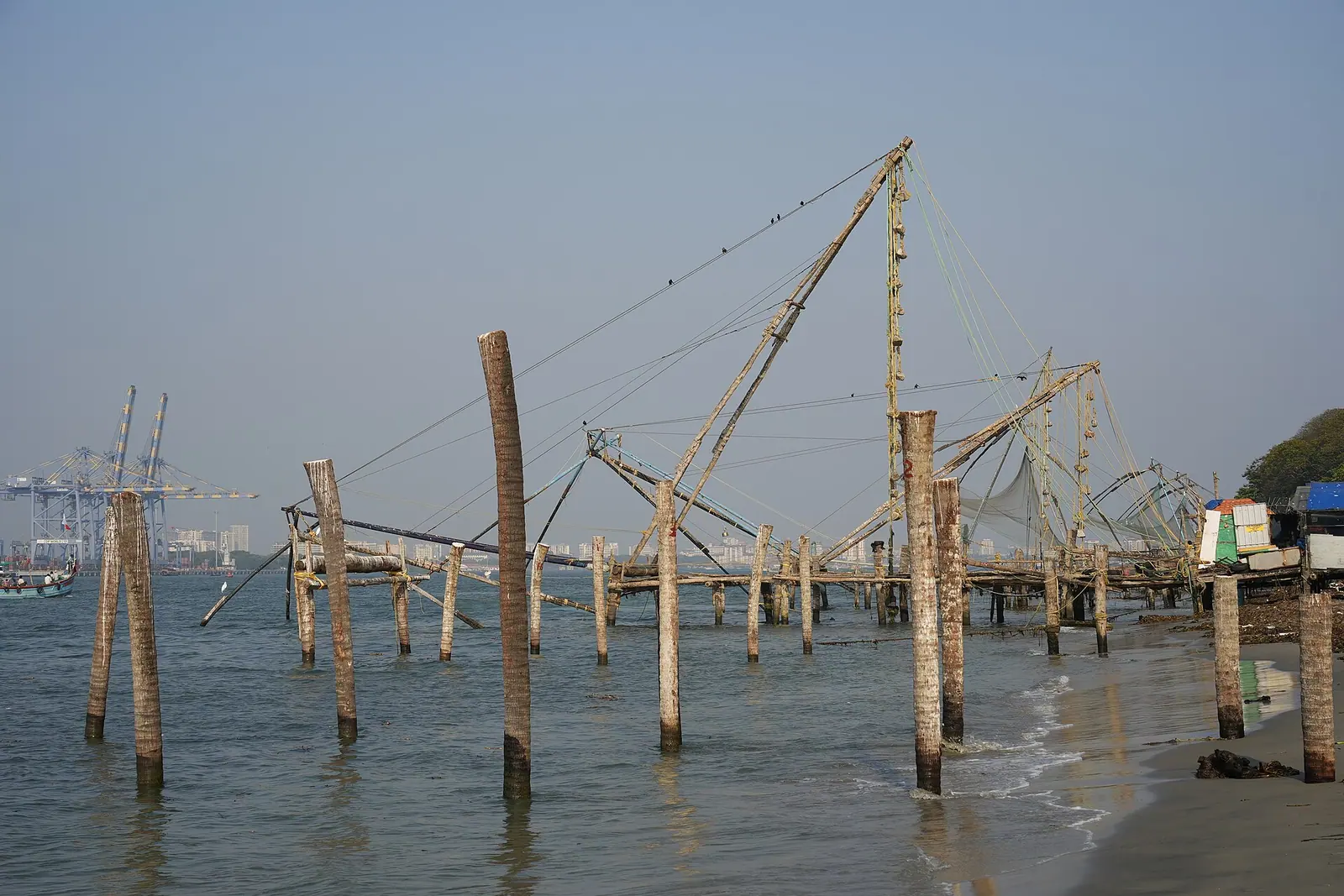
The square facing the harbour is the natural beginning. The cantilevered Chinese fishing nets — cheena vala — line the waterfront here, worked by counterweights and a small crew. Their origin is debated; the technology is often attributed to Portuguese traders arriving from Macau, while local tradition gives it a Chinese ancestry. What is not in doubt is that they are still used, not preserved as a display. Stand clear of the ropes and ask before climbing onto the platform.
Walk east along the waterfront towards the old fort area. The path passes the harbour office and the customs buildings, with the backwater traffic on one side and the town on the other. This is a working port edge rather than a promenade, so expect lorries, fishing boats and uneven paving.
The churches and the cemetery
St Francis Church is the oldest European church in India, built by the Portuguese in the early sixteenth century and later used by the Dutch and the British. Vasco da Gama was buried here in 1524; his remains were eventually taken to Lisbon, and the tombstone remains. The church is a plain, whitewashed building with a pitched timber roof, and its simplicity is part of the appeal after the ornament of the city's later churches.
A few minutes away, Santa Cruz Basilica is the opposite experience: a tall, painted interior with a Gothic Revival facade, rebuilt in the late nineteenth century after the original Portuguese church was demolished. Both are active parishes, so check service times before walking in with a camera.
Continue north to the Dutch Cemetery, the oldest European cemetery in India, where merchant families and colonial officials were buried from the seventeenth century onwards. The tombs are weathered and many inscriptions are illegible, which is precisely why the place is worth a quiet ten minutes. It is a cemetery, not a park; keep voices low and gates closed.
Bazaar Road and the spice warehouses
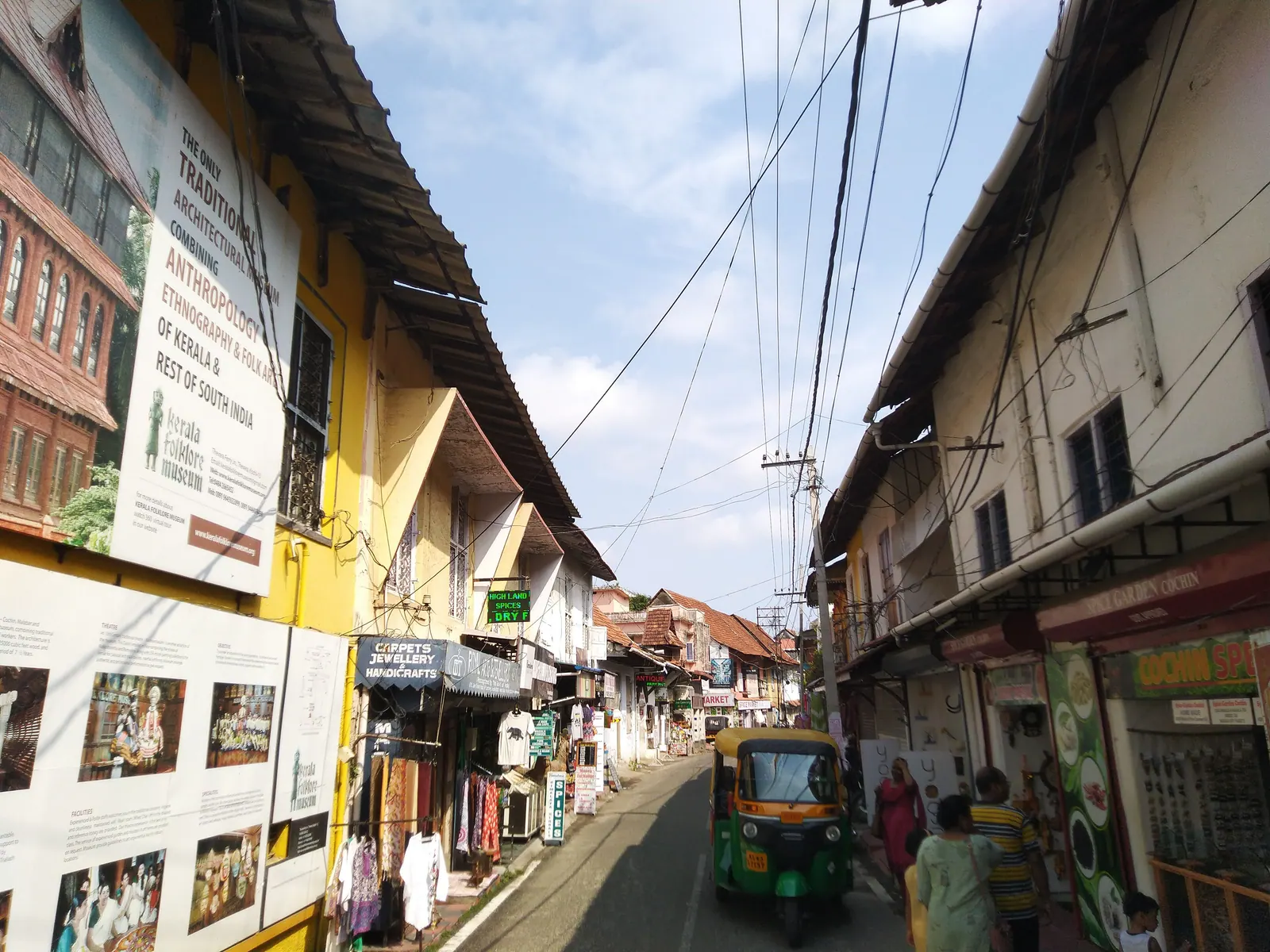
Turn inland along Bazaar Road, which runs towards Mattancherry. This is the commercial spine of the old town: spice warehouses, wholesale shops, tea traders and loading bays, much of it still working. The smell of pepper and ginger is strongest in the mornings, when sacks are being moved. It is not a shopping street in the tourist sense, though some warehouses have opened retail rooms upstairs.
- Vasco da Gama Square and the fishing nets: 30–45 minutes, more if you stop for tea.
- St Francis Church and Santa Cruz Basilica: 30 minutes, longer if a service is on.
- Dutch Cemetery: 10 minutes.
- Bazaar Road to Mattancherry: 30–40 minutes on foot, with detours.
- Reserve the afternoon for the Mattancherry Palace and Jew Town, or come back the next day.
Practical shape of the half day
Allow three to four hours including a breakfast stop. Fort Kochi has plenty of places to eat, from small tea shops to restaurants aimed at visitors; the further you move from the waterfront, the more ordinary and cheaper the food becomes. The old town is flat, but the pavements are inconsistent and some lanes flood in the monsoon.
Fort Kochi is reached from Ernakulam by bus, taxi, auto or ferry. The ferry is the most pleasant approach and lands you close to the waterfront, though services are less frequent in the evening. If you are staying in the old town, everything above is walkable; there is no need to hire a vehicle for the day.
Sources & notes
- Kerala Tourism — official state tourism portal · checked 2026-10-22
- Wikipedia — place and history reference · checked 2026-10-22
Last updated 24 October 2026. Prices, opening hours and transport should be confirmed with official sources before travel.
Hello Kerala Publisher
Hello Kerala's editorial desk.
Found an error or an outdated detail?
Tell us