First-timers
Kerala for the first time: what nobody tells you
The practical things that make the difference between a rushed week and a good one — transport, distances, dress, food and the monsoon.
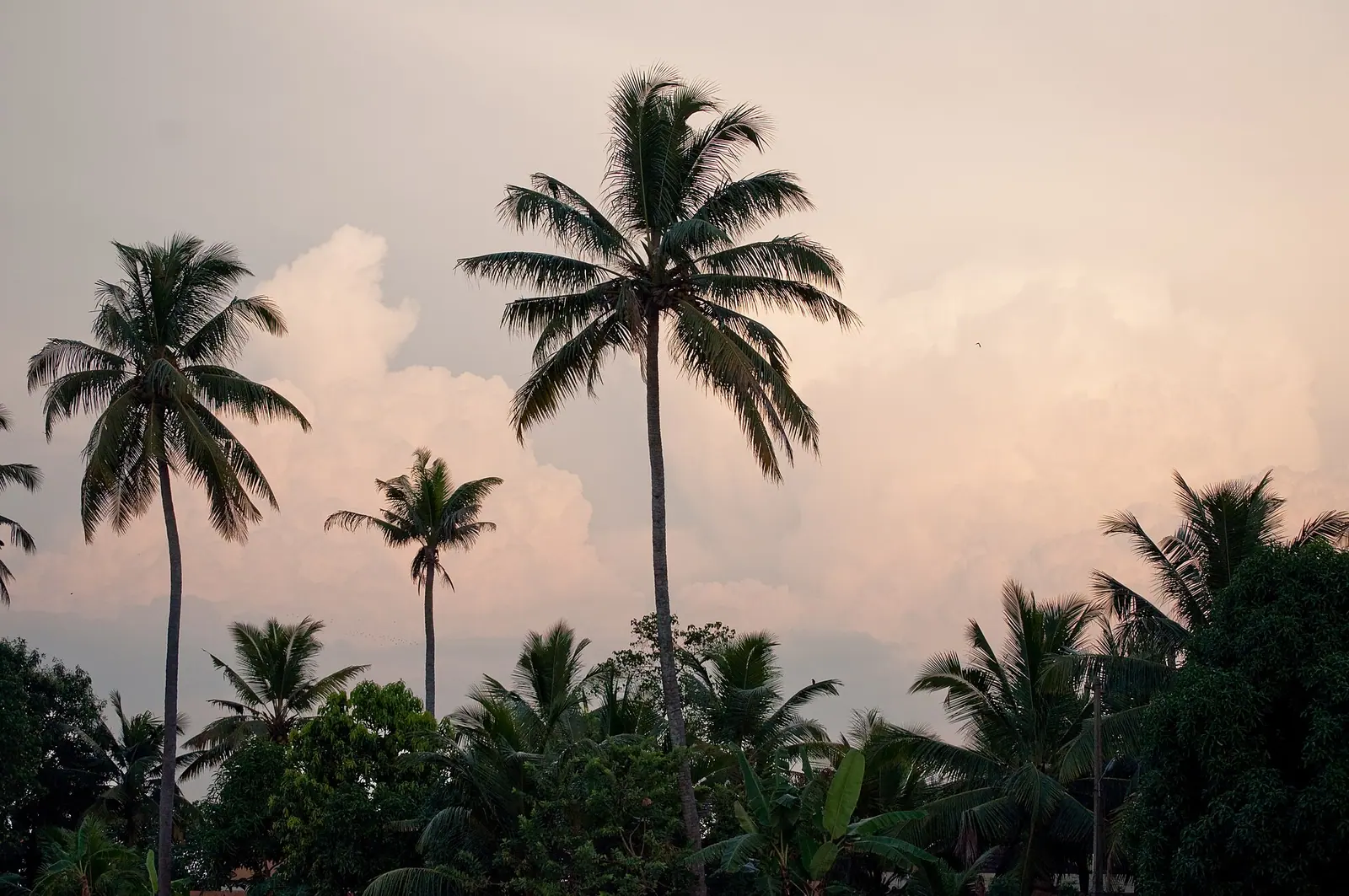
Kerala looks small on a map of India. It is not small to travel through. The state runs about 580 km from the northern border at Manjeshwar to the southern tip at Kaliyakkavilai, and the road between them is slow: two-lane highways, temple towns, school buses, and a Western Ghats ridge that forces every east–west journey into a series of hairpins. A first-time visitor who plans Kochi, Munnar, Alleppey and Varkala in five days will spend much of it in a car.
The better approach is to choose one line and go deep. For a week, pick either the southern coast (Thiruvananthapuram–Varkala–Kollam–Alleppey) or the central hills and backwaters (Kochi–Munnar–Thekkady–Kumarakom). Both are coherent. Trying to add Wayanad or Kannur to a one-week trip is where itineraries break.
Distances are not what they look like
Kochi to Munnar is roughly 110 km. It takes three to four hours. Munnar to Thekkady is about 90 km and can take three hours in the mist. Alleppey to Varkala is 130 km and takes three and a half. Plan on 40–50 km/h on hill roads and 50–60 km/h on the coastal highway, then add stops. Google Maps is usually optimistic about the ghats.
Trains, buses and the last mile
The Indian Railways network along the coast is excellent value and often faster than road. Kochi, Alappuzha, Kollam and Thiruvananthapuram are well connected. Book sleeper or chair-car tickets in advance on IRCTC; unreserved compartments are not a good introduction. State-run KSRTC buses are frequent and cheap, but slow. For hill areas, a hired car with a driver is the practical choice, usually ₹3,000–₹4,500 per day depending on the vehicle and distance.
Autos are the last-mile tool. Agree the fare first or insist on the meter; apps are unreliable outside Kochi and Thiruvananthapuram. At railway stations, use the pre-paid auto counter where one exists.
What to wear, and where
Kerala is humid. Loose cotton is the answer. For temples, the rules are stricter than many visitors expect: men are often asked to remove their shirt and wear a dhoti, women to wear a saree or salwar kameez. Carry a light scarf and a long skirt or trousers. For churches and mosques, cover shoulders and knees. Beachwear belongs on the beach, not in town.
Food is the point
A Kerala breakfast is one of the great meals of India: appam and stew, puttu and kadala, idli and sambar, or a dosa from a roadside that has been doing one thing well for thirty years. Lunch is often a sadya — rice with a dozen vegetable dishes, pickle, papad and payasam — served on a banana leaf. Fish is excellent on the coast. Beef is widely eaten and politically sensitive; pork less so.
Vegetarians are well served, but ask whether the dal or curry contains coconut oil and curry leaves, because it almost certainly does. If you have a nut allergy, be specific: coconut is everywhere, and cashew is common in sweets and curries.
- Drink bottled or filtered water; avoid ice from street stalls unless the stall is busy and clean.
- Toddy shops serve some of the best fish curry in the state, but go with a local and expect a basic setting.
- A banana-leaf sadya is eaten with the right hand; use only the fingertips.
- Coffee is usually instant. Tea is the safe order, and it is excellent.
Destination in this story
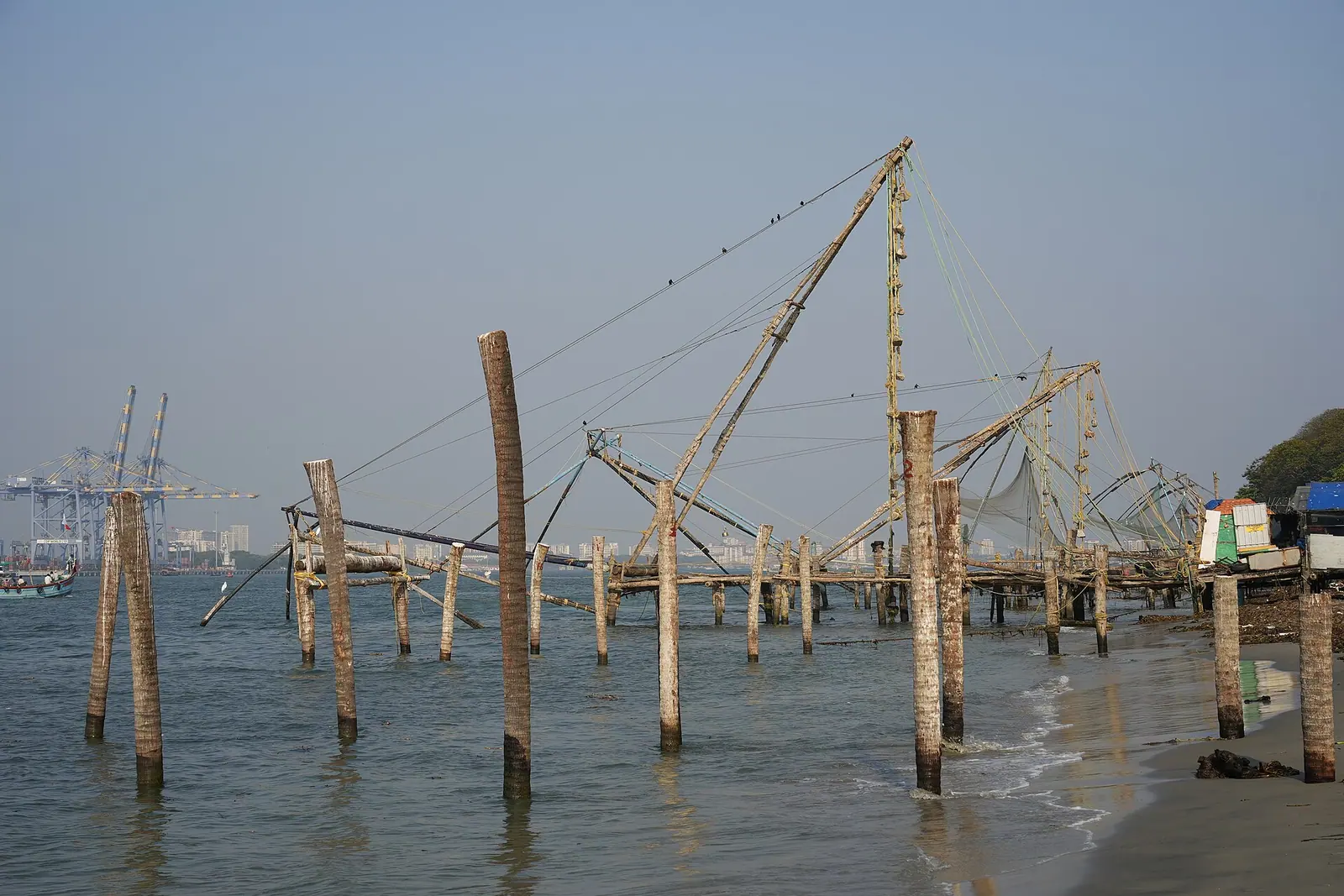 HeritageFort KochiErnakulam
The monsoon is not a mistake
The southwest monsoon arrives at the end of May and lasts through August, sometimes into September. It is wet, green and cheap, and many places close or reduce services. The northeast monsoon brings shorter, heavier evening showers in October and November, mainly in the south. If you want reliable beach weather, come between December and February. If you want the landscape at its most alive and can tolerate rain, June and July are extraordinary — just do not plan on swimming or long treks.
A few words that help
- Nandi (നന്ദി) — thank you.
- Namaskaram — a respectful greeting.
- Sheri (ശരി) — okay, agreed.
- Enthu vilaya? (എന്ത് വിലയ?) — how much is it?
- Venda (വേണ്ട) — no, thank you / I don't want it.
English is widely understood in towns and in the tourism industry, but Malayalam is appreciated. A greeting and a thank-you will get you further than a perfect accent.
Sources & notes
- Kerala Tourism — official state tourism portal · checked 2026-10-01
- Indian Railways — passenger information · checked 2026-10-01
Last updated 18 September 2026. Prices, opening hours and transport should be confirmed with official sources before travel.
Hello Kerala Publisher
Hello Kerala's editorial desk.
Found an error or an outdated detail?
Tell us