Hill country
Chembra Peak: the trek, the heart lake and the permit
Wayanad's highest peak is a grassland climb with a small lake shaped like a heart halfway up. The walk is the point, but the permit and the weather decide whether you get it.
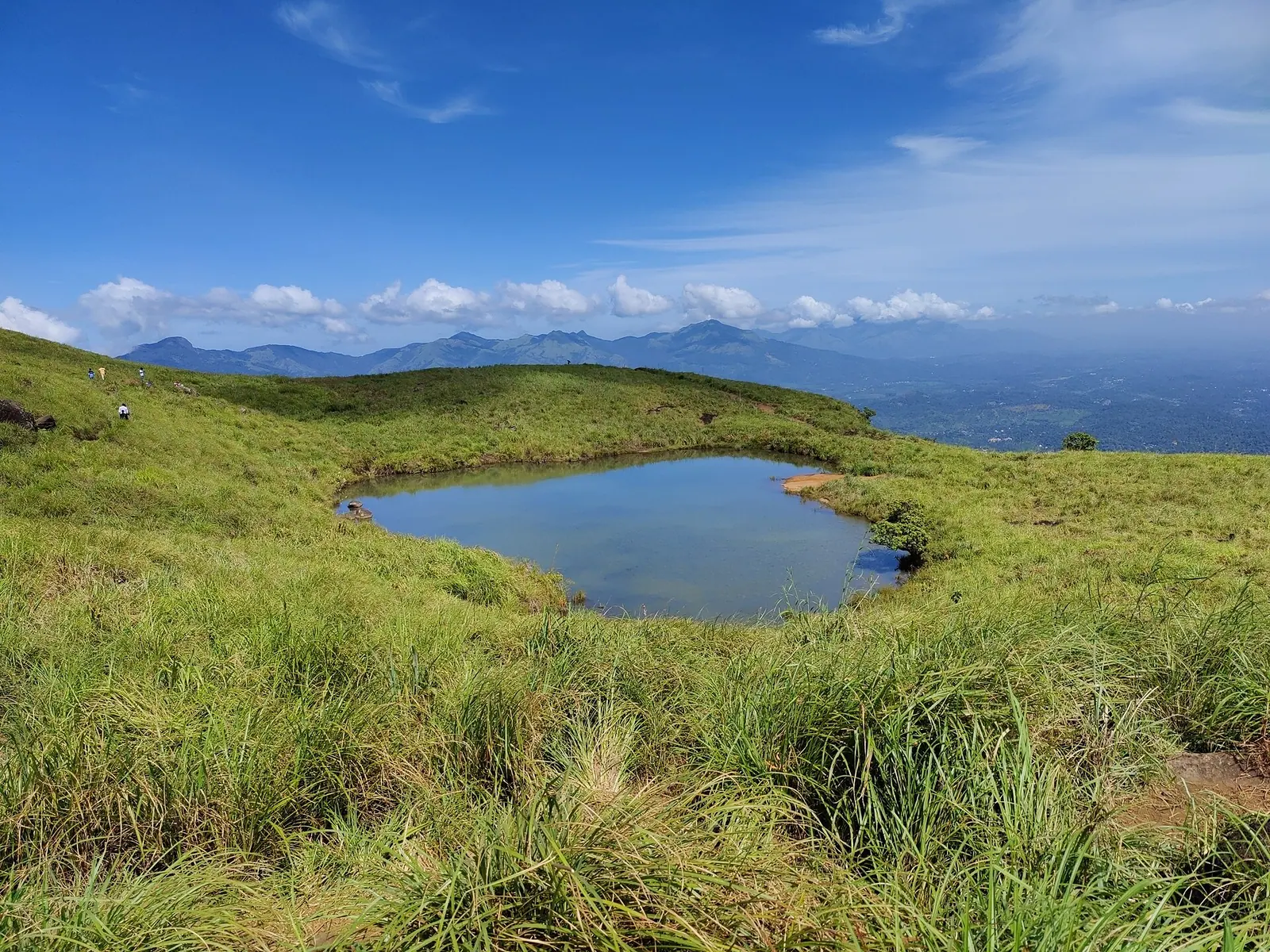
Chembra is the highest point in Wayanad, a grassy shoulder of the Western Ghats that rises above the tea and coffee country near Meppadi. It is not a technical mountain. There are no ropes, no ladders and no glacier. What it asks for is a steady climb, a permit arranged in advance and a willingness to turn around if the weather or the forest office says so. That last part is the one visitors most often forget.
The route begins in estate country and quickly leaves it, moving into open grassland with long views back over the valley. The grass is cropped short by wind and grazing, and the landscape feels more like a high moor than the tropical forest travellers expect from Kerala. In the monsoon the same slope turns slick and clouded, and the walk becomes a different proposition.
The climb
The ascent is continuous rather than steep in any one place. Most walkers take a few hours to reach the lake and the permitted high point, with stops for photographs and breath. The path is obvious in dry weather and easy to lose in mist, which is one reason the forest department generally expects visitors to go with a guide. The guide is not there to carry your bag; they are there to keep the group on the permitted route and to make the call when conditions change.
Take the altitude seriously even though it is modest by Himalayan standards. The climb starts from a warm valley and ends in cool, exposed grass. A light rain shell, a warm layer, water and footwear with grip are the basics. Cotton gets cold when it is wet; a spare dry layer in the vehicle is worth more than an extra camera lens.
- Arrange the permit through the official Forest Department or district tourism channel before the day of the walk.
- Start early. Afternoon cloud is common, and the views close in quickly.
- Carry water and snacks; there is nothing on the route.
- Wear shoes with tread. The grass and rock slabs are slippery when wet.
- Do not leave the marked route, even for a short cut. This is forest and grassland with wildlife, not a city park.
- Take every piece of litter back down with you.
The lake and the summit
Halfway up sits the small lake that appears in every photograph of Chembra, its outline close enough to a heart that the name has stuck. It is a real body of water in a fragile grassland, not a swimming spot. Visitors are normally expected to view it from the path; entering the water damages the bank and is not part of the visit. The lake is also the usual high point of the public trek, with the very top of the peak subject to separate restrictions. Do not assume that a summit view is included.
The view from the permitted ridge is wide and layered: tea estates below, ridges behind, and on a clear morning the blue outline of further ranges. It is worth sitting with for a while rather than treating the lake as a checkpoint. The descent is faster but harder on the knees, and the last section through the estate is often the hottest part of the day.
Permits, guides and when to go
Chembra is a protected landscape, and access has been managed through permits and guided groups for years. The details change: how many walkers are allowed, which days the route opens, whether the lake is included, and what the forest office requires in wet weather. Check directly rather than relying on an old blog post or a hotel desk that has not walked it recently. A permit is not a guarantee of access if the weather turns.
The most comfortable months are generally after the southwest monsoon, when the grass is dry and the views are steady. The monsoon itself can be beautiful but often closes the walk. December and January bring cool nights and clear mornings; summer is hotter but still workable if you start early. Whatever the season, build in a backup day. A closed trail is a normal outcome, not a conspiracy.
Wayanad rewards travellers who treat the trek as one part of a day rather than the whole reason for coming. Meppadi and the surrounding estates have tea, coffee and food worth lingering over. Coming down from the grass into a hot cup of tea is part of the experience.
Sources & notes
- Kerala Tourism — official state tourism portal · checked 2026-10-22
- Wikipedia — place and history reference · checked 2026-10-22
- Kerala Forest Department — protected areas, permits and ecotourism · checked 2026-10-22
Last updated 24 October 2026. Prices, opening hours and transport should be confirmed with official sources before travel.
Hello Kerala Publisher
Hello Kerala's editorial desk.
Found an error or an outdated detail?
Tell us