Culture
Theyyam season in Kannur: a practical guide for visitors
Theyyam is a ritual, not a show. Here is what the season involves, how to find a performance honestly, and how to behave when you are a guest in a shrine.
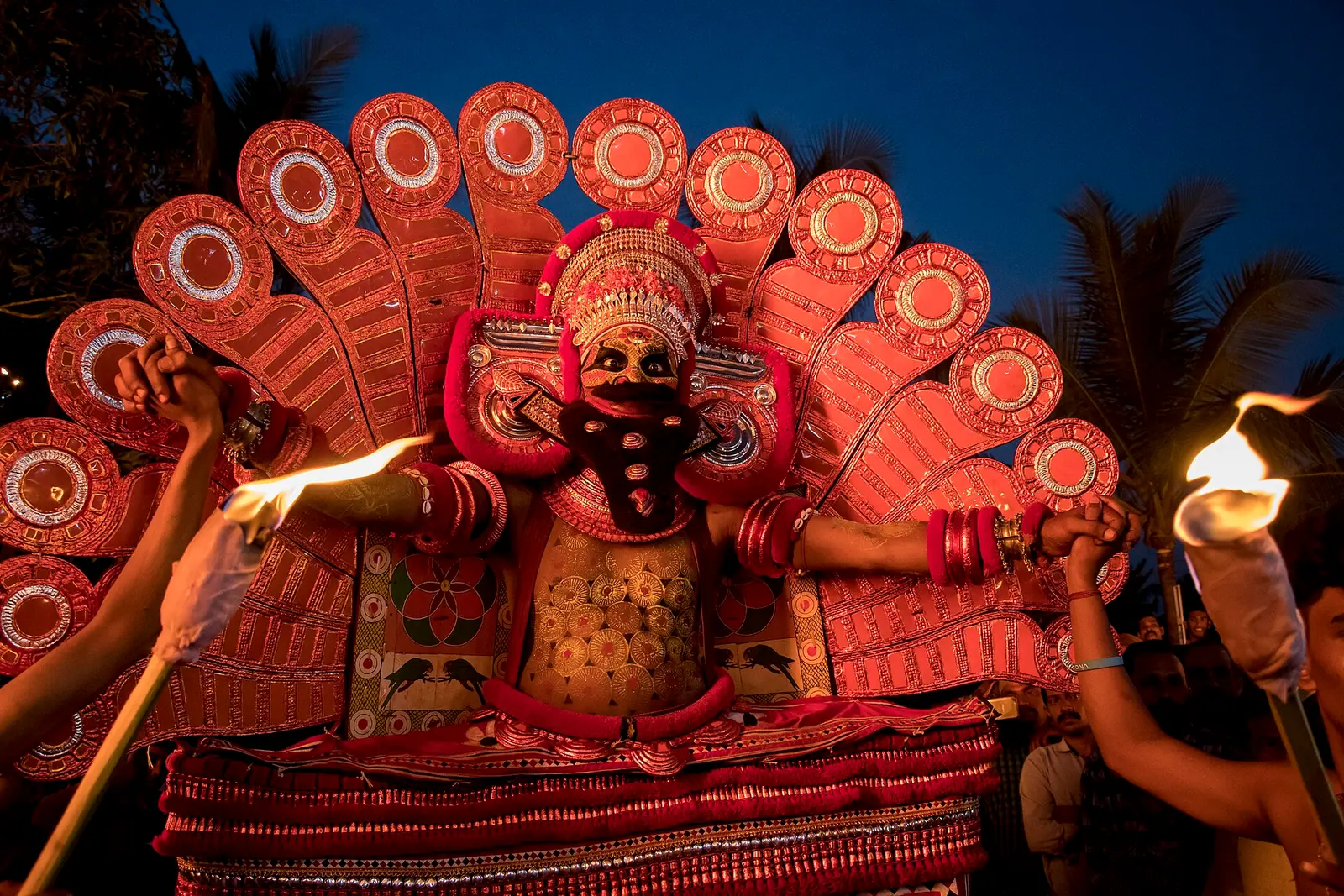
Theyyam is often described as a dance form, which is misleading. It is a ritual in which a performer, through costume, make-up, drumming and hours of movement, becomes the deity the shrine is honouring. The performance happens because the ritual calendar requires it, not because a visitor has bought a ticket. That distinction should shape everything about how you watch.
The tradition belongs to north Malabar, with Kannur and Kasaragod as its heartland. Performances take place in kavus, small village shrines that are often surrounded by trees and owned by a family or a community. Some are large and well known; many are small, local and not advertised anywhere.
What the season looks like
The season runs roughly from October to May, with the densest cluster of performances between December and April. Dates follow local calendars and shrine traditions, so there is no single published schedule that covers the whole district. A performance may start in the evening and run until dawn, or take place in the morning. Some last a few hours; others are all-night affairs.
The best way to find one is through a local guide, a homestay host or the shrine itself. Ask whether visitors are welcome before you turn up. Some rituals are closed to outsiders, and that is not a commercial decision you can negotiate. If a shrine says no, accept it and move on.
At the shrine
Dress modestly, covering shoulders and knees. Remove shoes where others do. Do not touch the performer, the costume, the headdress or the offerings. Do not walk between the performer and the shrine, or sit on a platform that is being used for ritual. Keep to the edges, follow the crowd and watch what local people do.
- Ask before taking photographs, and never use a flash.
- Do not film a trance or a possession sequence for entertainment.
- Do not offer money to the performer.
- Accept prasadam with your right hand if it is offered.
- Keep children close and quiet; this is a place of worship, not a festival ground.
- Carry a torch and wear footwear you can remove easily.
Watching through the night
If you plan to stay for a night performance, arrange transport in advance. Village roads are dark, parking is limited, and a driver who knows the area is worth more than a saved fare. Eat before you go, carry water and a light layer, and expect to stand or sit on the ground for long stretches. There may be no toilets.
The atmosphere changes through the night. Drumming, fire, the movement of the crowd and the slow transformation of the performer are all part of it. You do not need to understand every ritual detail to be present respectfully. You do need to accept that you are a guest, and that the ritual is not organised around your comfort or your camera.
The easier introduction
Parassinikkadavu, near Kannur, has a daily Theyyam as part of its temple routine. It is easier to attend than a village all-nighter and gives a sense of the form, but it is still an act of worship. Treat it as an introduction, not as a substitute for understanding the wider tradition.
Sources & notes
- Kerala Tourism — official state tourism portal · checked 2026-10-22
- Wikipedia — place and history reference · checked 2026-10-22
Last updated 24 October 2026. Prices, opening hours and transport should be confirmed with official sources before travel.
Hello Kerala Publisher
Hello Kerala's editorial desk.
Found an error or an outdated detail?
Tell us