Culture
Theyyam: how to watch a ritual without turning it into a show
What north Malabar's Theyyam actually is, when it happens, and the etiquette that matters.
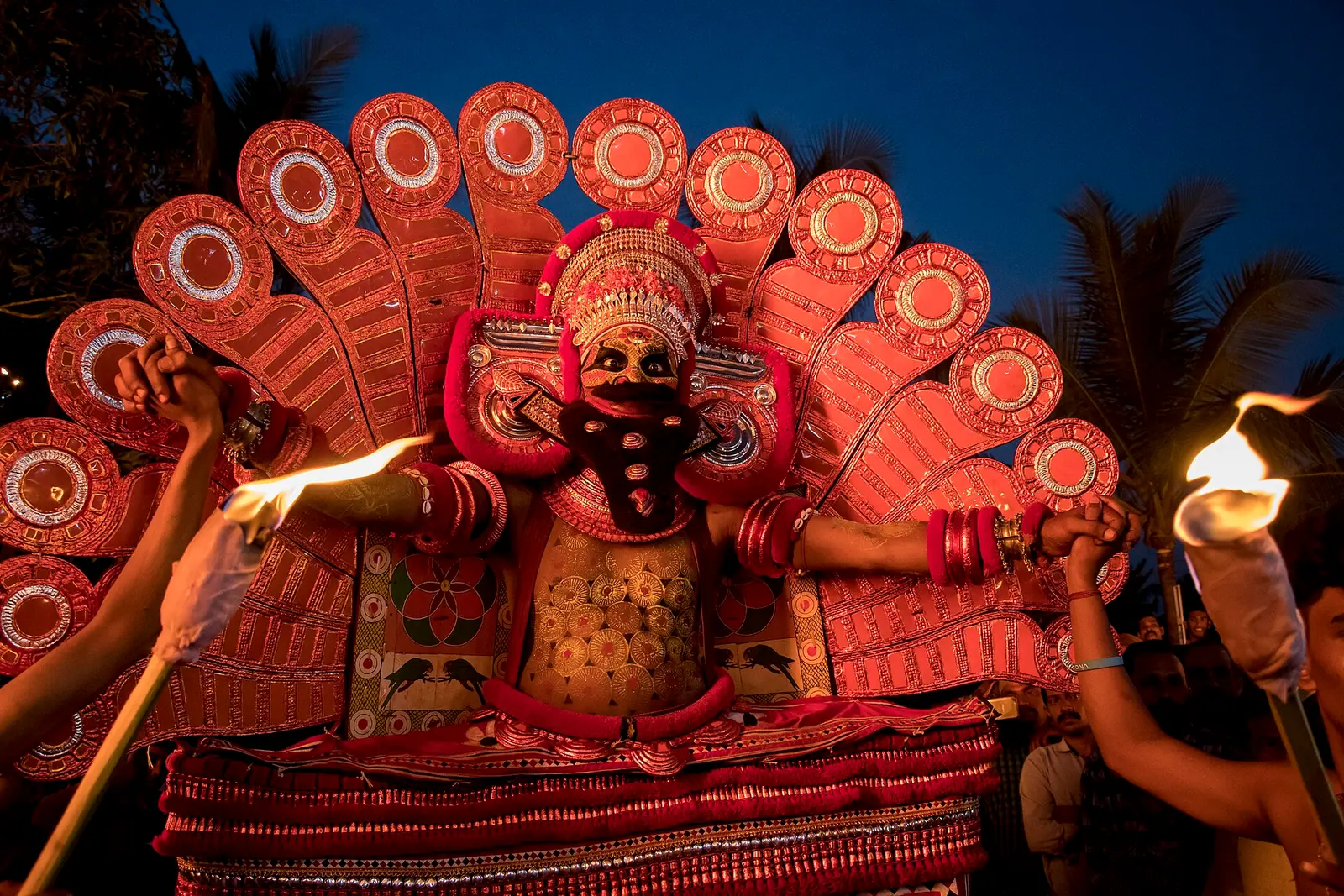
Theyyam is often described as a dance. It is closer to a possession ritual. In the shrines of north Malabar, a performer is transformed through costume, make-up, drumming and hours of movement into a deity, and the community receives that deity in its midst. The performance can last from a few hours to a full night. It happens because the ritual calendar requires it, not because a tourist has bought a ticket.
When and where
The season runs roughly from October to May, with the densest cluster between December and April. Kannur and Kasaragod are the heartland, though performances also occur in parts of Kozhikode and Wayanad. Each shrine has its own dates, deities and rules. Some performances are large and public; others are small, local and not advertised. A local guide is the difference between watching a spectacle and understanding what is happening.
What you will see
Expect drumming, fire, elaborate headdresses made of wood, cloth and coconut fronds, and face paint in red, black and ochre. The performer may circle the shrine, interact with the crowd, accept offerings or enter a trance. The audience is not passive: it is a congregation, and people come and go through the night.
- Dress modestly, covering shoulders and knees.
- Do not touch the performer, the costume or the shrine offerings.
- Do not use flash photography; ask before using a camera at all.
- Keep out of the way of drummers, fire and processions.
- Do not sit on the shrine platform or enter restricted areas.
- If you are offered prasadam, accept it with your right hand.
Practically speaking
Performances often start late at night and run until dawn. Eat before you go, carry water and a light layer, and arrange a driver who knows the roads. Village shrines may have no parking, seating or toilets. Some are not accessible to outsiders; accept that a closed door is part of the tradition, not an inconvenience to negotiate.
The Parassinikkadavu Muthappan temple near Kannur has a daily Theyyam performance and is easier to visit, but it is an active temple, not a theatre. Treat it accordingly. For a broader visit, combine a performance with St Angelo Fort and Kannur's food; the region rewards a slower stay.
Destination in this story
CultureTheyyam Season, KannurKannurDestination in this story
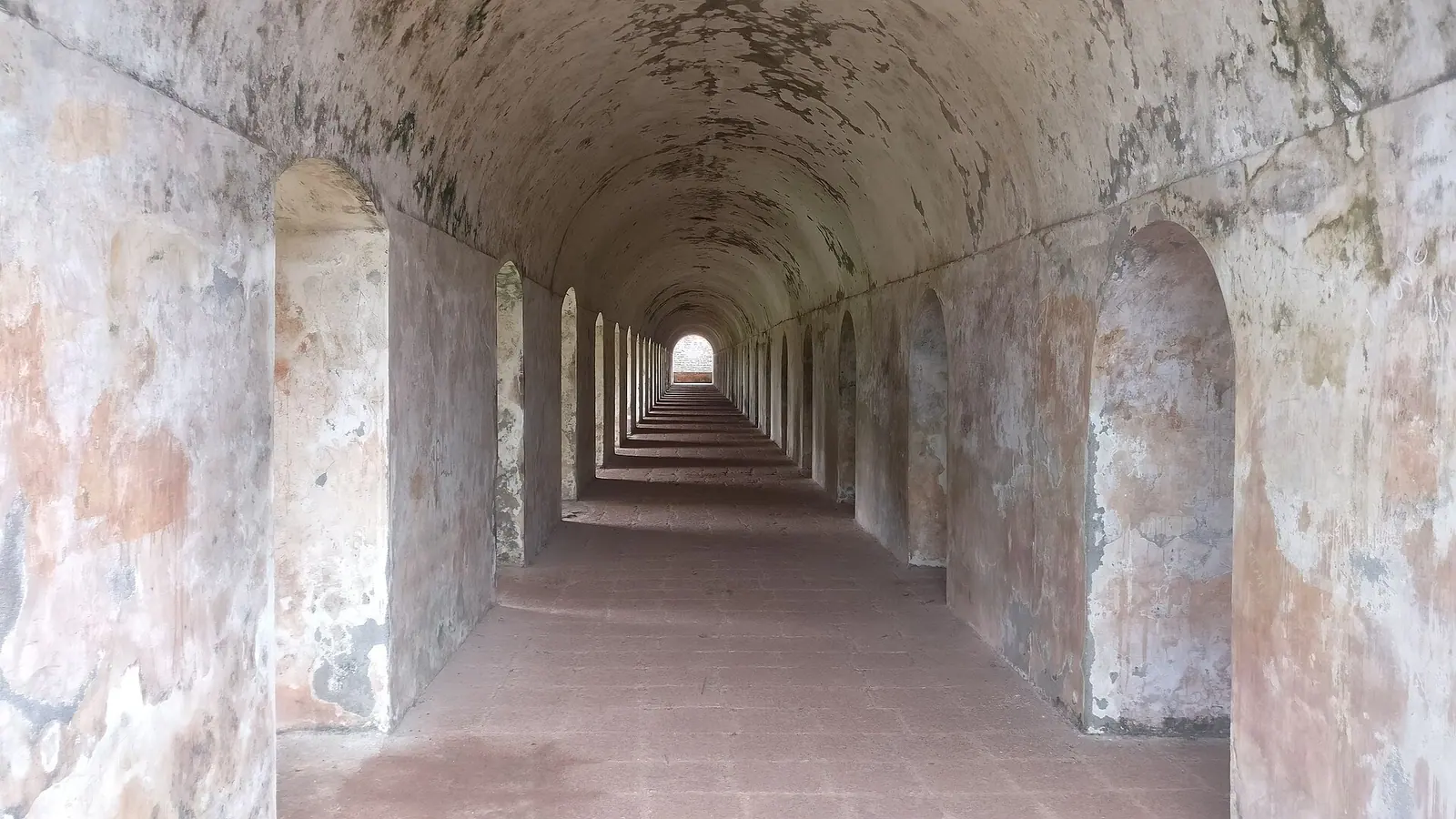 HeritageSt Angelo FortKannur
Sources & notes
- Kerala Tourism — Theyyam and north Malabar culture · checked 2026-10-01
Last updated 15 October 2026. Prices, opening hours and transport should be confirmed with official sources before travel.
Hello Kerala Publisher
Hello Kerala's editorial desk.
Found an error or an outdated detail?
Tell us