Wildlife
Aralam Wildlife Sanctuary: Kerala's northern rainforest
At the top of the state, where Kerala meets Karnataka, Aralam protects a pocket of evergreen forest that few travellers reach. Access is controlled, and that is the point.
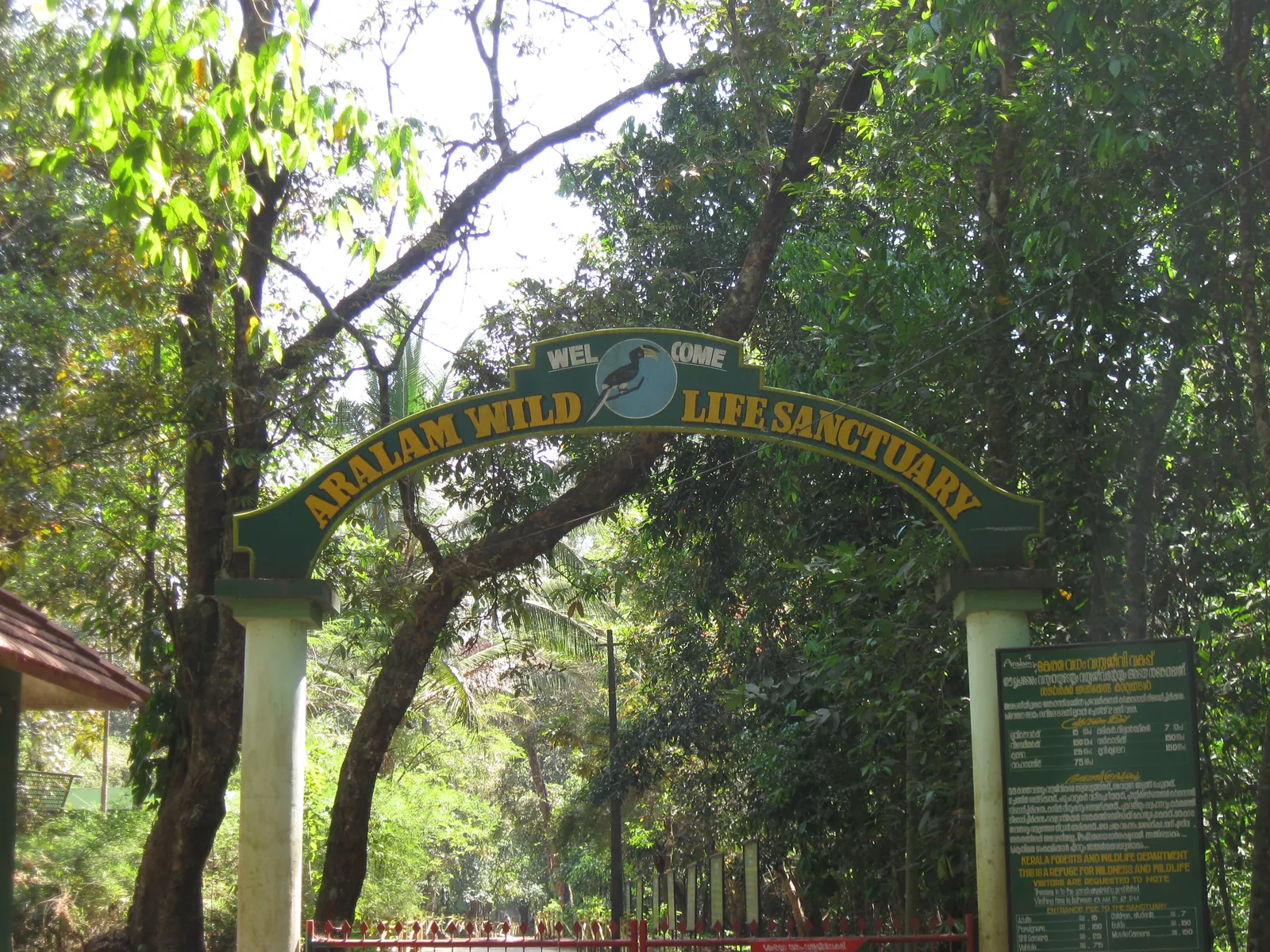
Aralam is the northernmost of Kerala's wildlife sanctuaries, a block of evergreen and semi-evergreen forest in the Western Ghats, close to the Karnataka border. It does not have the fame of Periyar or the accessibility of a hill-station park. What it has is intact forest, a small number of visitors and a sense of being at the edge of the state.
The sanctuary sits above the coastal plain, where the Ghats begin to rise. The forest is dense, the rainfall is heavy and the roads are few. Most of the land around it is plantation and farmland, which makes the protected area both an island and a corridor for animals moving between larger forest blocks.
What lives there
The sanctuary is part of the larger Western Ghats elephant landscape, and elephants, gaur and deer move through it. Hornbills, woodpeckers and a long list of butterflies are easier to see than mammals. The forest also supports amphibians and reptiles that depend on clean streams and dense undergrowth. None of this is guaranteed on a short visit; the forest is not arranged for viewing.
The best way to see anything is slowly, on foot, with a guide who knows calls and tracks. That means accepting a low chance of a dramatic sighting and a high chance of hearing the forest. If you want a guaranteed elephant encounter, this is the wrong place; if you want a quiet, wet, green day, it is the right one.
Access and permits
Aralam is not a self-drive park. Access is arranged through the Forest Department, usually at the range office, and may include a guide, a vehicle restriction and a set route. Trekking options depend on staffing, weather and the season. Do not assume a trail is open because a previous visitor walked it.
The surrounding area includes the old Central State Farm and settlements with long histories of land use and migration. The forest and the farmland are not separate worlds; animals move between them, and conflict is a real issue. Visit with that context in mind rather than treating the sanctuary as an empty wilderness.
- Arrange permits in advance through the Forest Department.
- Wear long trousers, closed shoes and leech protection in the wet months.
- Carry water, food and a rain layer; there are no shops inside.
- Do not use playback, drones or loud music.
- Do not approach or feed animals, and keep a safe distance from elephants.
- Take all litter out with you.
When to go
The post-monsoon months, from November into February, are the most comfortable for walking. The monsoon is dramatic but can close roads and trails, and the leeches are relentless. Wildlife is often more visible in the dry season when animals concentrate around water, but the forest is at its most beautiful in the wet.
Aralam is a long way from the usual Kerala circuit. The nearest practical base is Kannur, from where the drive climbs through plantation country. It works best as a full-day trip for someone who is already in north Malabar, not as a detour from Kochi or Munnar. If you are short on time, choose one forest and give it a proper morning.
Sources & notes
- Kerala Tourism — official state tourism portal · checked 2026-10-22
- Kerala Forest Department — protected areas, permits and ecotourism · checked 2026-10-22
- Wikipedia — place and history reference · checked 2026-10-22
Last updated 24 October 2026. Prices, opening hours and transport should be confirmed with official sources before travel.
Hello Kerala Publisher
Hello Kerala's editorial desk.
Found an error or an outdated detail?
Tell us