Heritage
Palakkad Fort: the moat, the museum and the town around it
A Mysore fort in the middle of a Kerala market town, with a moat, a rampart walk and a small museum. It is not a half-day monument, and that is part of its charm.
Most forts in Kerala are coastal or hilltop affairs, reached by a climb and visited for a view. Palakkad Fort is different. It sits flat in the middle of town, surrounded by a moat and a busy road, with autos queuing at the gate and a football ground on its doorstep. You can walk to it from the market, spend an hour inside and be drinking tea somewhere else before the afternoon heat arrives. That ordinariness is what makes it worth seeing.
The fort is usually associated with Hyder Ali, the eighteenth-century ruler of Mysore, who built it as a frontier post in the 1760s during his campaigns into Malabar. It changed hands more than once in the Mysore Wars and was held by the British by the end of the century. Its local name, Tipu's Fort, keeps the Mysore connection alive even though the structure has been repaired, reused and remodelled many times since.
A fort built for a frontier
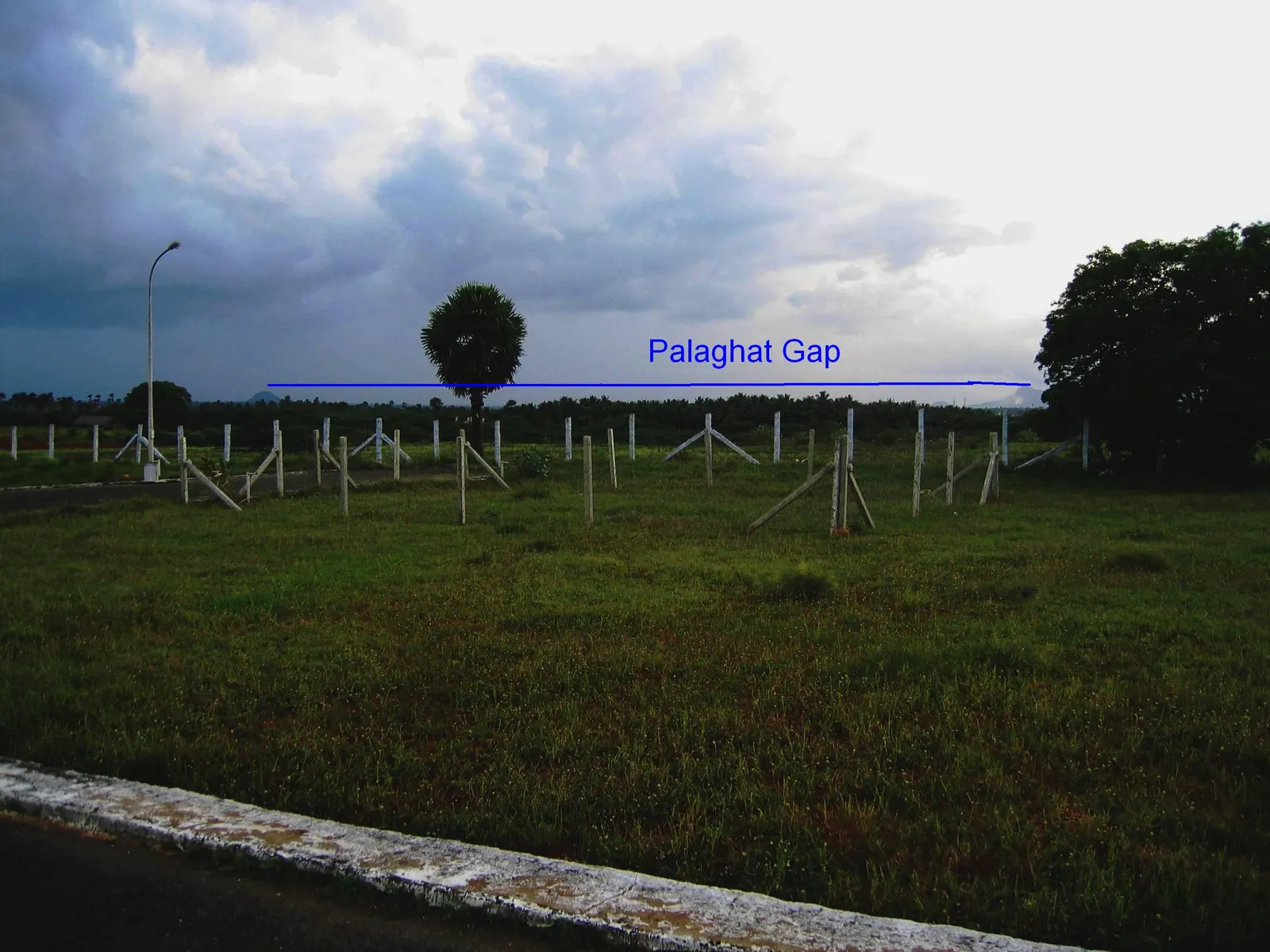
The site was chosen for control rather than beauty. Palakkad sits at the eastern edge of the gap in the Western Ghats, the natural corridor between Kerala and Tamil Nadu, and any power that wanted to move troops and goods through that corridor needed a base here. The fort's low, thick walls and wide moat are designed for artillery and defence on flat ground, not for the romantic silhouette of a hill fort.
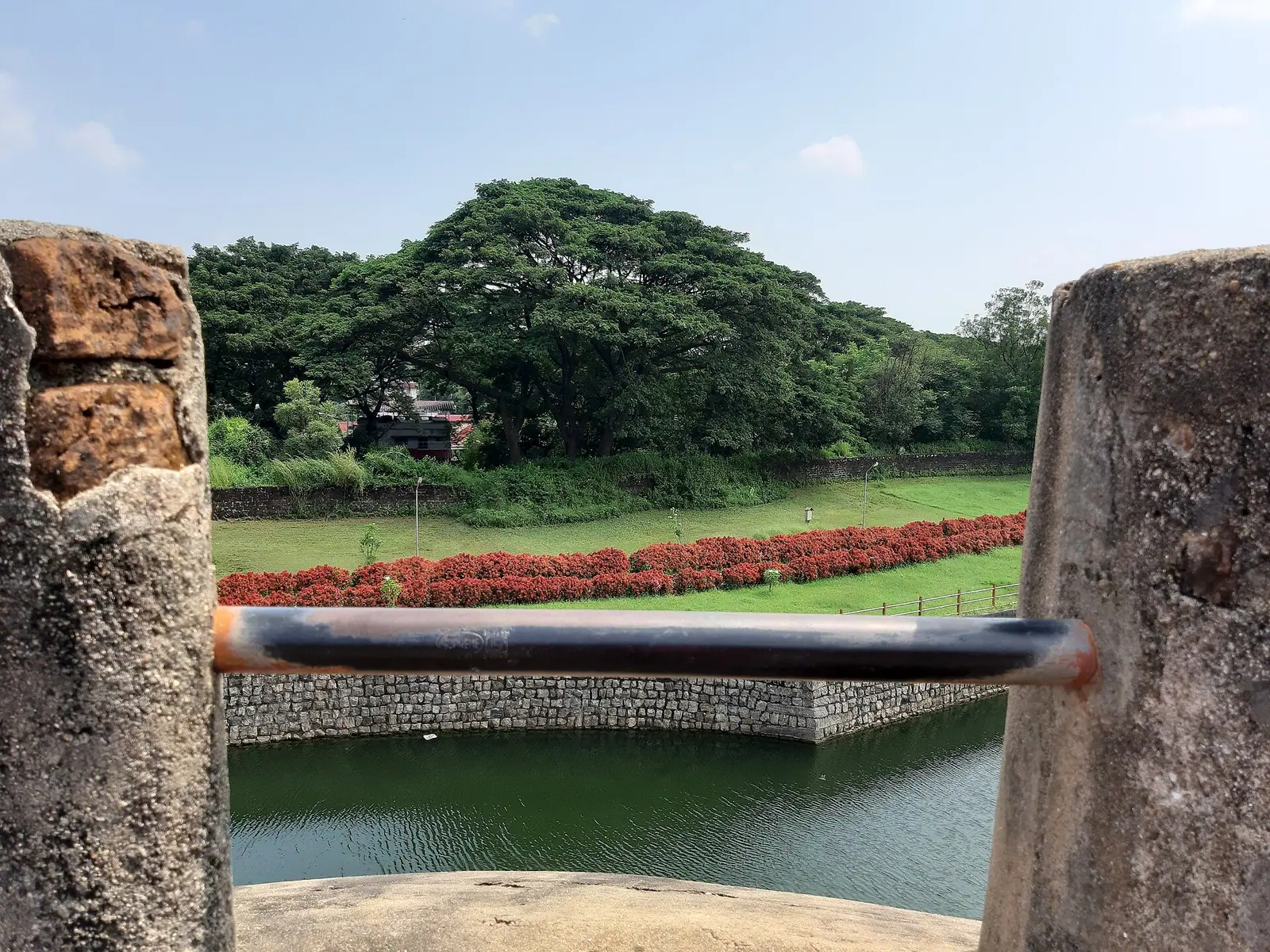
What you see today is a modest, well-kept compound. The moat is wide and often green with weed; the ramparts are walkable in parts; the gate is a heavy, dark passage that gives onto a lawn. There are later additions, including a temple and a small museum, and the fort has served as a jail and an administrative office at different points in its life. It is an archaeological site, not a restored palace, so do not come expecting furnished rooms.
What to see inside
The pleasure of the fort is the circuit: the gate, the rampart, the moat, the lawns and the view back into town. The walls are low enough to see over and thick enough to feel the engineering. In the wet season the grass is vivid and the stone darkens; in the dry months the moat can look tired, and the exposed laterite holds the heat.
The museum inside is small, with sculpture fragments, coins and local antiquities. It is the kind of collection that rewards twenty quiet minutes rather than an afternoon, and its opening hours are not always the same as the fort's. The temple in the compound is active, so treat it as a place of worship rather than another exhibit. Photography rules vary by area; follow the signs and ask before photographing people at prayer.
- Allow about an hour for the fort and museum together, more if you like reading labels.
- Walk the outside of the moat as well as the inside; the scale makes more sense from the road.
- Carry water and a hat. The compound is open and the stone reflects heat.
- Combine the visit with the town market and the nearby streets rather than making a special trip.
How to visit without overplanning
The fort is central, so autos and buses will know it. Early morning and late afternoon are the comfortable windows; midday is punishing and the light is flat. Weekends bring families and school groups, and the surrounding maidan is used for walks and football in the evenings, which is a good time to see the fort as part of the town rather than as a monument.
Palakkad is a market town with a strong food culture and a famous stretch of vegetarian restaurants, and the fort is a natural stop before lunch. Do not rush the town to fit in a bigger circuit. The fort, the market and a meal are a complete half-day, and a more honest introduction to the district than a checklist of sights.
Sources & notes
- Kerala Tourism — official state tourism portal · checked 2026-10-22
- Wikipedia — place and history reference · checked 2026-10-22
Last updated 24 October 2026. Prices, opening hours and transport should be confirmed with official sources before travel.
Hello Kerala Publisher
Hello Kerala's editorial desk.
Found an error or an outdated detail?
Tell us