Heritage
Nilambur's teak: the plantation that built a town
The teak trade shaped a river town, a royal house and a landscape. A guide to Nilambur's plantations, the Chaliyar and the stories the timber left behind.
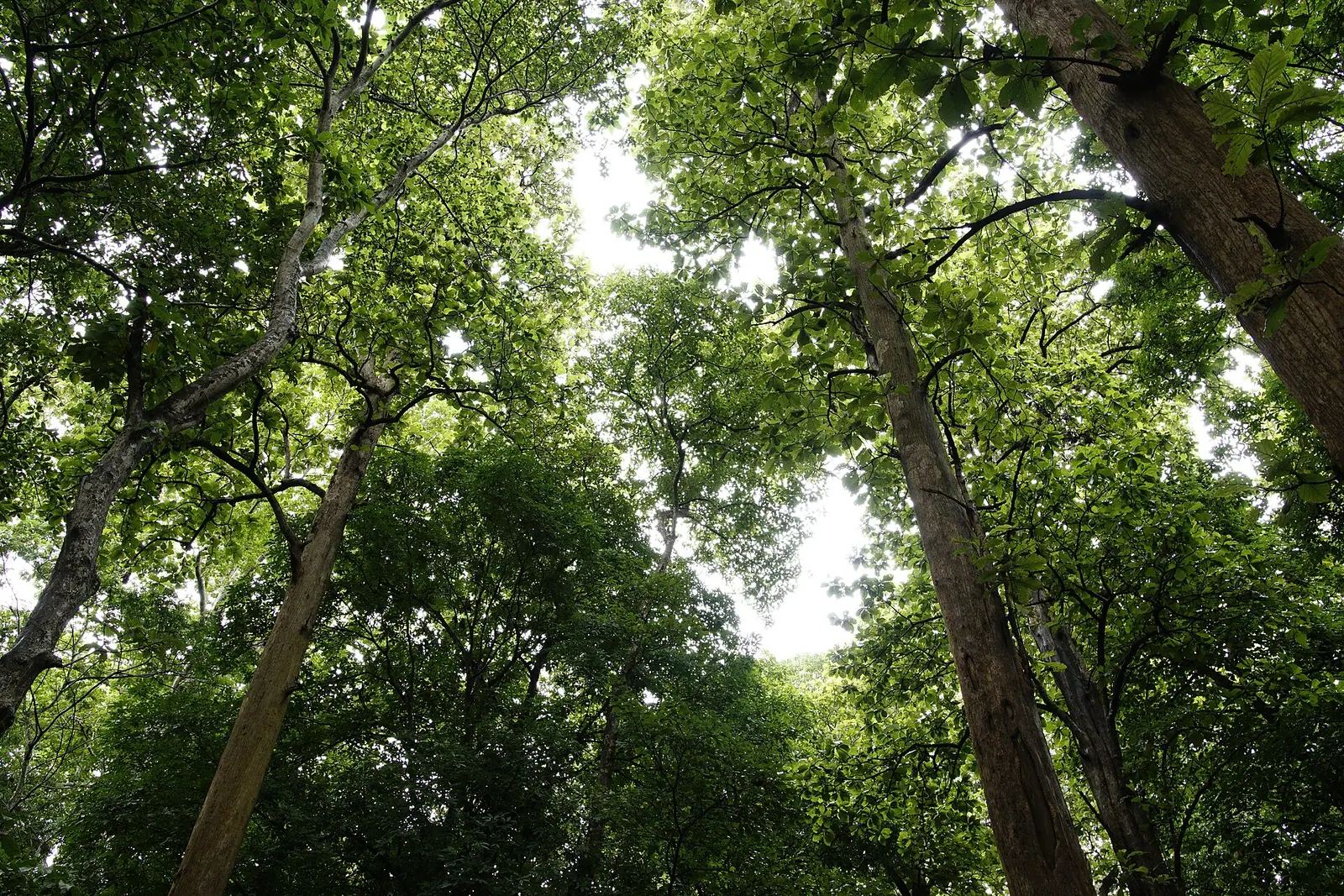
Nilambur is a small town in eastern Malappuram, set among low hills where the Chaliyar river comes down from the Western Ghats. It is not a place that announces its importance. There is a busy road, a market, a palace with a long low roofline, and plantations of tall, straight trees that look as if they have always been there. They have not. The teak around Nilambur is one of the earliest examples anywhere of a forest species being deliberately cultivated, and the town's fortunes were built on it.
A plantation older than the idea of plantations
Teak has grown in these hills for a very long time, but the organised plantation is a colonial story. In the nineteenth century, when the British were consolidating control of Malabar and the navy and railways needed durable timber, the forests around Nilambur were identified as a strategic resource. An area known as Connolly's Plot, named after a district collector of Malabar, is widely described as the first teak plantation of its kind, planted in the 1840s. The claim is repeated in forestry literature and local accounts; what is not in doubt is that the experiment became a model for teak cultivation elsewhere in India and beyond.
The plantation changed more than the forest. It brought surveyors, forest guards, labourers and roads. It tied Nilambur into a timber economy that ran down the Chaliyar to the coast and on to markets overseas. It also created the idea of a managed forest, with boundaries, rotations and rules about who could cut what — an idea that would reshape the relationship between the state and the people who had lived in and around these woods for generations.
The Chaliyar and the timber route
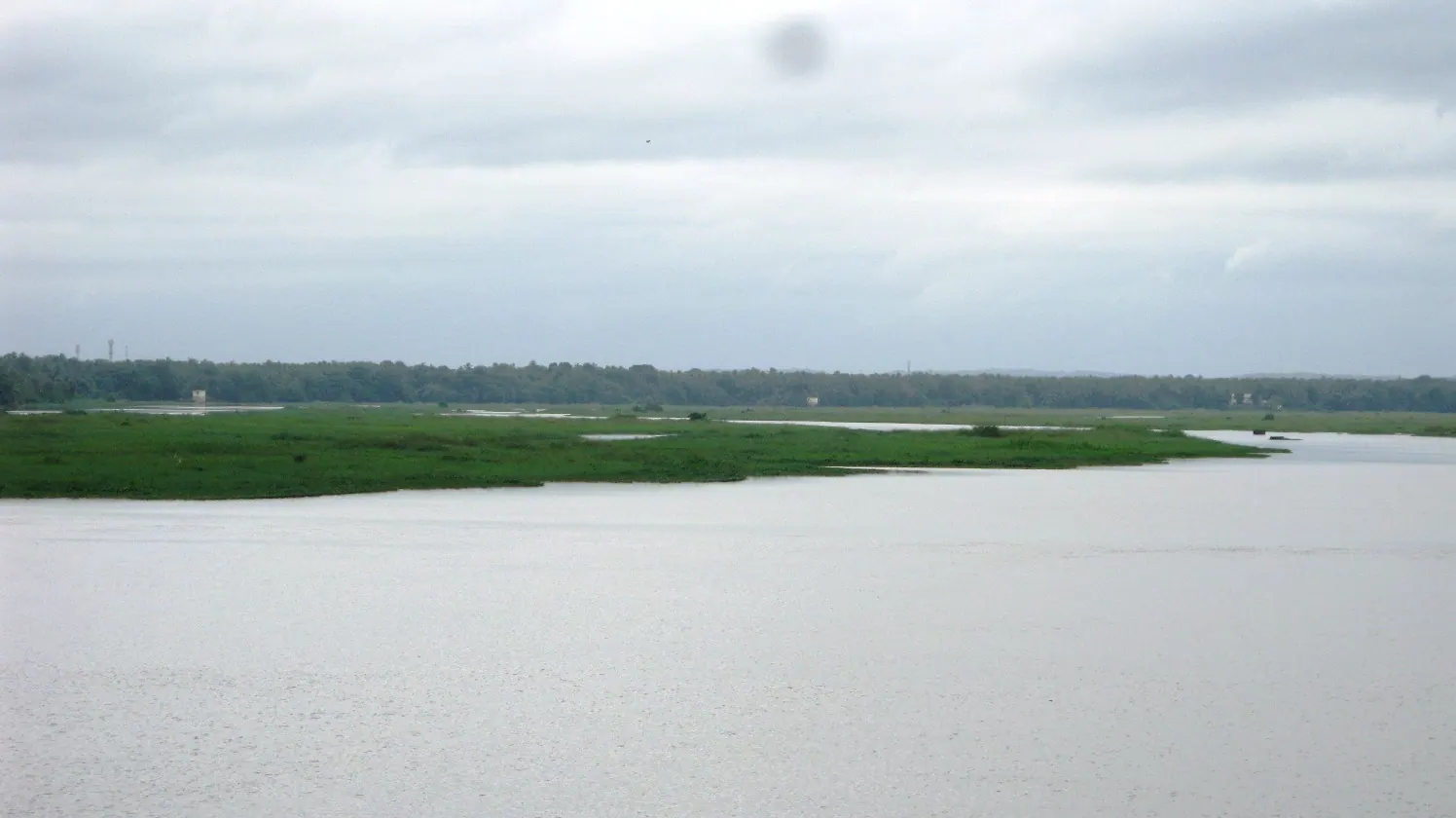
Before the road, the river was the road. Teak logs were floated down the Chaliyar to the coast, and the riverside at Nilambur was a place of rafts, rope and waiting. The trade declined as road transport and restrictions on timber extraction changed, but the river remains the spine of the landscape. It is wide and shallow here, with sandbanks and dark pools, and the light on it in the late afternoon is one of the quiet pleasures of the district. Walking the bank is free, unarranged and more informative than any signboard.
The Nilambur Kovilakam
The local royal house, the Nilambur Kovilakam, is closely associated with the town's history and with the teak trade. The palace complex is a low, traditional Kerala building with wooden columns, an inner courtyard and a distinctly unfortified air. Parts of it are open to visitors at certain times, and the architectural contrast with the later colonial forestry buildings is part of the interest. Do not expect a grand museum; expect a working heritage building with a story that is still being negotiated. Check locally before planning a visit.
The town itself is worth an hour. The market sells produce from the surrounding farms, the mosques and churches reflect the district's mixed religious landscape, and the tea shops are good. Nilambur is also a railhead on a branch line that climbs towards the hills, a slow and scenic journey that few tourists take. If you are coming from Kozhikode or Palakkad, the train is a more interesting approach than the highway.
A responsible visit
- Treat the plantations as working forest, not a park; do not wander off marked paths.
- Do not take cuttings, seeds or timber, and do not light fires.
- Ask before photographing forest workers or people in the town.
- Carry water and rain protection; the area is humid for much of the year.
- If you want a guide, arrange one through the Forest Department or a local operator rather than an unsolicited offer.
The teak story is not a simple one. It is a story of scientific forestry and of labour, of conservation and of extraction, and the people of Nilambur have lived with all of it. A visitor who arrives with curiosity rather than a checklist will find a town that is generous with its history. The trees are impressive, but the more interesting thing is how a single species organised a place.
Sources & notes
- Kerala Tourism — official state tourism portal · checked 2026-10-22
- Wikipedia — place and history reference · checked 2026-10-22
- Kerala Forest Department — protected areas, permits and ecotourism · checked 2026-10-22
Last updated 24 October 2026. Prices, opening hours and transport should be confirmed with official sources before travel.
Hello Kerala Publisher
Hello Kerala's editorial desk.
Found an error or an outdated detail?
Tell us