Heritage
The Teak Museum at Nilambur: small, specific, worth an hour
India's first museum devoted to a single timber species explains more about Kerala's forests than its size suggests. Pair it with the plantations and the river.
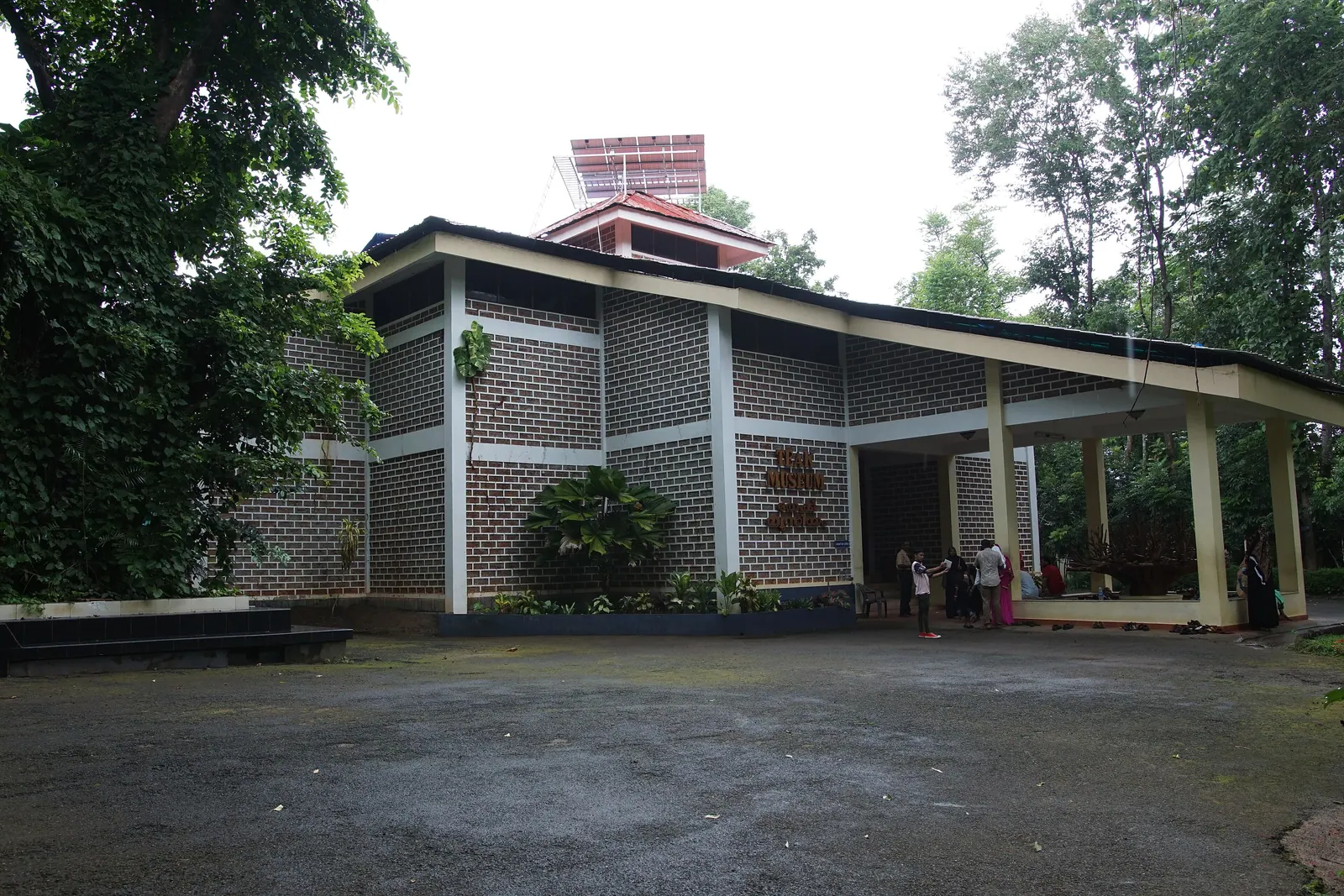
The Teak Museum at Nilambur is easy to miss. It sits in a garden on the edge of town, in a low building that looks more like an agricultural office than a national institution. Inside, the subject is narrow and the treatment is detailed: teak as a tree, as timber, as a trade and as an object of scientific study. That narrowness is the reason to go. In an hour you learn more about how Kerala's forests were understood and used than a week of interpretive boards at a bigger attraction would give you.
A museum built around one tree
The museum was established in the 1990s by the Kerala Forest Research Institute, and it is often described as the first museum in the country dedicated to teak. The exhibits cover the botany of the species, its natural range, the qualities that made the timber valuable for shipbuilding, furniture, railway sleepers and construction, and the history of plantation forestry around Nilambur. There are sections on pests and diseases, on wood anatomy, and on the uses of other forest products. Some displays are dated; the information is still worth reading.
The grounds are part of the collection. Several very old teak trees stand in the garden, including one that is usually identified as the oldest planted teak in the area. Their size is the point: a teak tree grows slowly, and the trunk in front of you represents a span of time that is hard to imagine in a timber yard. There is also a small nursery and a collection of wood samples. Children tend to enjoy the scale of the trees and the tactile exhibits more than the labels.
What it does not cover
The museum is a forestry museum, not a social history of the teak trade. It will tell you about species and silviculture; it will not tell you much about the labourers who planted and extracted the timber, the communities displaced by reserved forests, or the politics of forest access. Those questions are part of the story, and they are worth carrying with you when you walk around Nilambur. A museum devoted to a commodity inevitably reflects the perspective of the institution that created it.
Pairing the visit
The museum is small enough to combine with a morning at the plantations and an afternoon by the Chaliyar. Start early, visit the museum while it is cool, then drive through the teak country and stop at a riverside spot for lunch. The Nilambur Kovilakam and the town market can fill the rest of the day. If you are dependent on public transport, the museum is close enough to town to reach by auto; confirm the return trip with the driver, as app-based services are limited.
- Allow about an hour for the galleries and the garden.
- Check opening days in advance; small institutional museums keep limited hours.
- Photography rules vary by gallery; ask at the desk.
- The garden is a good place for children to run, but stay off planted beds.
- Carry cash; card acceptance is not guaranteed.
Nilambur is not on the standard Kerala circuit, and the museum is not the reason most people come. But if you are interested in forests, in how knowledge about them was produced, or simply in the quiet pleasure of a specialist collection, it earns its hour. The town's teak story is larger than the building, and the museum is a useful key to reading it.
Sources & notes
- Kerala Tourism — official state tourism portal · checked 2026-10-22
- Wikipedia — place and history reference · checked 2026-10-22
- Kerala Forest Department — protected areas, permits and ecotourism · checked 2026-10-22
Last updated 24 October 2026. Prices, opening hours and transport should be confirmed with official sources before travel.
Hello Kerala Publisher
Hello Kerala's editorial desk.
Found an error or an outdated detail?
Tell us