Food
Ducks, eggs and duck curry: Kuttanad's second harvest
Flocks of ducks follow the paddy harvest across the fields below sea level, and the district's kitchens follow the ducks. How the two economies fit together.
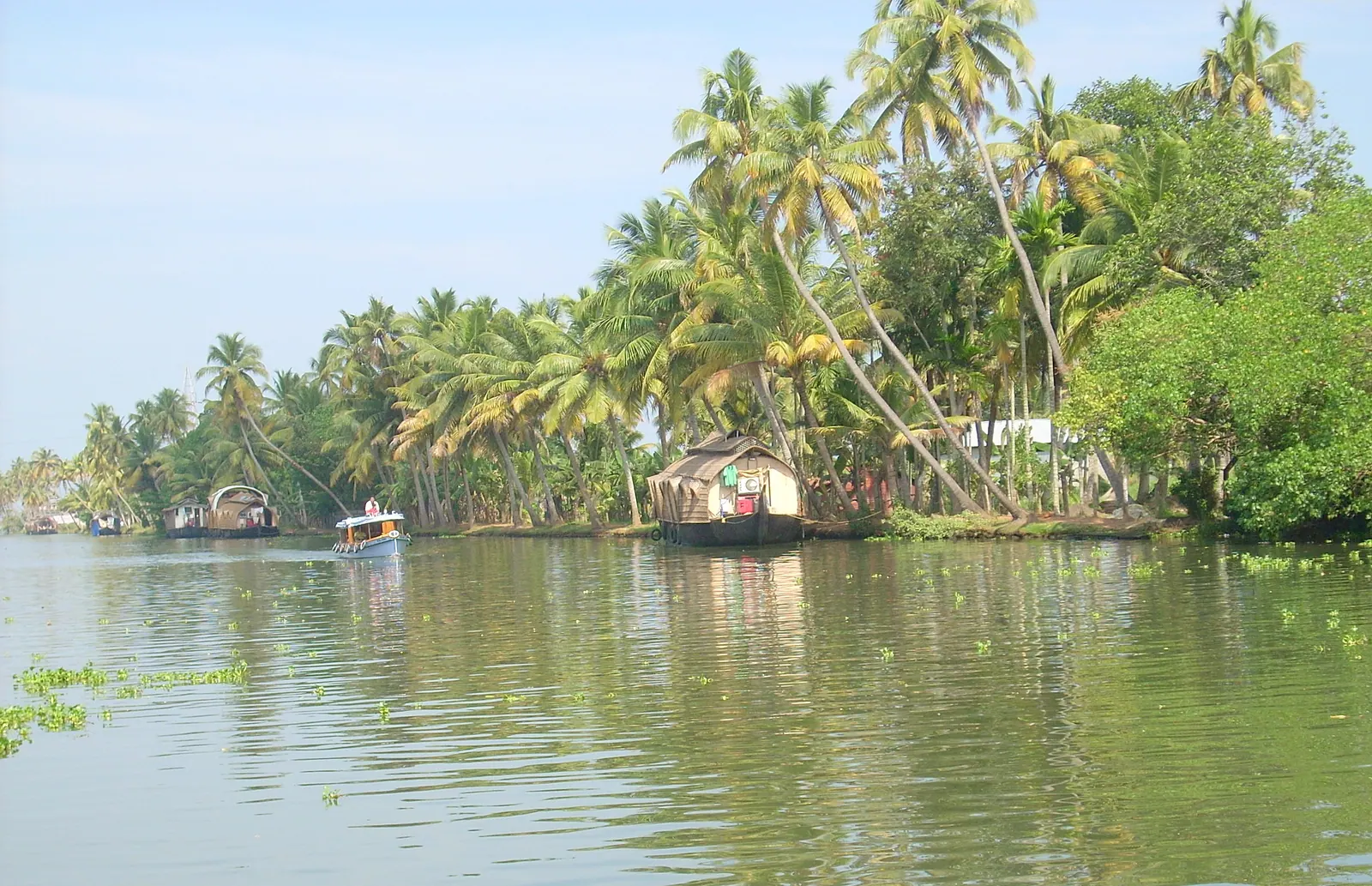
Photograph: Sourav Niyogi / CC BY-SA 3.0, via Wikimedia Commons
In the weeks after a paddy harvest, Kuttanad's fields fill with a moving carpet of ducks. They arrive in flocks of hundreds, sometimes more, herded from field to field by a couple of people with a long pole and a lot of patience.
It is one of the great sights of the district and almost nobody plans a trip around it, because it is not an attraction: it is a working arrangement between a crop and a bird that has been going on for as long as the fields have been drained and flooded.
What the ducks are doing
After the grain is cut, the field is full of spilled rice, insects, snails and weed. A duck flock converts that into eggs and meat at almost no cost to the farmer, and leaves behind manure. The flock moves when the field is picked clean.
The herders work seasonally and on foot or by boat, moving the birds along the bunds between fields. The ducks are not fenced; they follow the person with the pole, which is a skill that looks simple and is not. Watching a flock cross a narrow bund without losing a bird is the best free show in Alappuzha district.
The eggs are the daily product, sold through small shops and markets across the district. Duck eggs are richer than hen eggs and are used in baking and in the region's own cooking rather than only eaten boiled.
Where the duck ends up
Kuttanad's kitchens treat duck as a celebration dish rather than an everyday meat. The classic preparation is a thick, dark curry with coconut, pepper and the souring agent the cook prefers — tamarind, vinegar or kudampuli — simmered long enough that the meat comes away from the bone.
Duck roast is the other version: the bird cooked down with sliced coconut and spices until almost dry. Both are heavy, both are meant to be eaten with rice or with the district's lacy appam, and both are usually ordered in advance because a duck takes time.
You will find it in toddy shops, in family-run restaurants and at festival tables rather than in hotel buffets. Ask whether it is available that day; the answer is often no, and that is a good sign rather than a bad one.
The paddy the ducks depend on
None of this works without the fields. Kuttanad's paddy is grown on land pumped dry and protected from the lake, in a cycle of planting, harvesting and deliberate flooding that also supports fishing in the channels.
The crop is under pressure from salinity, pollution, labour costs and the simple difficulty of farming below sea level. The duck flocks are part of the same system: fewer fields mean fewer flocks, and fewer herders mean the arrangement survives only where families still do it.
If you see a flock, watch from the road or the bund and let the birds pass. Do not walk into the field, do not chase the flock for a photograph, and do not assume the herder has time to talk.
The district in brief
Canals, coir sheds, paddy fields and houseboats: Alappuzha is the Kerala most travellers picture. It is also a real town with a working waterfront, a long beach and a food culture built on karimeen, toddy shops and village kitchens.
Elsewhere in Alappuzha
Alappuzha Backwaters. The classic Kerala backwater town: canals, houseboats, paddy fields and toddy shops.
Destination in this story
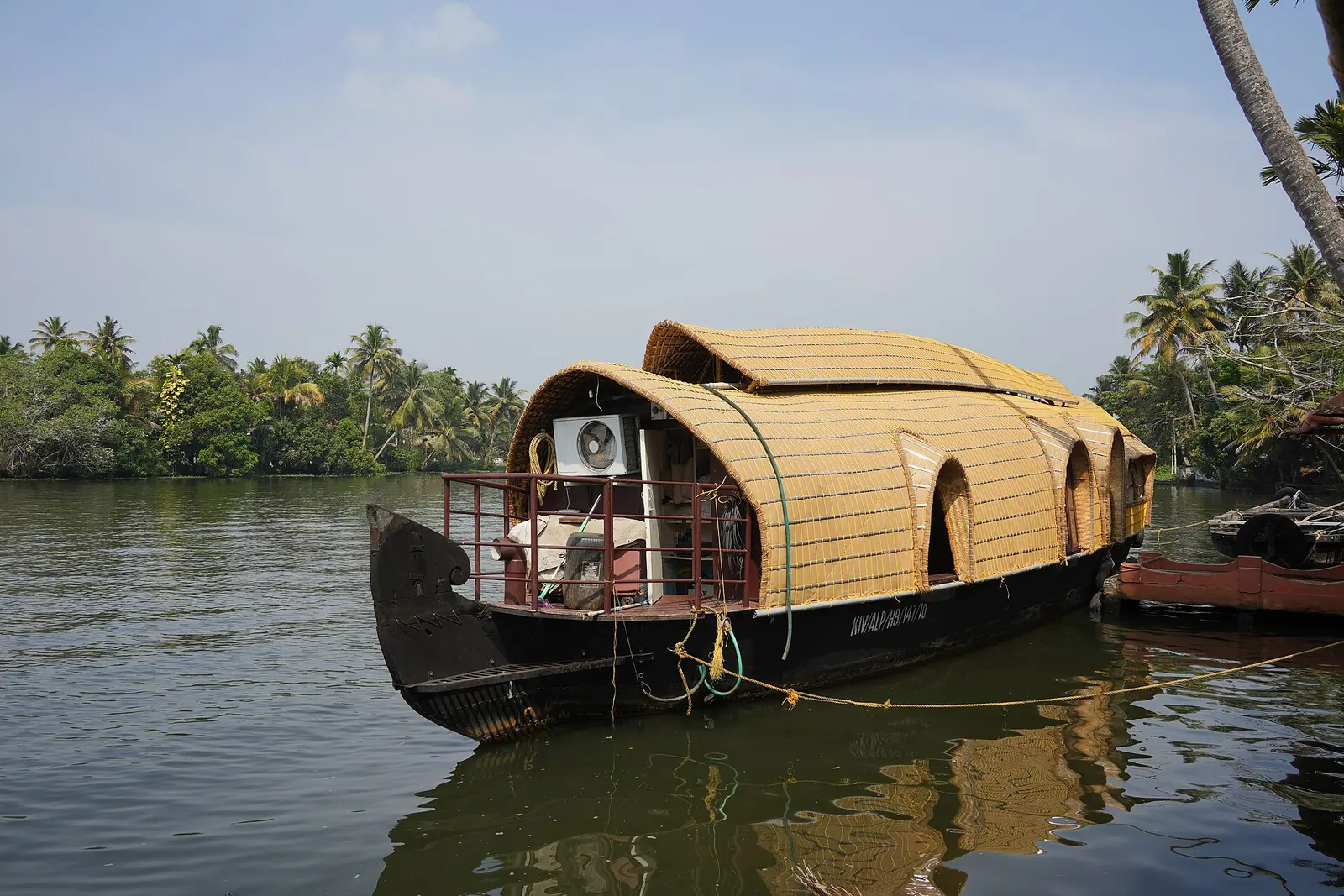 BackwatersAlappuzha BackwatersAlappuzha
Marari Beach. A quiet fishing beach near Alappuzha, with homestays, palms and none of the cliff-bar scene.
Destination in this story
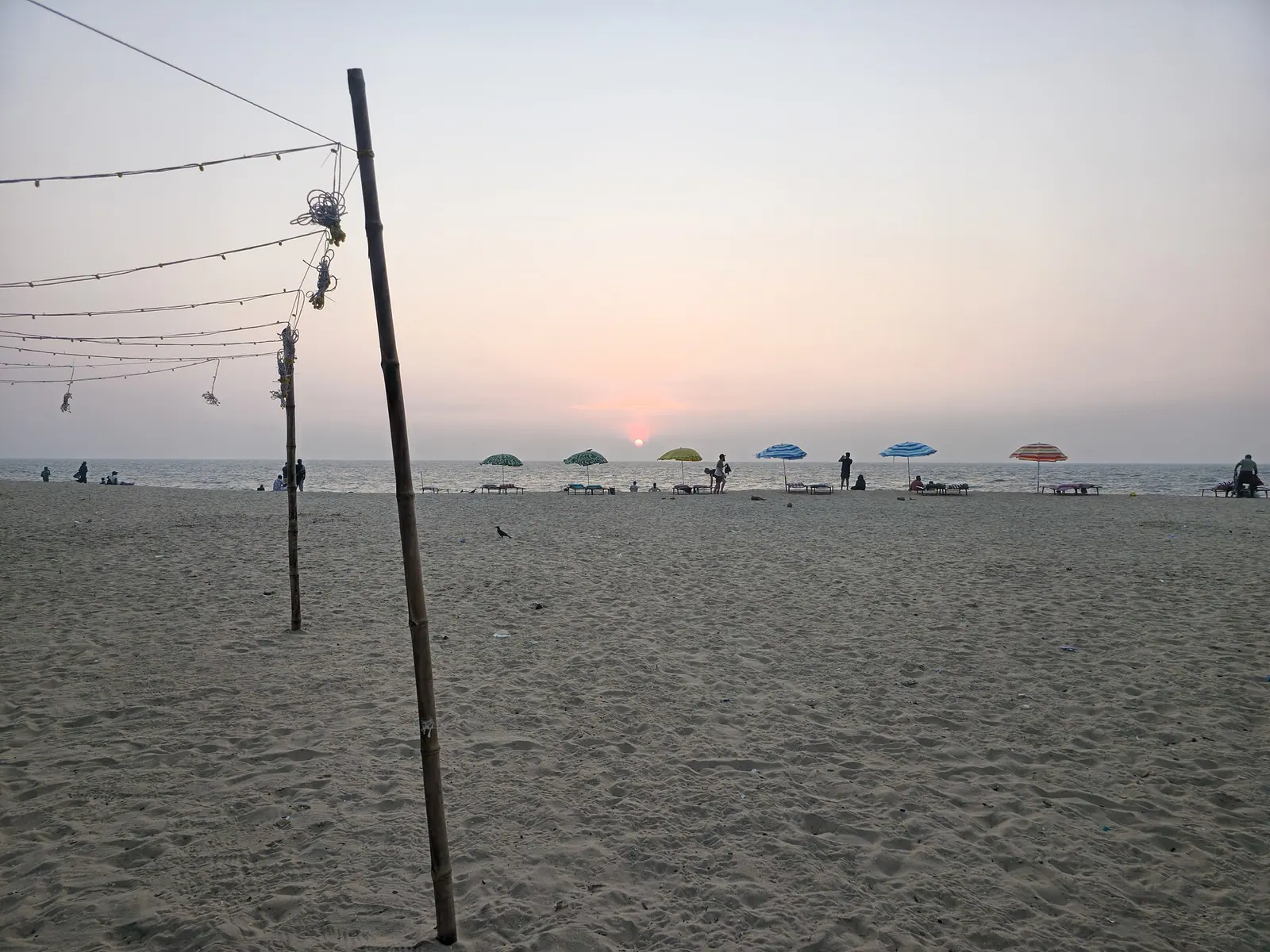 BeachMarari BeachAlappuzha
Practical notes
- Duck flocks follow the paddy harvest, so the season is late in the year into the dry months.
- Watch from the bund or the road; a scattered flock is a day's work lost.
- Ask for duck curry a day ahead in a toddy shop or family restaurant.
- Duck roast and duck curry are different dishes; try whichever the kitchen does well.
- Duck eggs are worth buying where you see them sold.
Common questions
- When can you see duck flocks in Kuttanad? Most reliably after the paddy harvest, from late in the year into the dry months, when stubble and spilled grain are available.
- Where do you eat duck in Alappuzha? Toddy shops and family-run restaurants, usually by prior order. Hotel restaurants rarely cook it well because it takes time.
- Are the ducks a tourist attraction? No. They are a working part of the farm economy; visitors are welcome to watch respectfully from a distance.
Plan this trip
Planning a trip to Ducks, eggs and duck curry, Alappuzha?
There is no mapped record for Ducks, eggs and duck curry yet, so no route is drawn. The planner opens with Ducks, eggs and duck curry named, and a person can check what is actually there.
PLAN TRIP HERE CONTACT US TO ARRANGE THIS TRIPA trip-arrangement request, not a booking. Nothing is confirmed or charged here.
Sources & notes
- Kerala Tourism — official state tourism portal · checked 2026-10-22
- Wikipedia — place and history reference · checked 2026-10-22
- Kerala Tourism — Alappuzha district · checked 2026-10-22
Last updated 4 November 2026. Prices, opening hours and transport should be confirmed with official sources before travel.
Hello Kerala Publisher
Hello Kerala's editorial desk.
Found an error or an outdated detail?
Tell us