Food
A Kozhikode food walk: halwa, biryani and the right teashop
Malabar's food is distinct from the rest of Kerala: more Arabic and Mappila influence, more meat, more sweetness, and a tea-shop culture that runs from breakfast to midnight.
Kozhikode, or Calicut, was a port long before it was a tourist destination. Arab traders, Chinese fleets, Portuguese adventurers and Malabar Muslims all left something in the kitchen, and the result is a cuisine that does not taste much like the rest of Kerala. There is more wheat, more meat, more ghee and more sweetness. The fish is still excellent, but the signature dishes are the ones that came off the dhows and out of Mappila kitchens.
Start with the halwa
Kozhikode halwa is the town's most famous sweet and one of the few Indian sweets with a texture that people argue about. It is dense, dark, glossy and slightly chewy, made from flour, sugar, ghee and colour, and cooked in large cauldrons for hours. The classic is black, but you will see red, green and yellow versions. Buy a small piece from a shop that is actually making it rather than one that is merely selling it; the difference is obvious in the warmth and the smell.
The old sweet street is Mittai Theruvu, usually called SM Street, which runs through the commercial heart of the town. It is not a carefully preserved heritage quarter. It is a working market of textile shops, sweet stalls, bookshops and snack counters, crowded with schoolchildren and shoppers. Go hungry, walk the length of it, and buy by the piece rather than committing to a box before you have tasted anything.
Biryani, pathiri and the Mappila table
Malabar biryani is lighter and more aromatic than the heavy biryanis of the north, built on short-grain rice, fried onions, green chillies and a restrained hand with the spices. It is commonly served with a date pickle, a raita and a boiled egg. The chicken version is the everyday order; mutton and fish versions appear too. In Kozhikode, biryani is not a special-occasion dish, it is lunch.
Pathiri is a thin rice pancake, and it turns up in several forms: plain, layered, or stuffed. It goes with a coconutty chicken or fish curry, or with a simple beef fry. Aleesa, a wheat and meat porridge, is festival food and harder to find on a weekday. If you are offered a plate at a family table, accept it; refusing food is a bigger social error than eating too much.
- Kozhikode halwa — buy a small piece warm, from a shop making it.
- Malabar biryani — short-grain rice, date pickle, boiled egg.
- Pathiri and chicken curry — a gentler, coconut-based alternative to biryani.
- Sulaimani tea — black tea with lemon, often served after a meal.
- Unnakkaya and other Mappila snacks — banana, egg and nut sweets, best fresh.
Tea, and how to drink it
The teashop is the basic unit of Kozhikode social life. It is a counter, a few benches, a huge kettle and a steady traffic of drivers, shopkeepers, students and retired men. Order a chaya and you will get strong, milky, sweet tea in a small glass. Sulaimani is the lemon version, sometimes with a clove or a cardamom pod. Coffee exists, but it is not the local religion.
Sit down if there is space. Do not expect a menu, table service or a quiet corner. Pay at the counter on the way out. If you want to understand the town in twenty minutes, this is a better use of the time than another monument.
Walking the old town
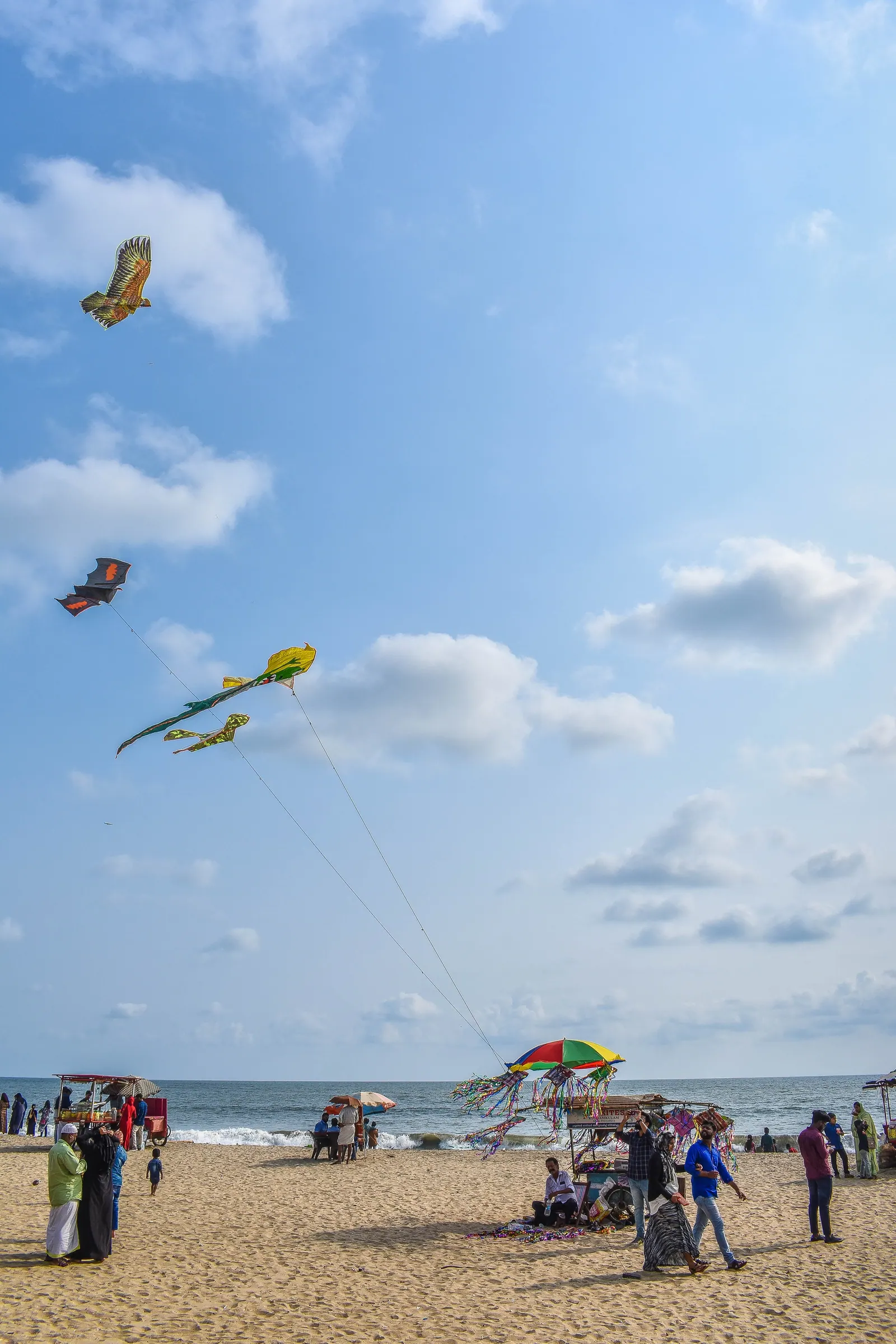
A sensible food walk starts at SM Street, continues through the Valiyangadi wholesale quarter towards the waterfront, and ends at Kozhikode beach for the kites and the sunset. The distances are short and the streets are busy. Eat small portions at several places rather than committing to a full meal at the first stop. The beach itself is not a swimming beach, but it is a genuinely democratic public space in the evening.
Sources & notes
- Kerala Tourism — official state tourism portal · checked 2026-10-22
- Wikipedia — place and history reference · checked 2026-10-22
Last updated 24 October 2026. Prices, opening hours and transport should be confirmed with official sources before travel.
Hello Kerala Publisher
Hello Kerala's editorial desk.
Found an error or an outdated detail?
Tell us