Heritage
Beypore: wooden ships, a river mouth and a fading craft
Beypore has been building wooden vessels for centuries, and the uru is still made by hand at the mouth of the Chaliyar. The shipyards are working places, not attractions, and that is exactly why they are worth visiting with care.
Beypore sits at the mouth of the Chaliyar river, a few kilometres south of Kozhikode, and has been a port for a very long time. Arab traders used it, the Zamorin's fleets were supplied from it, and for centuries its yards turned out large wooden sailing vessels for the Indian Ocean trade. The craft survives, though in reduced form. If you walk to the riverfront you may still see the skeleton of an uru — a wooden dhow-like boat — being assembled by hand, plank by plank.
It is not a museum. Men are working, wood is being cut, and there are no barriers, tickets or interpretive panels. That makes Beypore more interesting than a heritage centre and also more delicate. You are a guest in somebody's workplace, and the correct behaviour is to ask before entering, stay out of the way and accept a no.
The uru and the shipyards
The uru is built without modern plans, from timber shaped by eye and experience. Hulls are stitched and caulked, ribs are fitted, and the whole thing comes together on the mud beside the river. The boats were once used for cargo across the Arabian Sea; today the trade is smaller, and many yards also repair fibreglass and steel vessels. The knowledge is still there, but the economics are difficult: a wooden ship takes months, costs a great deal and competes with cheaper materials.
Several yards line the river. Some are open to a polite request, others are not. Do not climb onto a hull, stand under a suspended plank or walk into a shed without being invited. If you are lucky enough to be shown around, listen more than you photograph.
The river mouth and the beach
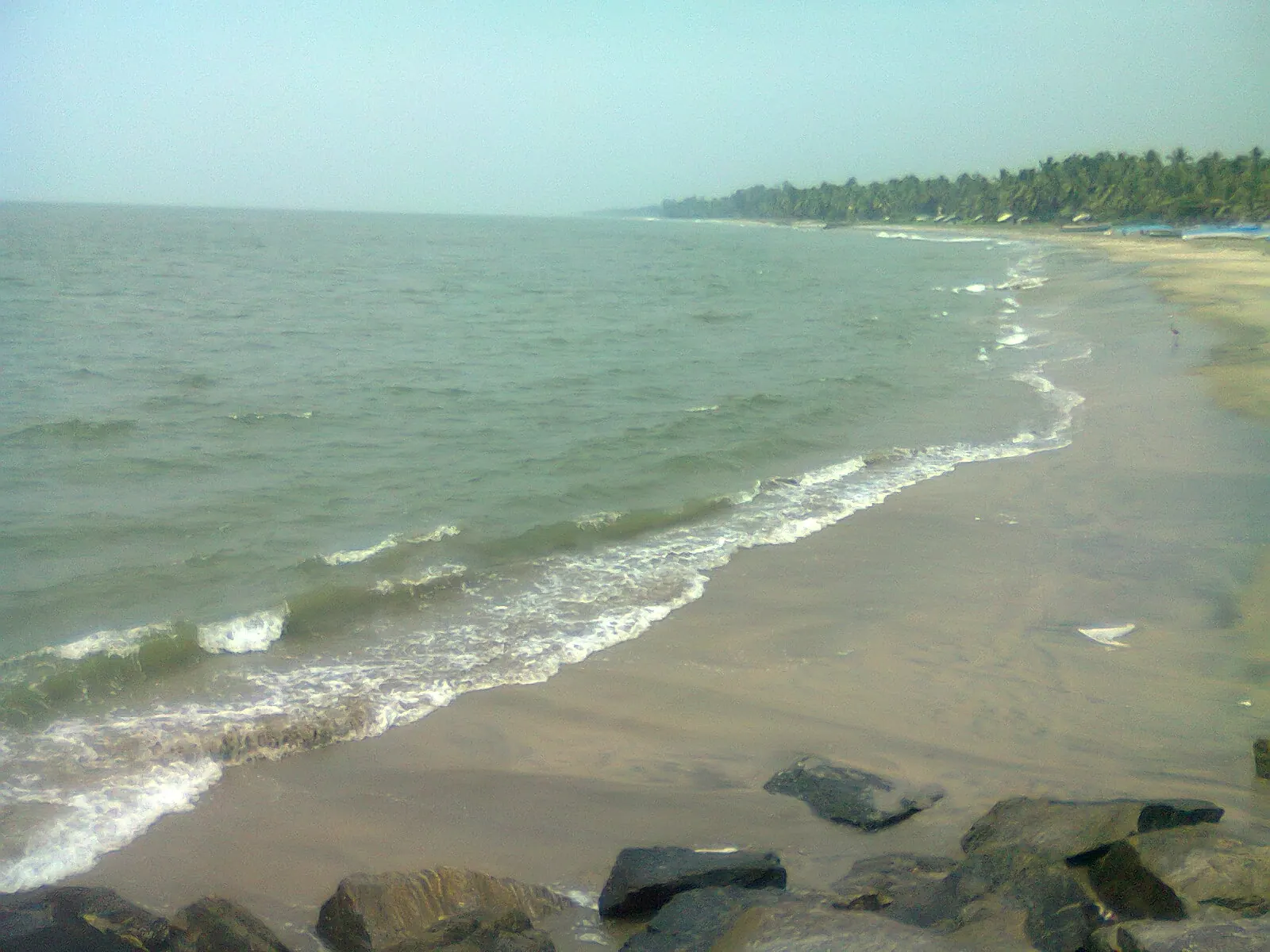
Beypore beach is broad and quiet, with the Chaliyar emptying into the sea at one end. The stone pier known as Pulimuttu extends into the water and is a local landmark and a popular place to walk, especially in the evening. The beach is not a swimming destination; the currents at a river mouth are unpredictable and there is no lifeguard service.
The harbour area is a working fishing port, with ice, diesel, auctions and the usual noise of a place that starts before dawn. If you want to see the catch, arrive early and keep out of the way. If you want a quiet afternoon, the beach at the southern end is the better choice.
- Ask permission before entering a shipyard; these are active workplaces.
- Visit the riverfront in the morning, when work is under way and the light is good.
- The beach and Pulimuttu are best in the late afternoon.
- Do not swim near the river mouth, whatever the tide looks like.
- Pair Beypore with Kozhikode's food streets; it is a short drive from the city.
Why it matters
Kerala's coast is full of places that were once important and are now quiet. Beypore is one of the most legible. The craft, the river, the mosque and church streets behind the port, and the fishing economy all belong to the same story of a trading coast that has been reoriented again and again. Seeing a wooden ship under construction connects the present to that history more directly than any display case.
Sources & notes
- Kerala Tourism — official state tourism portal · checked 2026-10-22
- Wikipedia — place and history reference · checked 2026-10-22
Last updated 24 October 2026. Prices, opening hours and transport should be confirmed with official sources before travel.
Hello Kerala Publisher
Hello Kerala's editorial desk.
Found an error or an outdated detail?
Tell us