Backwaters
Ashtamudi Lake: the quieter way into the backwaters
Kollam's eight-armed lake is the backwater gateway most travellers skip. Here is what the water actually offers, and how to travel it without turning the day into a coach tour.
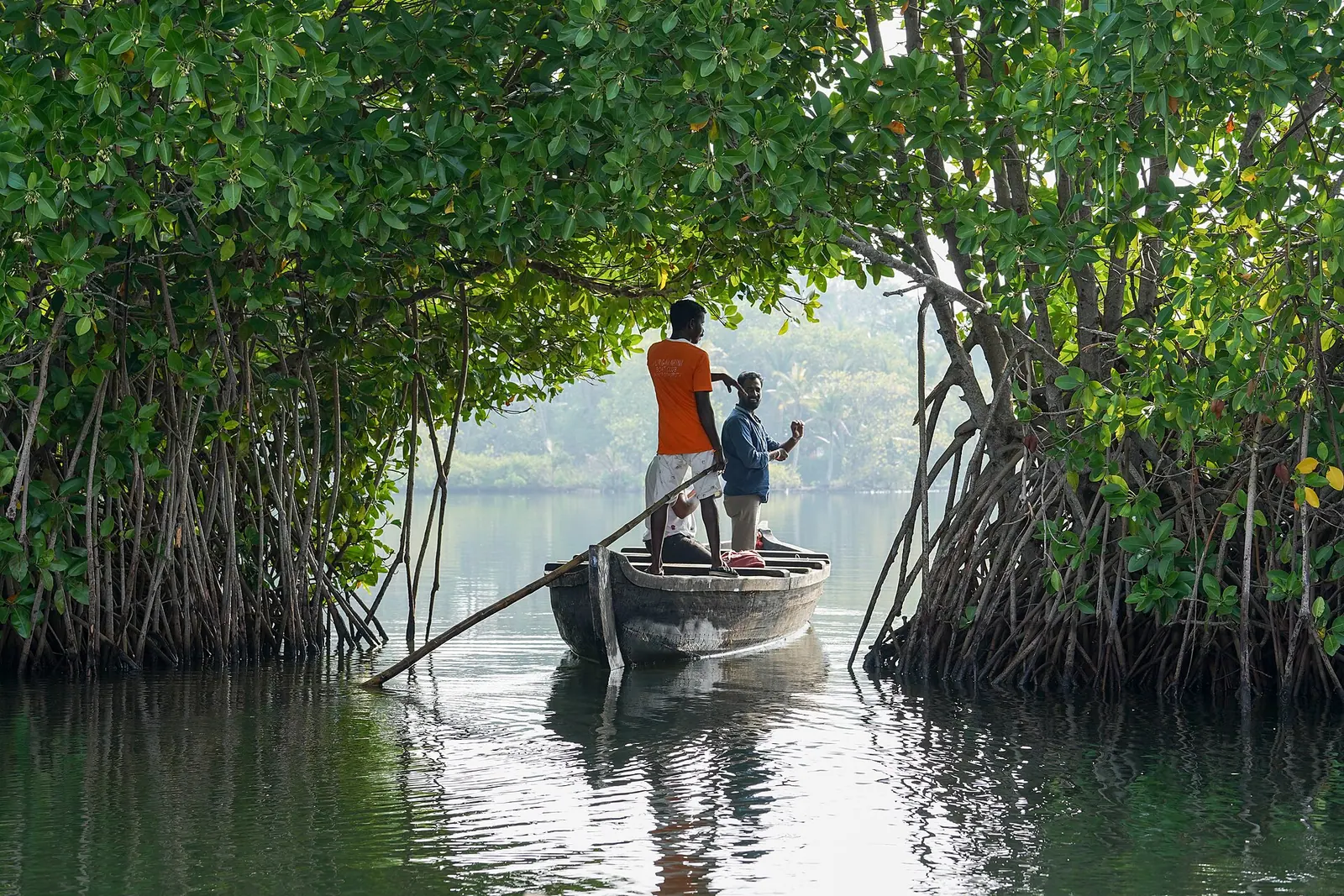
Ashtamudi means eight arms, and from the water the name makes sense. The lake opens from the sea at Kollam and pushes inland in a series of channels and shallow basins, past coconut gardens, coir sheds and small jetties where the day's fish is being sorted. It is not a single scenic pool. It is a working estuarine system with a town at one end and villages tucked into the other.
That is precisely why it rewards a slower visit than the backwater circuit around Alappuzha. Kollam is a real city, not a tourism stage set, and the lake begins at its edge. You can step off a train, walk to the waterfront and be on the water within an hour, without a coach transfer or a resort reception desk.
What the lake is
Ashtamudi is fed by the Kallada River and connected to the sea, so its water shifts between fresh and brackish. The southern and eastern arms are the quiet ones: narrow channels, mangrove edges and paddy fields that sit below the level of the surrounding land. The Ramsar designation it holds is about the wetland's ecology, not its scenery, though the two overlap. The lake is also a source of livelihood for fishing and clam-gathering families, and you will see that work close up.
The lake's best-known excursion is to Munroe Island, a cluster of low-lying villages in the Kallada delta. It is reached by road and small boat, and it is best seen in a canoe or a country boat rather than a large houseboat. The channels there are narrow, the bridges are low and the pace is set by the water. Ask your host about the island's history, including the colonial-era name and the canal work that shaped the land.
Houseboat or day boat?
Kollam operates houseboats, and the route south towards Alappuzha is one of the classic overnight backwater journeys. But a houseboat is a specific kind of travel: a large, slow-moving vessel with a fixed route, a cook and a mooring place for the night. If your interest is birds, village life and narrow channels, a smaller covered boat or a canoe is often better value and far more intimate.
- A day boat from Kollam can cover the lake's nearer arms and return before dark.
- An overnight houseboat usually travels a longer route and moors in a fixed location.
- Small canoes can enter channels that houseboats cannot, but have less shade and no toilet.
- Ask whether the boat has life jackets for every passenger, and whether the engine noise stops at night.
Book through a operator you can speak to directly, and ask where the boat actually goes rather than accepting a glossy route map. The difference between a good day and a dull one is usually the route, not the boat's furniture.
When to go
The post-monsoon months, roughly November to February, bring calmer water and comfortable temperatures. The monsoon is dramatic and green, but rain can cancel boat trips and the lake can be rough where it opens to the sea. Early morning is the best light and the most activity: fishermen returning, school boats, and the mist sitting on the water before the sun clears it.
Kollam's railway station and bus stands are close to the town, and the lake is a short auto ride from either. If you are coming from Thiruvananthapuram, the train is the least fussy option. From Alappuzha, the road is straightforward but slow, and the scenery is part of the point.
Sources & notes
- Kerala Tourism — official state tourism portal · checked 2026-10-22
- Wikipedia — place and history reference · checked 2026-10-22
Last updated 24 October 2026. Prices, opening hours and transport should be confirmed with official sources before travel.
Hello Kerala Publisher
Hello Kerala's editorial desk.
Found an error or an outdated detail?
Tell us