Backwaters
The honest guide to an Alappuzha houseboat
What a night on a converted rice barge actually involves, how to tell a thoughtful operator from a rushed one, and why the smallest boat is often the better choice.
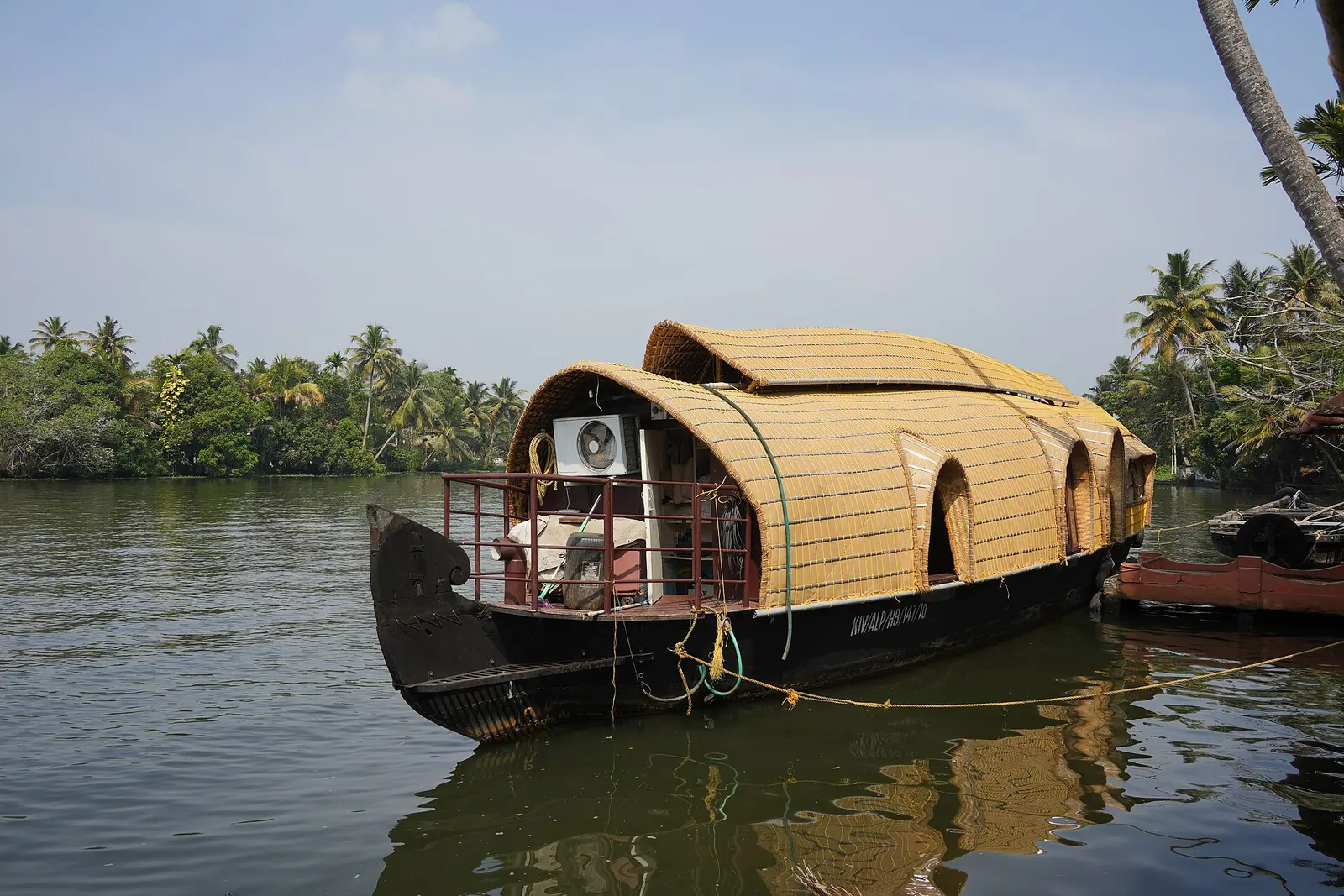
The Alappuzha houseboat began as a working vessel. A kettuvallam was a rice barge, its hull planks tied together with coir and its shallow draft built for canals that carry only a metre or two of water. When the cargo trade declined, boat owners roofed the hulls, added bedrooms and kitchens, and turned the backwaters into a tourism business. That history explains both the pleasure and the limits of the experience: you are on a cargo boat with furniture in it, not a cruise ship.
A standard booking is a single night. The boat boards around midday, cruises for three or four hours, moors before dusk, serves dinner, sleeps, and returns after breakfast. Some operators offer shorter day cruises, which suit people who want the water without the overnight. Both are worth doing, but they are different trips.
What the night is actually like
Most boats carry a crew of two or three: a driver, a cook and sometimes a helper. Cabins are small, usually with a double bed, a fan, and air conditioning that may run only at night. Bathrooms are compact. The deck is the real living room, and dinner is usually served there. Food is often excellent — fish, rice, vegetables, breakfast — but it is cooked in a small galley and the menu is agreed in advance.
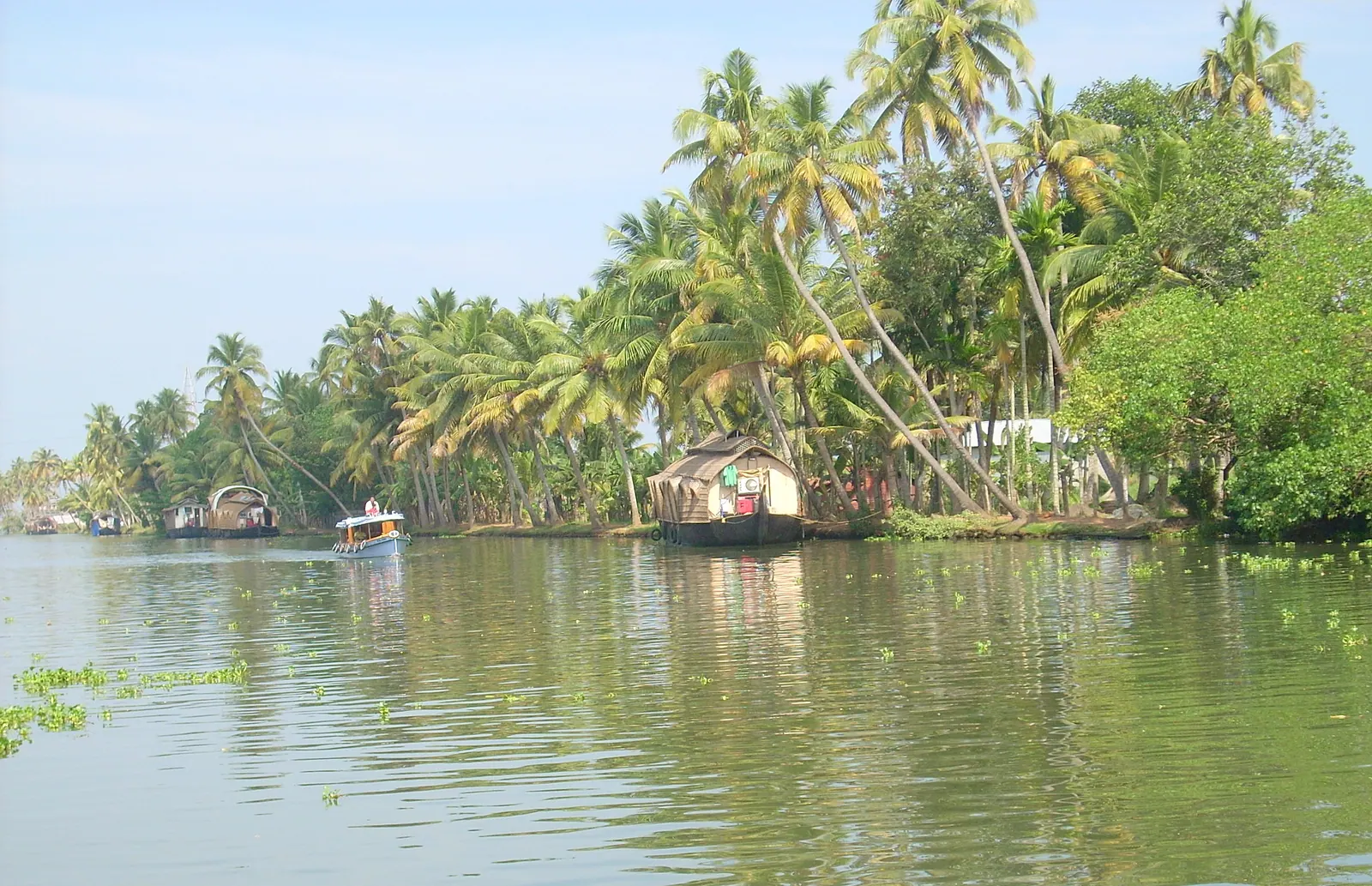
Expect heat and insects in the afternoon, and a generator humming if the boat is air-conditioned. Expect also that you will see other houseboats, sometimes in a line, especially on the main routes. This is a populated working landscape of villages, paddy fields, churches, temples and boat yards. It is not wilderness, and the best trips do not pretend otherwise.
Big boat, small boat, canoe
The large houseboats are comfortable but limited: their size keeps them on the wider channels, and at night they often moor in convoy at recognised spots. A smaller boat can enter narrow canals where the everyday life of the backwaters is closer. A canoe or a country boat, with a local boatman, is slower still and usually cheaper. If your priority is landscape and quiet rather than a bedroom with air conditioning, take the small boat by day and sleep on land.
- Ask whether the boat is licensed and insured, and whether life jackets are provided for everyone.
- Ask which route it will take and where it will moor; a vague answer usually means the standard convoy.
- Ask what hours the generator and air conditioning run, and whether the cabin has a fan regardless.
- Ask how waste water and rubbish are handled. Some operators are careful; others are not.
- Ask whether alcohol is permitted, and whether the crew eats and sleeps on board.
- Agree the total price in writing, including meals and any extra charges, before boarding.
The route question
Most one-night trips head north from Alappuzha towards Kainakary and the paddy fields, or loop through the Punnamada area where the Nehru Trophy boat race is held. The scenery is at its best in the early morning, when the water is still and the villages are waking. If you can, choose a boat that moors away from the main cluster, or ask to moor near a smaller village. The difference between a memorable night and a floating car park is often just where the boat stops.
The environmental cost
The backwaters are not a theme park, and a large number of boats puts pressure on them. Diesel engines, generators, plastic water bottles, food waste and the simple volume of traffic all have an effect on a fragile system of canals and paddy fields. You can reduce your footprint by choosing a smaller boat, refusing single-use plastic, asking about waste handling, and travelling outside the December–January peak. None of these choices makes the industry clean, but they are better than pretending the problem does not exist.
Sources & notes
- Kerala Tourism — official state tourism portal · checked 2026-10-22
- Wikipedia — place and history reference · checked 2026-10-22
Last updated 24 October 2026. Prices, opening hours and transport should be confirmed with official sources before travel.
Hello Kerala Publisher
Hello Kerala's editorial desk.
Found an error or an outdated detail?
Tell us